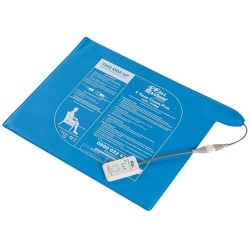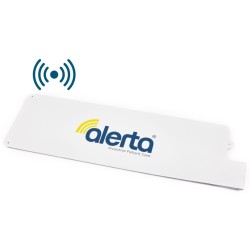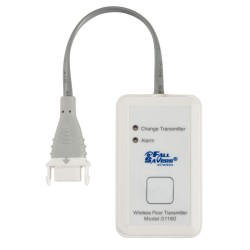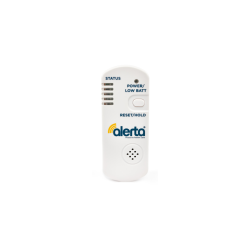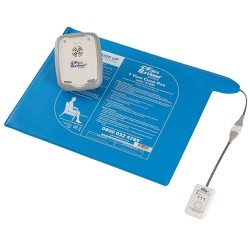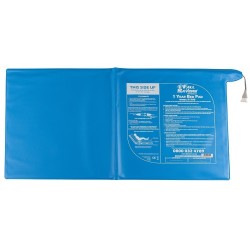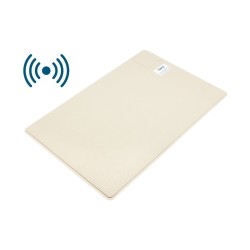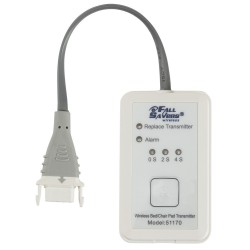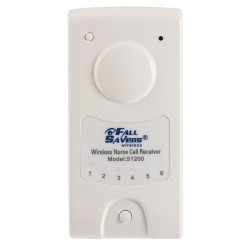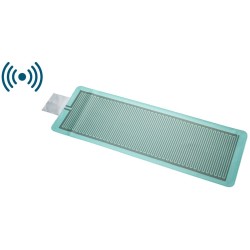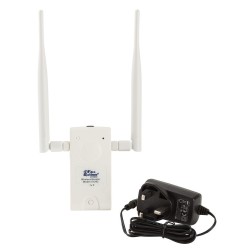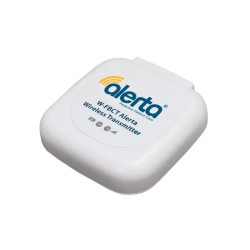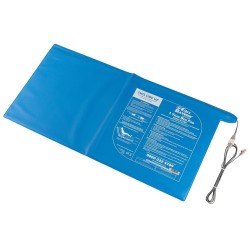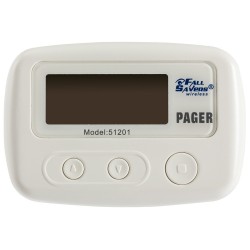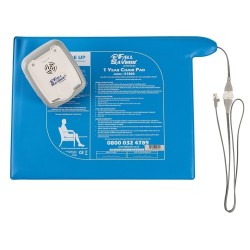
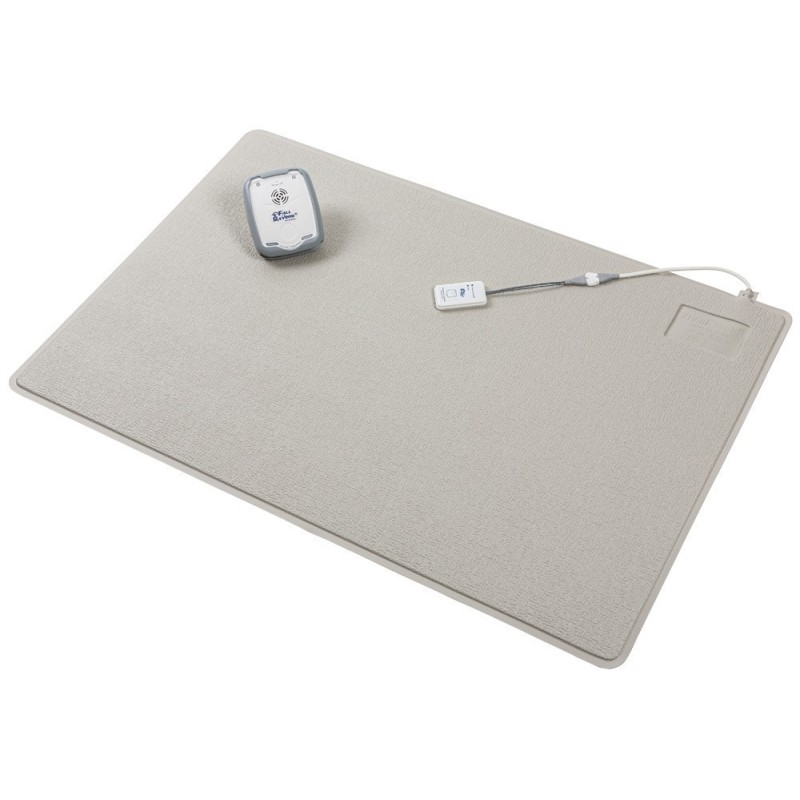

The Fall Savers Wireless Floor Package is a complete floor sensor monitoring system supplied as a matched pair: the Fall Savers Wireless Monitor and a high-sensitivity wireless floor sensor pad. When a patient steps onto the floor pad, the pressure is detected and an alert is transmitted wirelessly to the Wireless Monitor at the staff response point. The floor pad can be placed at the bedside, across a doorway or at any key movement area where unsupervised patient movement presents a fall risk. Wireless transmission from pad to monitor removes cable management from the floor surface, eliminating the cable trip hazard that wired floor sensors introduce in high-movement care environments.
| Specification | Detail |
|---|---|
| Product Code | NCL-51003 |
| Supplied As | Complete package - Wireless Monitor and floor sensor pad |
| Sensor Placement | Bedside, doorway or key movement area |
| Alert Trigger | Foot pressure on sensor pad surface |
| Detection | High-sensitivity pressure detection |
| Signal | Wireless - floor sensor to Wireless Monitor |
| Application | Care homes, NHS wards, home care, doorway monitoring |
NICE Guideline NG147 (Falls in Older People) supports floor sensor monitoring as an early-alert intervention that provides carer notification before a fall occurs rather than in response to one - the floor pad triggers on first foot contact, before the patient has achieved a standing position, giving carers the response window identified in NG147 as clinically meaningful. CQC Regulation 10 (Dignity and Respect) is supported by the early-alert approach: the patient is monitored without physical restriction, maintaining freedom of movement while ensuring timely carer response. The wireless operation also removes visible cabling from the room environment. CQC Regulation 17 (Good Governance) requires that fall prevention equipment is documented in the patient's care plan: the complete package format provides a clear equipment specification - sensor pad model and monitor model - that supports precise documentation of the monitoring configuration in the individual's falls management plan.
What is the difference between the Wireless Floor Package and the Wireless Bed Package for bedside fall prevention?
The Wireless Floor Package sensor pad is placed on the floor at the bedside and triggers when the patient steps onto it - at the moment they make first floor contact after leaving the bed. The Wireless Bed Package sensor pad is placed on the mattress and triggers when the patient leaves the bed surface - before they have made floor contact. The bed sensor provides an earlier alert in the exit sequence, while the floor sensor provides an alert at the point of first independent standing. For patients where the primary risk is from the standing position onwards rather than from the bed exit itself, a floor sensor at the bedside provides appropriate early monitoring. For patients where the bed exit transition itself is the critical risk moment, a bed sensor is the more appropriate specification.
Does the floor sensor pad create a trip hazard at the bedside, and how is this managed?
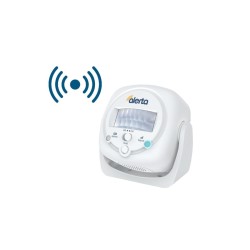
All floor sensor pads introduce some additional floor-level equipment that requires management. The Fall Savers wireless floor sensor pad is low-profile in design to minimise its height above the floor surface and reduce the trip risk from the pad edge. Placement is important: the pad should be positioned so the patient steps onto its centre rather than its edge during a normal bed exit movement, and the wireless transmitter cable (if present on the sensor) should be routed along the wall or bed frame rather than crossing open floor areas. For patients where any floor-level equipment presents an unacceptable trip risk due to gait pattern, reduced foot clearance or visual impairment, the Fall Savers Infrared Monitor (NCL-91170) provides contact-free monitoring without any floor-level equipment.
Part of our comprehensive Patient Sensor Alarms range. Wireless patient alarms provide flexible, cable-free fall prevention and resident safety monitoring across care homes and home care settings.