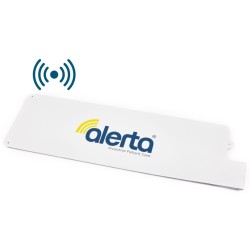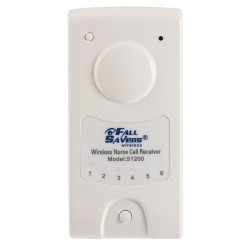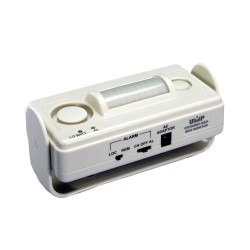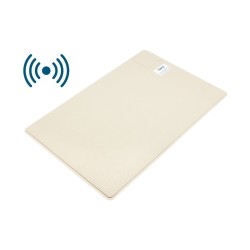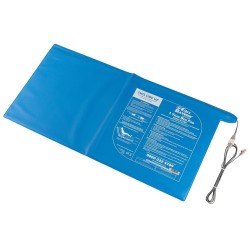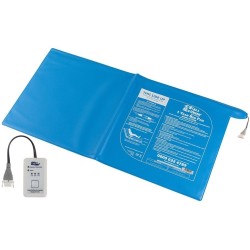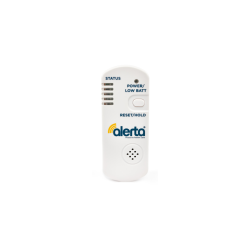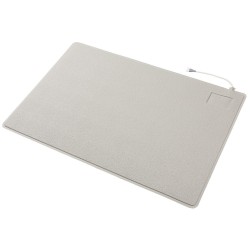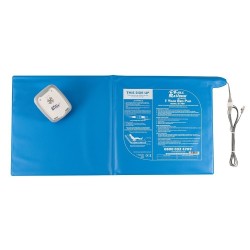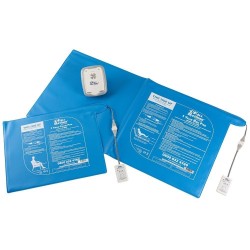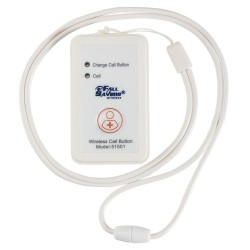
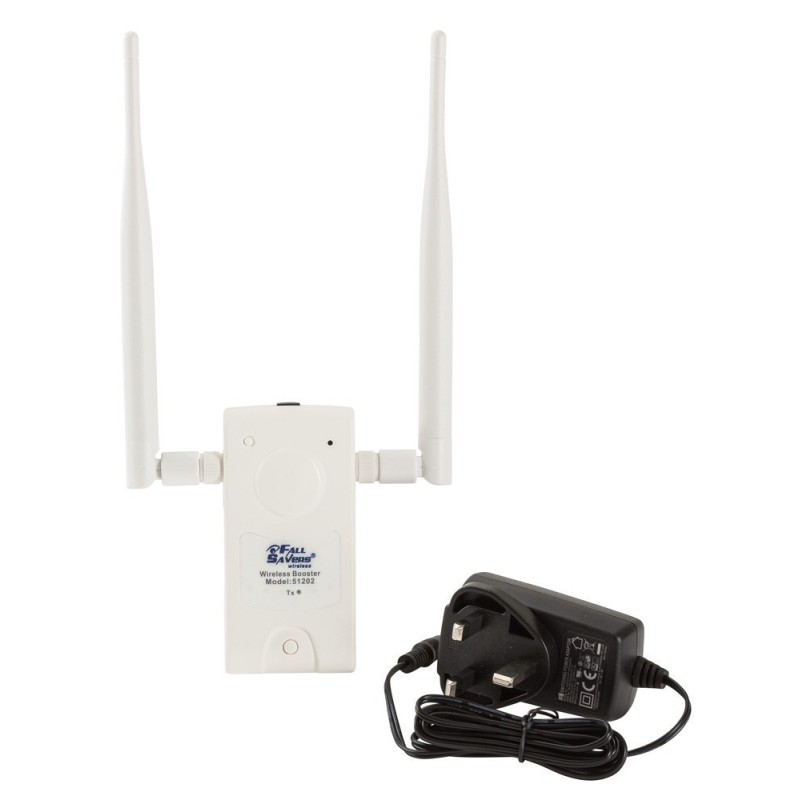


The Fall Savers Wireless Booster extends the wireless signal range of the Fall Savers fall prevention system, retransmitting signals between sensors and receivers across larger premises, multi-floor facilities and buildings where construction materials attenuate wireless signal. By positioning the booster at the optimal signal relay point in the building, monitoring coverage can be extended to locations beyond the primary receiver's reliable range - eliminating the signal gaps that cause missed alerts in larger care homes and challenging building layouts. LED indicators confirm signal reception and retransmission status for routine equipment checks. Battery-powered with optional mains adaptor.
| Specification | Detail |
|---|---|
| Product Code | NCL-51202 |
| Function | Wireless signal range extender for Fall Savers systems |
| Compatible With | Fall Savers wireless sensor systems and receivers |
| Indicators | LED status indicators - signal reception and retransmission |
| Power | Battery-powered or optional mains adaptor |
| Application | Larger premises, multi-floor facilities, thick-walled buildings |
CQC Regulation 12 (Safe Care and Treatment) requires that monitoring equipment functions consistently: a wireless monitoring system with coverage gaps that cause missed alerts does not meet this standard. The Fall Savers Wireless Booster restores consistent signal delivery at locations where the primary receiver cannot reliably receive sensor alerts, ensuring that the monitoring system meets its clinical function across the full extent of the care home's monitored areas. CQC Regulation 17 (Good Governance) requires that monitoring systems are maintained in effective operational order and that equipment status is verified and documented: the booster's LED status indicators support this by providing a visual confirmation of signal relay function that can be checked as part of routine equipment maintenance without specialist testing equipment. Care homes should include the booster's operational status check in the routine monitoring equipment maintenance record alongside the sensor pad and receiver status checks. NICE Guideline NG147 (Falls in Older People) is served by the coverage extension: a monitoring system that reliably delivers alerts from all monitored locations is materially more effective at fall prevention than one with unreliable coverage in parts of the facility.
How do I identify the correct position to install the Wireless Booster to resolve a coverage gap?
The Fall Savers Wireless Booster should be positioned at the midpoint between the sensor or transmitter that is experiencing coverage loss and the primary Fall Savers receiver, within an area that still receives a reliable signal from the primary receiver. The optimal position is the furthest point from the receiver that still receives a reliable signal from it - this maximises the additional range that the booster adds toward the coverage gap location. In practice, this means starting from the sensor location that is not reliably reaching the receiver, moving toward the receiver until a reliable signal is detected, and positioning the booster there. The LED indicators confirm signal reception: position the booster where the relevant indicator shows signal is being received from the receiver, then confirm that the gap-affected sensor's alerts are now reaching the booster and being retransmitted. Repeat signal testing at the gap-affected sensor location after booster installation to confirm coverage has been restored.
Can multiple Wireless Boosters be used in the same Fall Savers system to cover very large premises?
Whether multiple boosters can be daisy-chained or used simultaneously in the same Fall Savers wireless system depends on the system's architecture and the booster's repeater capability. Single-hop boosting - one booster between sensor and receiver - is the standard application. Multi-hop configurations, where a sensor's signal passes through two or more boosters before reaching the receiver, may be possible depending on the specific system's protocol but should be confirmed with the supplier before attempting. For very large care homes or multi-floor facilities with extensive coverage requirements, the supplier can advise on the recommended booster deployment architecture - including the number of boosters, their positions and whether the system's wireless protocol supports multi-hop relay - during the system commissioning process. Do not install multiple boosters without supplier guidance on the specific system's multi-booster capability.
Part of our comprehensive Patient Sensor Alarms range. Wireless patient alarms provide flexible, cable-free fall prevention and resident safety monitoring across care homes and home care settings.