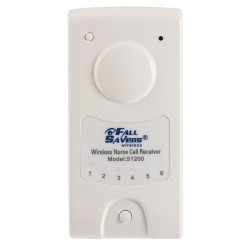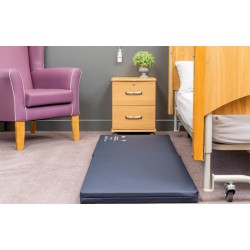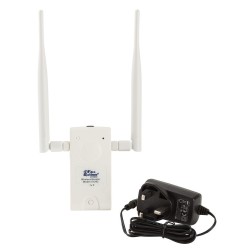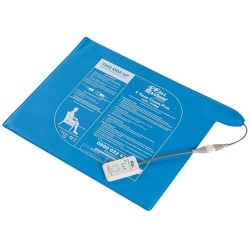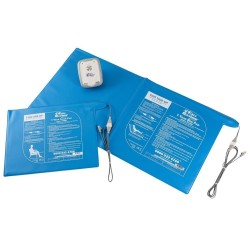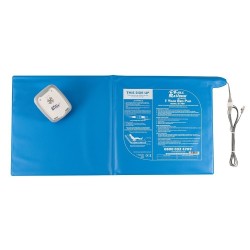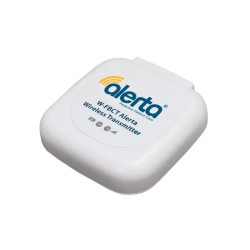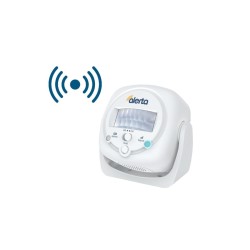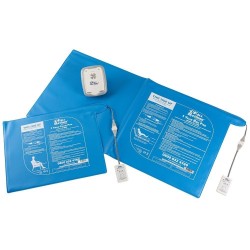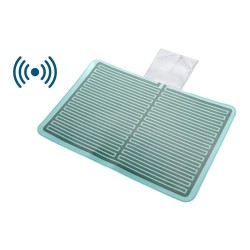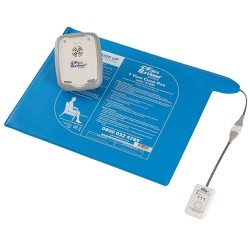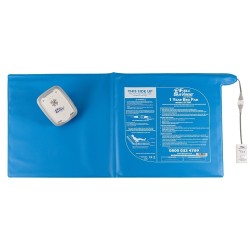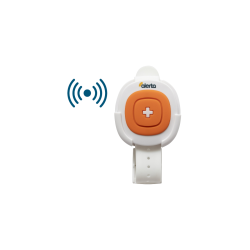
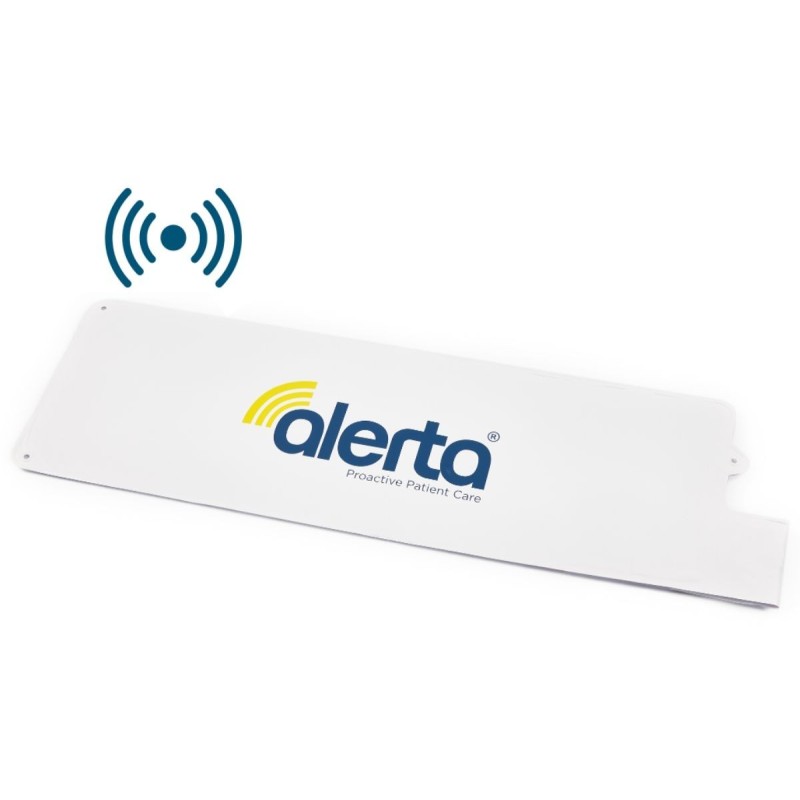


The Wireless Bed Alertamat is a 25x76cm antibacterial sensor mat for placement on top of the mattress beneath the bottom sheet, triggering a wireless alert when a patient leaves the bed and automatically resetting when they return. The built-in delay setting of 0, 2 or 4 seconds prevents false alerts from normal in-bed repositioning while capturing genuine bed exits, reducing alarm fatigue and ensuring alerts retain clinical significance. The 95m wireless range connects to the Alerta Wall Point Receiver for nurse call system integration or standalone alerting, with silent mode preserving overnight dignity and sleep continuity for patients under continuous bed exit monitoring.
| Specification | Detail |
|---|---|
| Product Code | NCL-W-BAM-T |
| Dimensions | 25 x 76 cm |
| Placement | On mattress, under bottom sheet |
| Alert Trigger | Pressure release - patient exits bed |
| Auto-Reset | Yes - when patient returns to bed |
| Delay Settings | 0, 2 or 4 seconds (adjustable) |
| Surface | Antibacterial, wipe-clean |
| Wireless Range | Up to 95 metres line-of-sight |
| Transmitter Power | 2x 1.5V AAA batteries (included) |
| Receiver Required | Alerta Wall Point Receiver (sold separately) |
NICE Guideline NG147 (Falls in Older People) identifies bed exit as a high-risk moment for falls, particularly for patients with dementia, post-operative confusion or orthostatic hypotension who may fall within seconds of achieving a standing position. The Wireless Bed Alertamat provides the early detection that NICE recommends, alerting at the moment of bed exit rather than after a fall has occurred, giving carers the response time needed for preventative intervention. CQC Regulation 12 (Safe Care and Treatment) requires that fall risk is mitigated through appropriate monitoring: the bed exit alert supports the supervised mobility protocol for high-risk patients. CQC Regulation 17 (Good Governance) is supported by the alert documentation capability of nurse call systems connected to the Wall Point Receiver, creating an audit trail for falls governance review.
What delay setting should be used, and how do I choose between 0, 2 and 4 seconds?
The delay setting should be matched to the patient's in-bed movement pattern and fall risk profile. Zero-second delay is appropriate for patients where any pressure release from the bed surface represents a clinical risk, for example a patient who is post-operative or has fallen on a previous unassisted bed exit where speed of carer response was identified as critical. A 2-second delay suits most high-risk patients who occasionally shift their sitting position on the mattress edge before standing. A 4-second delay is appropriate for patients who routinely lift or reposition their legs during sleep, where shorter delays generate frequent false alerts that undermine staff responsiveness through alarm fatigue.
Does the Wireless Bed Alertamat work on all mattress types, including pressure-relieving and profiling bed mattresses?
The Wireless Bed Alertamat is compatible with most mattress types including standard foam, pocket spring and basic pressure-relieving foam mattresses. For alternating pressure mattresses where the surface actively changes shape during the pressure cycle, the sensor may need to be assessed for false alert rate during normal mattress cycling. If false alerts occur during mattress cycling, increase the delay setting and reassess. For profiling beds, the mat remains functional across all profiling positions as it is placed between the mattress surface and the sheet rather than within the mattress structure.
Part of our comprehensive Patient Sensor Alarms range. Wireless patient alarms provide flexible, cable-free fall prevention and resident safety monitoring across care homes and home care settings.