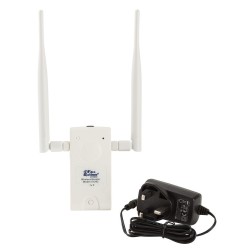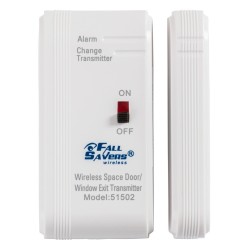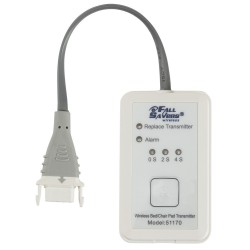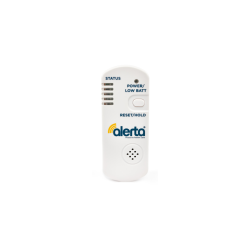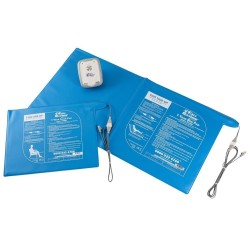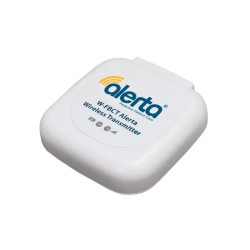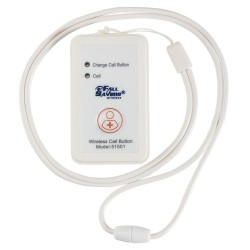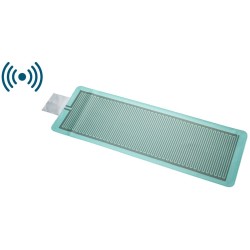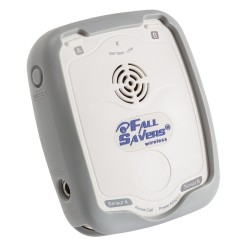
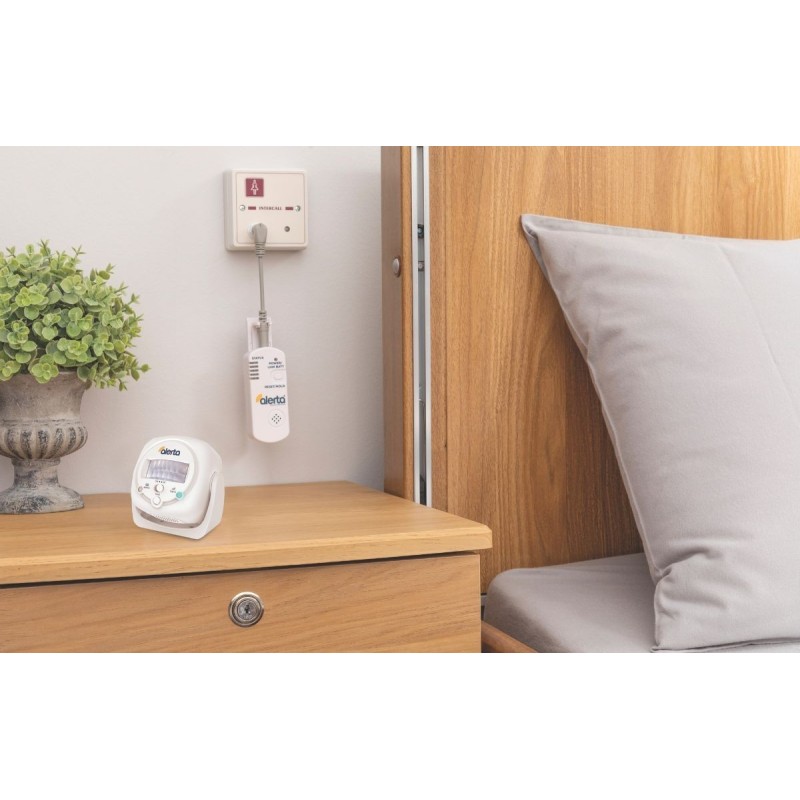


The Wireless Alerta Detect is a passive infrared motion sensor that wirelessly alerts caregivers when movement is detected beyond a defined safe zone, providing contact-free monitoring for patients at risk of unsupervised bed exit or wandering. Positioned at the bedside or across a doorway, the PIR sensor activates the moment the patient's movement crosses the defined detection boundary, transmitting an alert to the Alerta Wall Point Receiver at up to 95 metres range for nurse call system integration or local alerting. Contact-free PIR monitoring is particularly appropriate for patients who push floor mats aside, remove wrist or neck sensors, or for doorway monitoring where a floor mat would create a trip hazard for patients with reduced foot clearance.
| Specification | Detail |
|---|---|
| Product Code | NCL-ALT-DET |
| Sensor Type | Passive infrared (PIR) motion detection |
| Placement | Bedside or doorway - wall or surface mount |
| Detection | Movement beyond defined safe zone |
| Wireless Range | Up to 95 metres line-of-sight |
| Sensor Power | Mains or 3x 1.5V AA batteries |
| Battery Warning | Low battery indicator |
| Receiver Required | Alerta Wall Point Receiver (sold separately) |
NICE Guideline NG147 (Falls in Older People) recognises that different fall prevention monitoring approaches are appropriate for different patients and environments, and that no single technology covers every clinical scenario. The Wireless Alerta Detect addresses the monitoring gap for patients who cannot be effectively monitored by floor mats, either because they remove them, step over them, or because a floor obstacle itself creates fall risk. CQC Regulation 10 (Dignity and Respect) is specifically supported by the PIR approach: the sensor detects zone-crossing movement rather than continuously monitoring all body movement within the room, a more proportionate monitoring approach under the Mental Capacity Act 2005 best-interests principle. CQC Regulation 17 (Good Governance) is supported by the audit trail of zone-crossing alerts that can be logged through nurse call system integration.
How is the Alerta Detect positioned to monitor bed exit without triggering on all in-room movement?
The Alerta Detect uses a directional PIR detection zone that can be aimed to cover a specific area, typically the transition space between the bed and the room exit, or the patient's anticipated exit path from the bed. By positioning the sensor to cover the transition zone rather than the full room, false alerts from normal in-room movement by carers, visitors or the patient moving within the bed can be minimised. Confirm the alert triggers at the intended detection point by testing with a staff member walking the expected patient exit path during initial installation.
Can the Alerta Detect be used to monitor multiple patients in a shared bay or room?
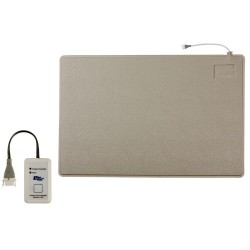
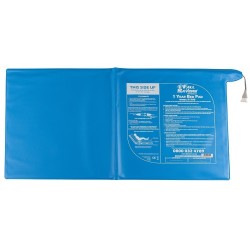
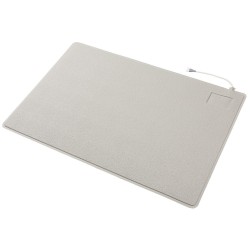
A single Alerta Detect sensor monitors the zone it is directed at without differentiating between individuals crossing the detection zone. In a shared bay or room, the sensor will trigger on the movement of any individual crossing the defined boundary. If selective monitoring of one specific patient in a shared space is required, the sensor position and detection zone should be calibrated to minimise triggering on other patients and staff in the same space. For shared rooms where patient-specific monitoring is clinically required, bed-specific sensors such as Chair or Bed Alertamats may be more appropriate than a room-level PIR sensor.
Part of our comprehensive Patient Sensor Alarms range. Wireless patient alarms provide flexible, cable-free fall prevention and resident safety monitoring across care homes and home care settings.