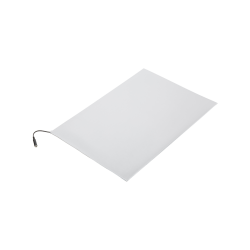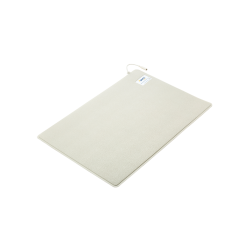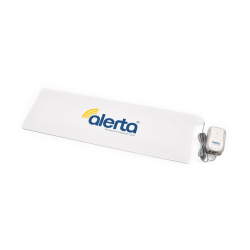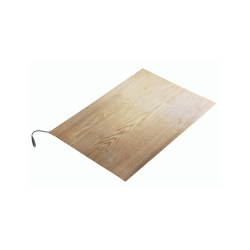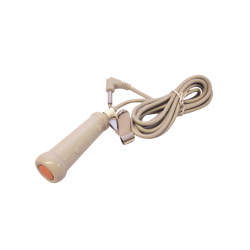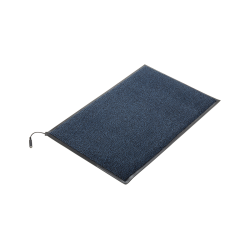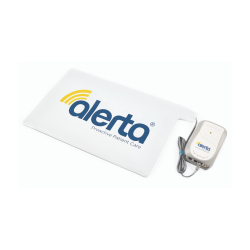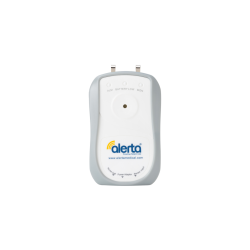
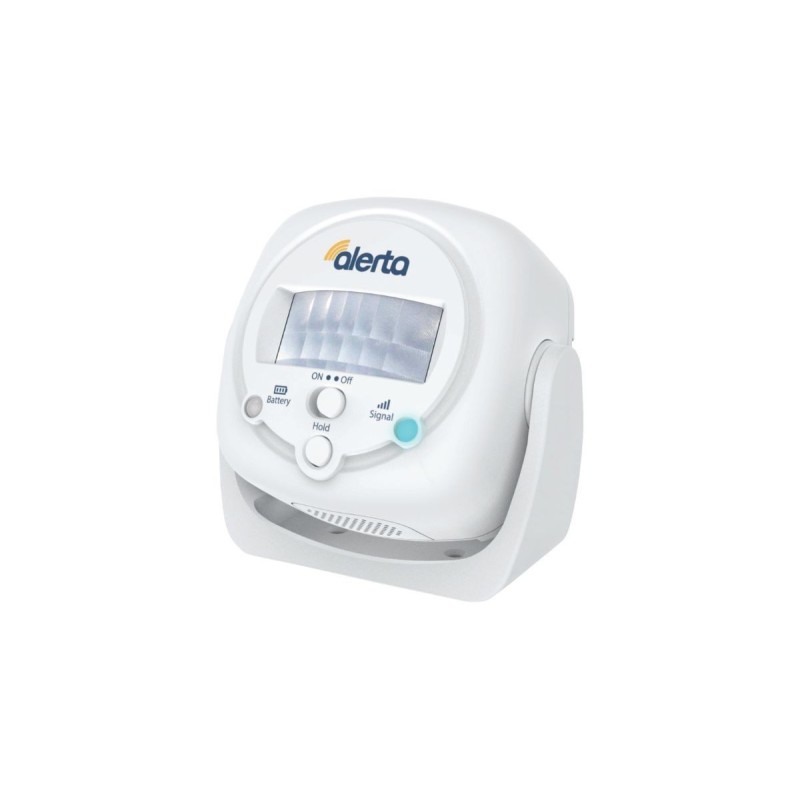


The Wired Alerta Detect is a passive infrared motion sensor that connects directly to the nurse call system via a 2m wired cable, providing immediate alerting when movement is detected beyond a defined safe zone at the bedside or across a doorway. Contact-free PIR monitoring is particularly appropriate for patients who push floor mats aside or for doorway monitoring where a floor mat would create a trip hazard. The wired connection delivers guaranteed signal without wireless transmission variables, and the sensor operates on mains power or 3x 1.5V AA batteries with a low battery warning for continuous operation.
| Specification | Detail |
|---|---|
| Product Code | NCL-ALT-DET-W |
| Sensor Type | Passive infrared (PIR) motion detection |
| Output | Wired nurse call jack - 2m cable included |
| Placement | Bedside or doorway - wall or surface mount |
| Detection | Movement beyond defined safe zone |
| Power | Mains or 3x 1.5V AA batteries |
| Battery Warning | Low battery indicator |
| Nurse Call | Direct jack connection - no wireless pairing |
NICE Guideline NG147 (Falls in Older People) acknowledges that monitoring technology selection must be matched to the individual patient's behaviour and the specific care environment. The Wired Alerta Detect addresses scenarios where pressure-based floor sensor mats are not effective: patients who detect and avoid the mat, patients whose mobility makes a floor-level obstacle a trip hazard, and narrow doorways where mat placement is impractical. CQC Regulation 10 (Dignity and Respect) is supported by the PIR approach: zone-crossing detection is a more proportionate monitoring intervention than continuous in-room movement monitoring, preserving the patient's sense of privacy within their safe zone. CQC Regulation 12 (Safe Care and Treatment) is served by the direct wired nurse call connection: guaranteed signal delivery without wireless variables ensures the monitoring system functions reliably in the high-RF-density environments that some NHS ward and care home settings present.
What is the difference between the Wired Alerta Detect and the Wireless Alerta Detect, and when should each be chosen?
The Wired Alerta Detect (NCL-ALT-DET-W) connects directly to the nurse call system via a 2m wired cable and outputs the alert signal through the physical connection. The Wireless Alerta Detect (NCL-ALT-DET) transmits the alert wirelessly via a paired transmitter to the Alerta Wall Point Receiver at up to 95 metres range. The wired version is appropriate for fixed bedside or doorway positions where the nurse call socket is within the 2m cable reach and the cable can be managed safely in the installation position. The wireless version is appropriate for positions where a cable from the sensor to the nurse call socket is impractical - for example, a mid-room bedside position, or a doorway where the cable run would cross an open floor area and create a trip hazard. Both have the same PIR detection technology.
Can the Wired Alerta Detect be used with the Alerta Alarm Monitor instead of a nurse call system?
Yes. The Wired Alerta Detect connects via its standard nurse call jack to the Alerta Alarm Monitor (sold separately) as well as to a nurse call system. When connected to the Alarm Monitor, the PIR sensor alert triggers the Alarm Monitor's audible alarm rather than the nurse call system panel. This provides a standalone alerting solution for home care settings, domestic environments or care settings where the PIR sensor position is not within reach of a nurse call socket. The Alarm Monitor is powered independently (1x9V battery or mains adaptor) and can be positioned anywhere within cable reach of the sensor for local in-room alerting.
Part of our comprehensive Patient Sensor Alarms range. Wired patient alarms deliver reliable, continuous fall prevention monitoring for care home residents and nursing home patients.