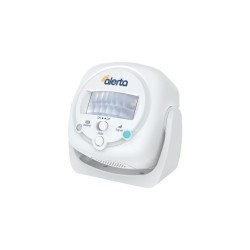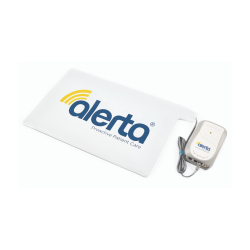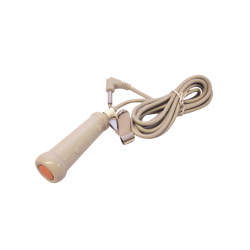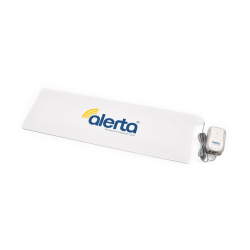
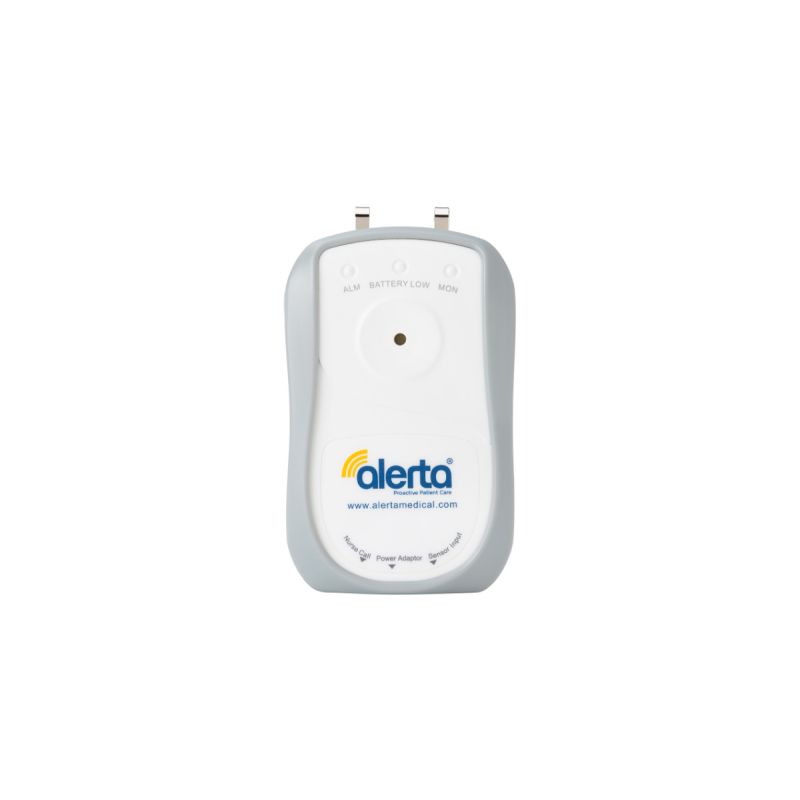

The Alerta Alarm Monitor is a compact standalone alerting unit for use with all Alerta wired Alertamats, Floor Sensors, PIR sensors and call buttons, providing immediate in-room audible alerting when any connected wired device is triggered. Designed for care settings without a nurse call system - home care, domestic settings, small residential homes and day centres - it provides the local alerting function that enables wired Alerta monitoring without centralised nurse call infrastructure. Volume settings (high, low, silent), multiple alarm tone options and adjustable delay reduce false alerts and enable environment-specific configuration. Powered by 1x9V battery or optional Mains Adaptor (NCL-MA, sold separately).
| Specification | Detail |
|---|---|
| Product Code | NCL-AUAM |
| Compatible With | All Alerta wired Alertamats, sensors and call buttons |
| Volume Settings | High, low, silent |
| Alarm Tones | Multiple options for environment-specific configuration |
| Delay Settings | Adjustable - reduces false alerts from repositioning |
| Power | 1x 9V battery or optional mains adaptor (NCL-MA) |
| Battery Warning | Low battery indicator |
| Application | Standalone use where nurse call system is unavailable |
NICE Guideline NG147 (Falls in Older People) applies to community and home care settings as well as residential and NHS environments - the falls risk in home care settings is statistically significant and the recommendation for appropriate monitoring equipment applies regardless of whether the setting has a centralised nurse call system. The Alerta Alarm Monitor enables the clinical fall prevention monitoring recommended by NG147 in settings where nurse call infrastructure is absent, extending the Alerta wired monitoring system's clinical reach to the full spectrum of care environments. CQC Regulation 12 (Safe Care and Treatment) applies to both regulated care home environments and regulated community care services: for community care providers whose package of care includes fall prevention monitoring, the Alarm Monitor enables compliant equipment-based monitoring in domestic settings. CQC Regulation 17 (Good Governance): the Alarm Monitor's delay and tone settings should be documented in the patient's monitoring plan, and the unit's battery status should be included in the regular equipment maintenance checks that CQC expects providers to conduct and document.
How many wired Alertamats can be connected to a single Alarm Monitor simultaneously?
The Alerta Alarm Monitor has a single nurse call jack input port, meaning it accepts one wired device connection at a time in its standard configuration. For settings where monitoring of both a bed mat and a chair mat (or any other combination of two wired devices) is required, the Double Plug Adaptor (NCL-DPA, sold separately) connects two wired Alerta devices to the Alarm Monitor's single input port, enabling both devices to alert through the same monitor. Note that when two devices share the Alarm Monitor via the Double Plug Adaptor, the monitor will alert when either device triggers, but will not differentiate between which device triggered - if identifying which device triggered the alert is clinically important, consider separate monitors for each device, or a nurse call system that differentiates between sensor inputs by socket.
Can the Alarm Monitor be used alongside a nurse call system, or is it only for settings without nurse call?
The Alarm Monitor can be used in conjunction with a nurse call system as a supplementary local alerting device. In care home settings where the nurse call system is centralised but the ward or unit is large, a local Alarm Monitor in the patient's room provides an immediate in-room audible alert that the carer in the immediate vicinity can hear before the centralised nurse call response reaches the room. This can reduce the response time from alert to carer arrival in larger care homes where the nurse call panel is not within immediate earshot of the patient's room. The wired Alertamat can connect to the nurse call system directly and to the Alarm Monitor simultaneously if the mat's Y-cable or a Double Plug Adaptor is used to split the signal to both devices. Confirm with the nurse call system installer that dual connection is supported by the specific system.
Part of our comprehensive Patient Sensor Alarms range. Wired patient alarms deliver reliable, continuous fall prevention monitoring for care home residents and nursing home patients.