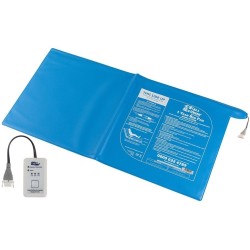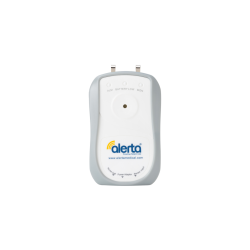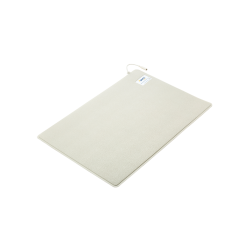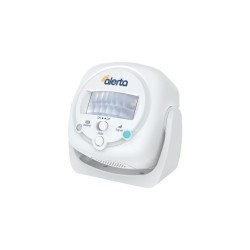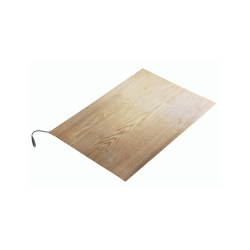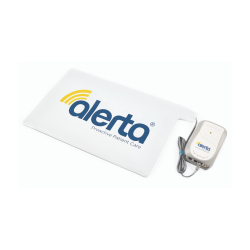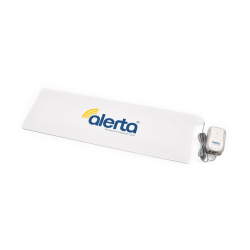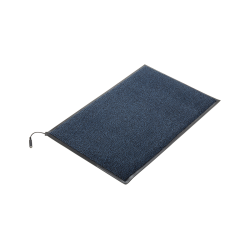
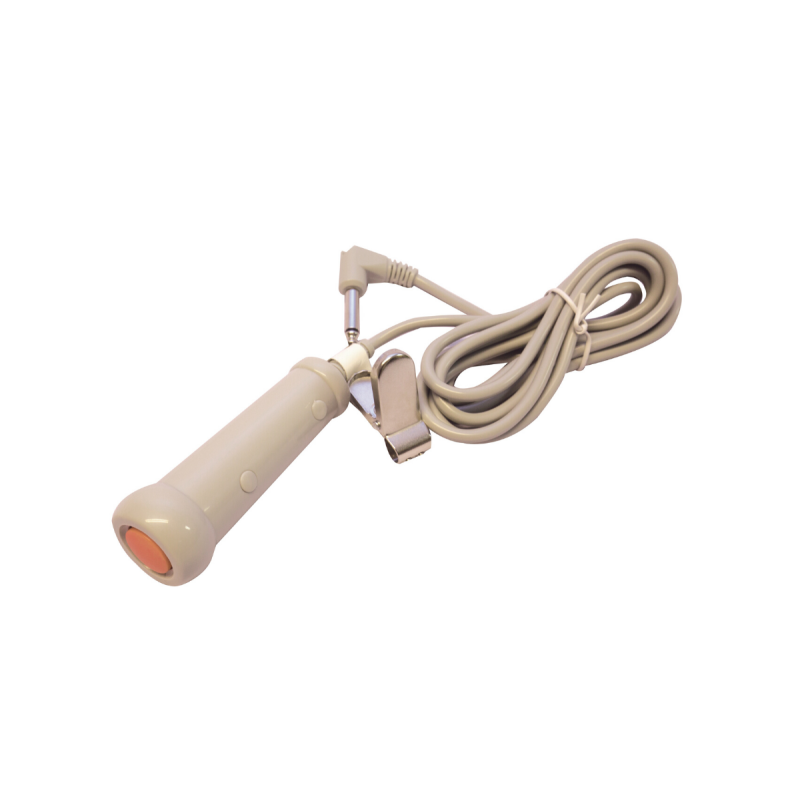


The Wired Alerta Button is a large soft-touch nurse call trigger button that connects directly to the nurse call system via a 2m wired cable, enabling patients to summon immediate care staff assistance on pressing. Designed for patients with limited mobility, reduced hand strength or reduced dexterity, the large button surface requires minimal activation pressure. The Alerta Button is compatible with the integrated "Y" cable in Alerta wired floor mats (Deluxe, Wood and Floor Plus Alertamats), allowing the button and mat to share the same nurse call socket from a single cable run without a separate socket or Double Plug Adaptor.
| Specification | Detail |
|---|---|
| Product Code | NCL-PCL |
| Function | User-initiated nurse call trigger |
| Button | Large soft-touch - accessible for reduced dexterity |
| Output | Wired nurse call jack - 2m cable included |
| Y-Cable | Compatible with Alerta Alertamat Y-cables |
| Connection | Direct nurse call system or Alarm Monitor |
| Battery | None required |
CQC Regulation 10 (Dignity and Respect) requires that care providers preserve people's ability to communicate their needs and summon assistance. A call button that patients cannot reach, cannot activate, or that fails to transmit the call fails this requirement. The Wired Alerta Button addresses two dimensions of this requirement: the large soft-touch button surface is accessible to patients who cannot reliably activate standard call buttons due to hand weakness, tremor or reduced fine motor control; and the direct wired connection guarantees that every button press transmits to the nurse call system without the wireless transmission variables that can cause sporadic call failures in some environments. CQC Regulation 12 (Safe Care and Treatment) requires that patient call equipment is maintained in continuous operational order: the Wired Alerta Button's operational status is directly verifiable - cable connected and button functional - without the pairing verification and battery status monitoring that wireless call buttons require.
How is the Wired Alerta Button positioned at the bedside, and can it be mounted to the bed rail or bed frame?
The Wired Alerta Button can be placed on the bedside surface, mounted to a bedside table, clipped to a bed rail, or positioned at any location within the 2m cable reach of the nurse call socket that is accessible to the patient. For patients who are bedridden, the button is often positioned on the mattress surface near the patient's dominant hand, or clipped to the bed rail at a height the patient can reach without sitting up. Confirm that any mounting position on a bed rail does not create an entrapment risk between the button and the rail, or a strangulation risk from the cable, as part of the individual patient's falls and safety assessment. For patients with highly limited upper limb movement, occupational therapy assessment of the optimal button placement position is appropriate before finalising the monitoring configuration.
Can the Wired Alerta Button be used as a standalone call button without a floor mat, or must it always be used with an Alertamat?
The Wired Alerta Button can be used entirely independently of any Alertamat as a standalone nurse call trigger. It plugs directly into the nurse call system socket via its own 2m cable and functions as a complete user-initiated call system. The Y-cable compatibility with Alertamats is an additional integration option for settings where both passive mat monitoring and user-initiated calling are required from the same nurse call socket - it is not a requirement for using the button. Many care settings use the Alerta Button as a standalone bedside call button for patients who cannot reliably use the nurse call system's built-in cord or button, or as an additional call point for patients in environments where the standard nurse call point is out of reach from the patient's typical position in the room.
Part of our comprehensive Patient Sensor Alarms range. Wired patient alarms deliver reliable, continuous fall prevention monitoring for care home residents and nursing home patients.