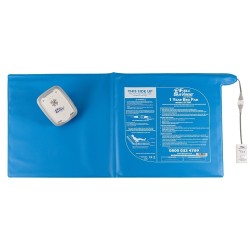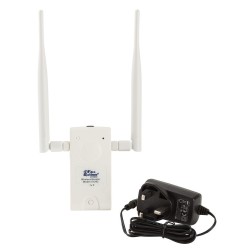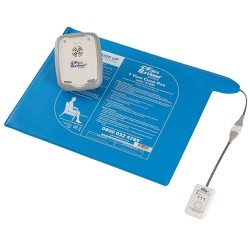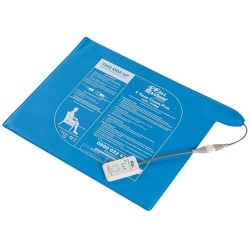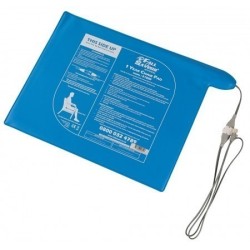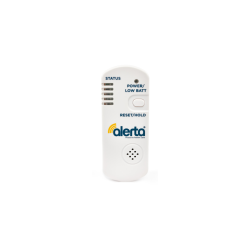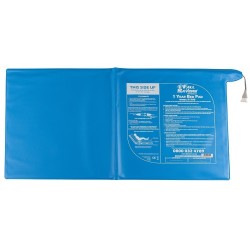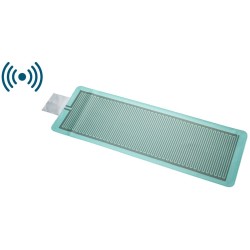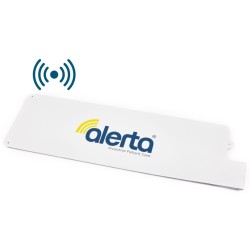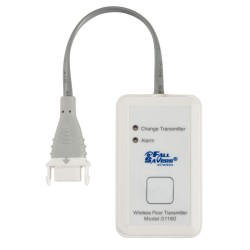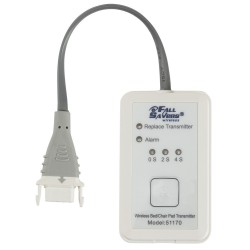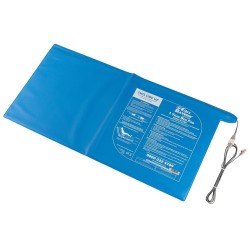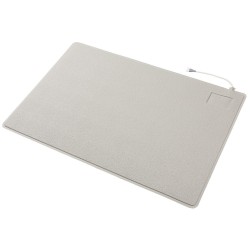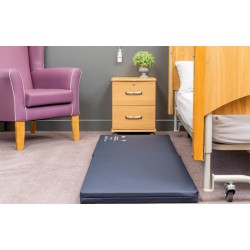
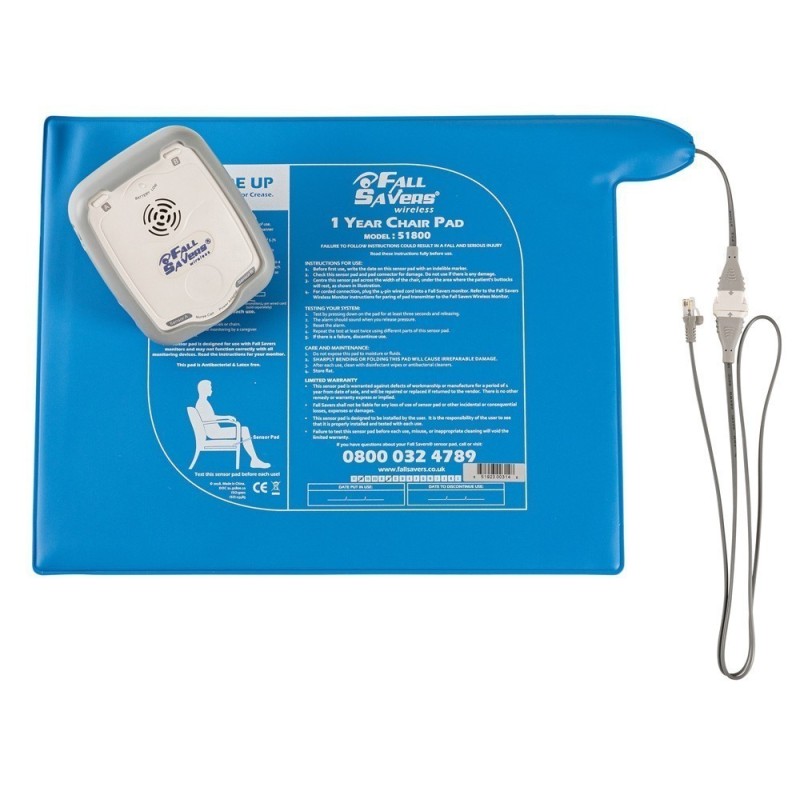

The Fall Savers Wireless Monitor with Wired Chair Pad is a hybrid monitoring system combining a wired chair sensor pad with a wireless monitor. The chair sensor pad connects directly to the Fall Savers Wireless Monitor via a physical cable, providing guaranteed signal delivery from the sensor to the monitor. When the patient rises from the chair, the pad detects the pressure change and alerts the monitor via the wired connection; the monitor then transmits the alert wirelessly to the care team at their response location. This architecture combines wired sensor reliability at the chair with wireless alert flexibility for staff notification across the care environment.
| Specification | Detail |
|---|---|
| Product Code | NCL-51012 |
| Sensor Connection | Wired - direct cable from chair pad to monitor |
| Alert Output | Wireless - monitor transmits to alert system |
| Sensor Placement | Beneath seat cushion |
| Alert Trigger | Pressure release - patient vacates chair |
| Application | Care homes, NHS wards, home care, day centres |
NICE Guideline NG147 (Falls in Older People) identifies unsupervised chair exit as a primary fall risk event for patients with orthostatic hypotension, lower limb weakness or dementia-related gait impairment: the wired chair pad ensures the alert reaches the monitor without wireless transmission uncertainty at the sensor-to-monitor stage of the signal chain. CQC Regulation 12 (Safe Care and Treatment) requires that monitoring equipment functions consistently: the wired pad-to-monitor connection provides this consistency in rooms where building construction materials or room configuration may affect wireless sensor performance. CQC Regulation 10 (Dignity and Respect) is supported by the under-cushion pad placement: the sensor is not visible above the seat surface, maintaining the normal appearance of the seating and avoiding visible clinical monitoring equipment in care home lounge and bedroom areas.
Can this system be used with a recliner chair, and how does the wired cable affect chair movement?
The wired chair pad system can be used with recliner chairs. The cable connects the pad beneath the cushion to the monitor, which is typically positioned on a nearby surface or wall-mounted adjacent to the chair. When the chair reclines, the cable should have sufficient slack to accommodate the reclining movement without pulling the pad from its position or creating tension on the monitor connection. Before routine use with a recliner, test the cable management across the full reclining range to confirm it does not restrict the chair's movement or become taut in any position. If the reclining movement consistently disrupts the cable, a cable management clip positioned to allow slack in the cable during recline typically resolves this.
What happens if the wired pad cable is accidentally disconnected from the monitor - will there be any indication that monitoring has stopped?
If the wired cable between the chair pad and the monitor is disconnected, the monitoring circuit is broken and the system will not detect a chair exit event. Depending on the specific monitor model, disconnection may trigger an alert or visual indicator on the monitor to signal a loss of connection, or it may simply cease monitoring silently. Check the monitor's specifications for connection-loss indication behaviour. To reduce the risk of undetected disconnection, include the cable connection status as part of the routine equipment check performed at the start of each shift - physically confirm the cable is seated securely in both the pad and the monitor as part of the monitoring system operational verification documented in the falls governance record.
Part of our comprehensive Patient Sensor Alarms range. Wireless patient alarms provide flexible, cable-free fall prevention and resident safety monitoring across care homes and home care settings.