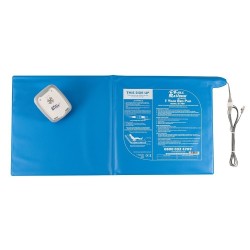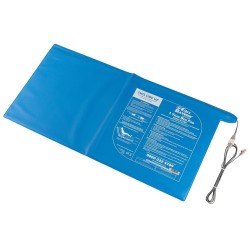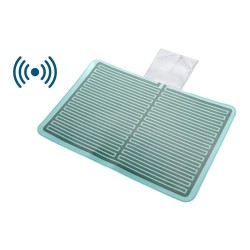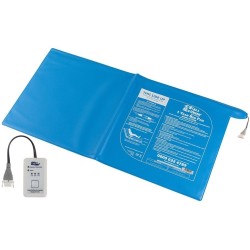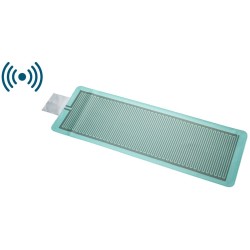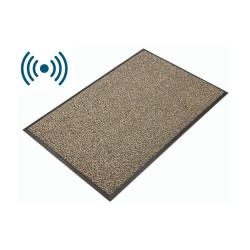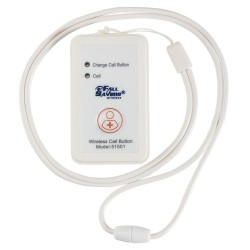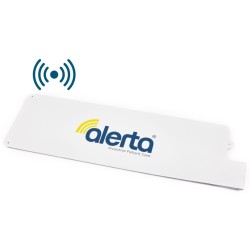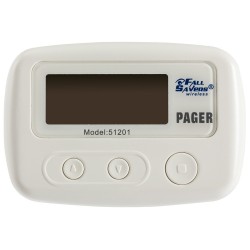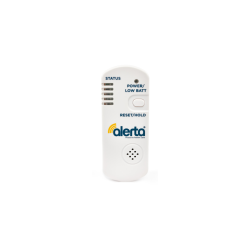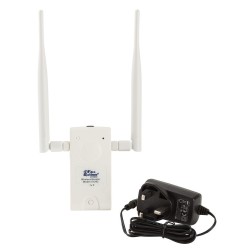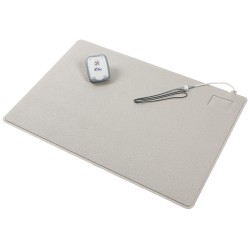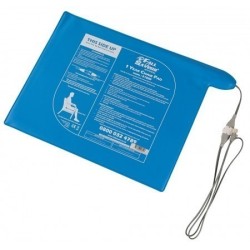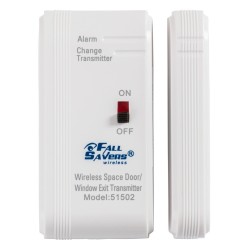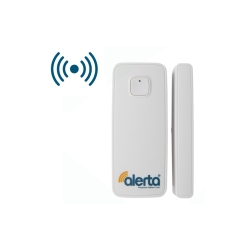
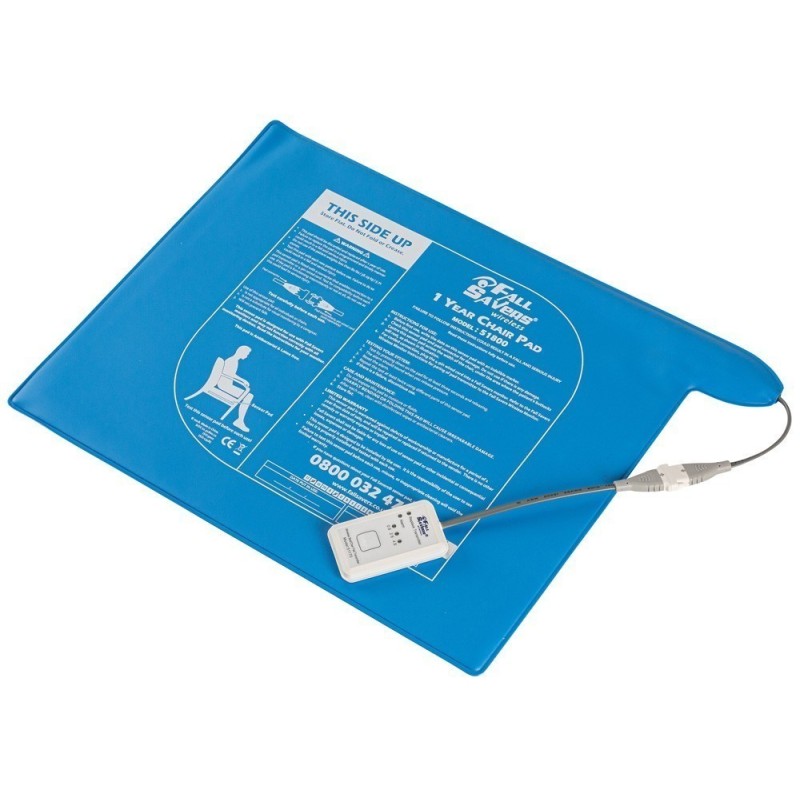


The Fall Savers Wireless Chair Sensor with Transmitter is a chair sensor pad with an integrated wireless transmitter, detecting chair exit and immediately transmitting an alert to a compatible Fall Savers receiver or monitor without requiring a separately sourced transmitter component. The sensor pad is placed beneath the seat cushion, the integrated transmitter sends the wireless alert when the patient vacates the chair, and the alert is received by the paired Fall Savers monitor or receiver at the staff response location. Lightweight and portable for repositioning between chairs, and wipe-clean for infection control between uses. A compatible Fall Savers receiver or monitor is required separately.
| Specification | Detail |
|---|---|
| Product Code | NCL-51801 |
| Type | Chair sensor pad with integrated wireless transmitter |
| Placement | Beneath seat cushion |
| Alert Trigger | Pressure release - patient vacates chair |
| Transmitter | Integrated - no separate transmitter required |
| Design | Lightweight and portable for chair repositioning |
| Surface | Wipe-clean for infection control |
| Receiver Required | Compatible Fall Savers monitor or receiver (sold separately) |
NICE Guideline NG147 (Falls in Older People) identifies chair exit as a primary fall risk event for patients with orthostatic hypotension, lower limb weakness or dementia-related gait instability, and supports sensor monitoring as a component of multifactorial fall prevention in seated care settings. The integrated transmitter in this unit means the monitoring system can be repositioned with the patient between chairs without cable reconnection, maintaining continuous monitoring coverage across the patient's seating locations throughout the day. CQC Regulation 10 (Dignity and Respect) is supported by the discreet under-cushion placement: the sensor and transmitter are not visible above the chair surface. CQC Regulation 12 (Safe Care and Treatment) is served by the portability: monitoring follows the patient between seats rather than being fixed to one chair position, removing the monitoring gap that occurs when a patient with a documented chair exit risk moves to a chair that is not monitored.
How is the integrated transmitter powered, and does it require a battery that needs periodic replacement?
The Fall Savers Wireless Chair Sensor with Transmitter's integrated transmitter requires a power source - typically batteries - to transmit the wireless alert signal. Refer to the product documentation for the specific battery type and expected battery life under normal monitoring use. As with all battery-powered wireless transmitters, the battery level should be included in regular equipment maintenance checks to confirm monitoring continuity. If the transmitter battery depletes, the sensor will continue to detect chair exit events but will not transmit alerts to the receiver, creating a silent monitoring failure that may not be immediately apparent. Establish a battery replacement schedule based on the manufacturer's guidance and the monitoring intensity of the specific deployment.
Can this chair sensor be used alongside a Fall Savers bed sensor on the same receiver, providing monitoring at both locations?
Fall Savers wireless sensors pair with compatible Fall Savers receivers or monitors. Whether multiple sensors can simultaneously pair with the same receiver depends on the receiver's multi-sensor pairing capability. If the receiver supports multiple paired sensors, both a chair sensor and a bed sensor can be paired with the same receiver, with the receiver alerting when either sensor detects a movement event. This provides dual-location monitoring from a single receiver - the chair sensor monitoring the patient during daytime seated periods and the bed sensor monitoring during overnight periods. Confirm the specific receiver's multi-sensor pairing capacity with the supplier before deploying a dual-sensor configuration.
Part of our comprehensive Patient Sensor Alarms range. Wireless patient alarms provide flexible, cable-free fall prevention and resident safety monitoring across care homes and home care settings.