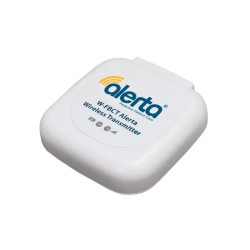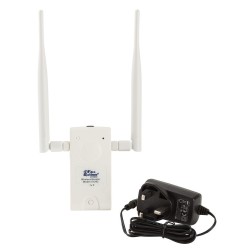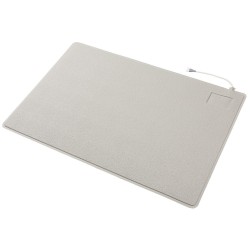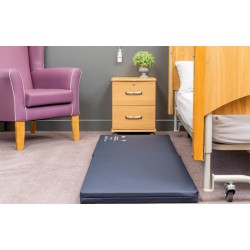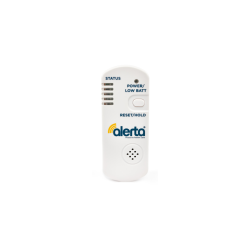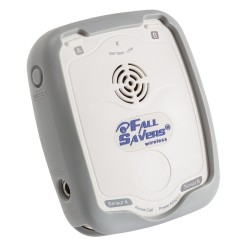
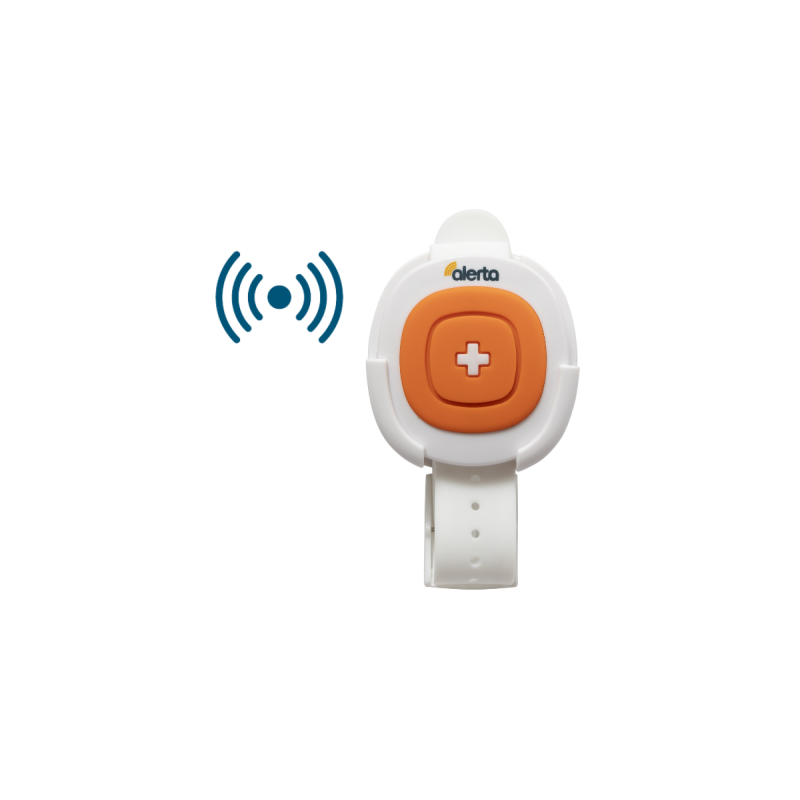


The Wireless Alerta Nurse Call Button enables patients to call for care staff assistance at any time by pressing the large tactile button, with the alert transmitted wirelessly to the Alerta Wall Point Receiver at up to 95 metres range for nurse call system integration or local alerting. Supplied with a silicone wrist strap, safety neck lanyard and wall-mountable holder, the button can be worn or mounted in whichever configuration best matches the individual user's mobility, cognition and clinical risk profile. The button can remain in the wall holder while attached to the wrist strap. Caregiver assessment of neck lanyard suitability is mandatory before use.
| Specification | Detail |
|---|---|
| Product Code | NCL-W-NCB |
| Wearing Options | Wrist strap, neck lanyard or wall-mount holder |
| Supplied With | Silicone wrist strap, safety neck lanyard, wall holder |
| Function | User-initiated call for assistance |
| Wireless Range | Up to 95 metres line-of-sight |
| Safety Note | Neck lanyard: individual suitability assessment required |
| Receiver Required | Alerta Wall Point Receiver (sold separately) |
CQC Regulation 10 (Dignity and Respect) requires that care providers preserve people's ability to communicate and maintain their own safety. A call button that is out of reach when needed fails this requirement. The Wireless Alerta Nurse Call Button addresses the documented clinical problem of call buttons inaccessible to patients who have fallen, become confused about the button's location or are unable to reach a wall-mounted button from their current position. The three wearing and mounting configurations ensure the button remains accessible across the patient's full range of in-room positions. Neck lanyard safety: the responsible caregiver must assess each individual user for the risk of the lanyard becoming caught on bed rails or furniture, or causing restriction if the user falls, and document this assessment in the patient's care plan with regular review.
What should be included in the neck lanyard suitability assessment for a care home resident?
The neck lanyard suitability assessment should evaluate: the resident's cognitive ability to understand that the lanyard must not be pulled or twisted; the risk of the lanyard becoming entangled with bed rails, bed head fixtures or furniture during normal in-room movement; the resident's fall risk and the consequences of the lanyard restricting neck movement during a fall; the resident's history of agitation or self-directed behaviour that could lead to lanyard misuse; and the availability of the wrist or wall mount configuration as a safer alternative. The assessment should be completed by a qualified nurse or care manager, documented in the resident's care plan, shared with all care staff, and reviewed when the resident's condition changes.
Can the Wireless Nurse Call Button be used to call staff from a garden or outdoor area?
The Wireless Nurse Call Button has a 95-metre wireless range that covers the majority of care home environments, including gardens and outdoor areas in most residential care settings. The 95-metre range is measured as line-of-sight and actual range through walls and external structures may be reduced. Test the button's effective range in specific outdoor areas used by residents during initial installation to confirm coverage. For care homes with large grounds where the signal may not consistently reach indoor receivers from the furthest garden areas, additional Wall Point Receivers covering the extended outdoor range may be required to ensure full-site coverage.
Part of our comprehensive Patient Sensor Alarms range. Wireless patient alarms provide flexible, cable-free fall prevention and resident safety monitoring across care homes and home care settings.