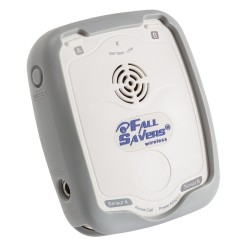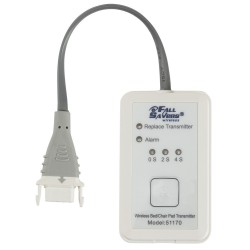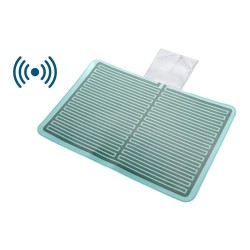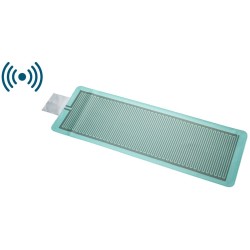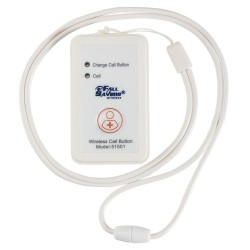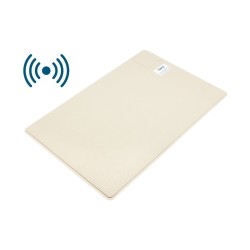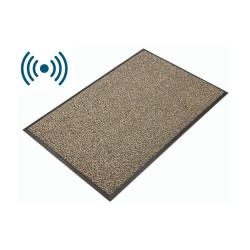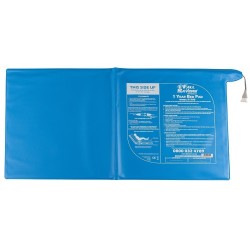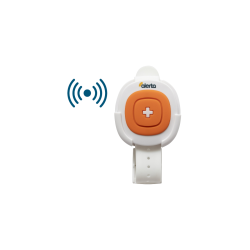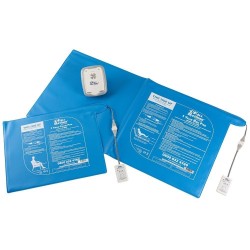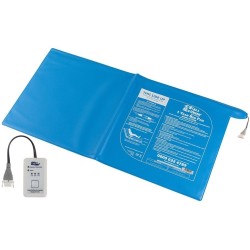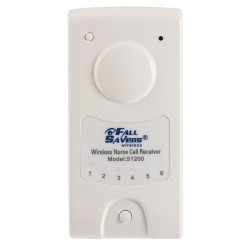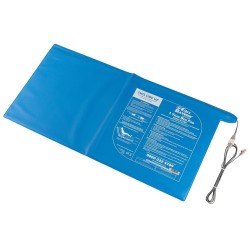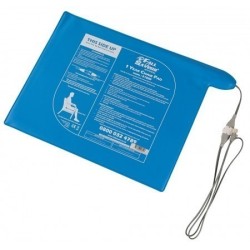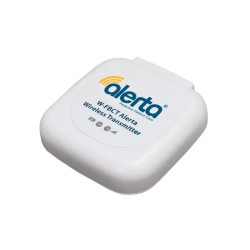
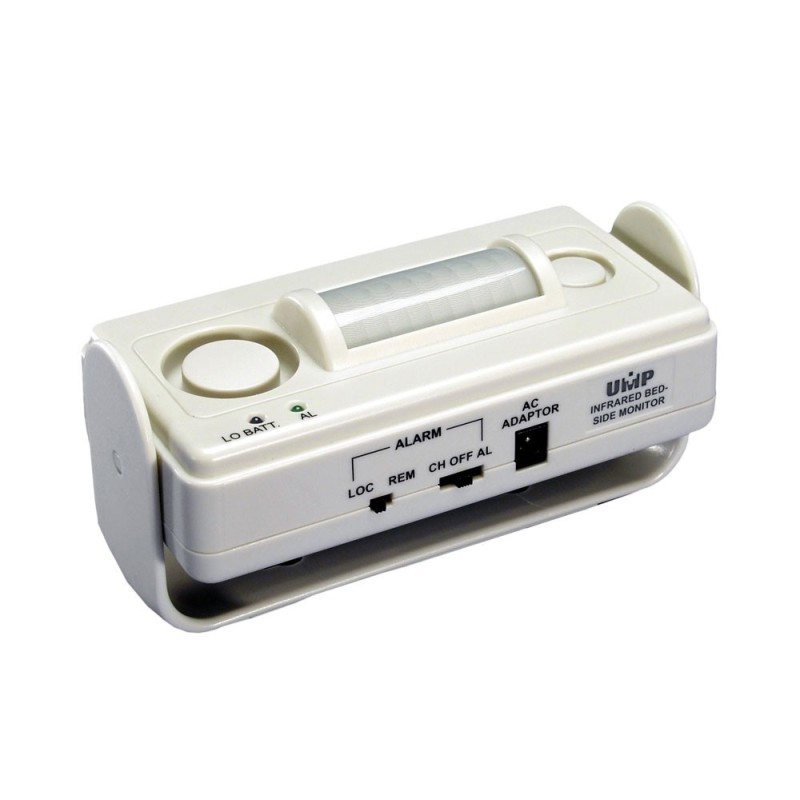

The Fall Savers Infrared Monitor uses infrared beam technology to detect patient movement without contact sensors, triggering an immediate alert when the infrared beam is broken. It is designed for use when floor mats or seat pads are clinically unsuitable - for patients who remove or step around contact sensors, for monitoring locations where floor-level equipment creates a trip hazard, or for patients where contact monitoring is not clinically appropriate. Adjustable sensitivity allows the detection zone to be configured for the specific patient environment, and the compact form factor allows wall mounting or surface placement with no equipment at floor level.
| Specification | Detail |
|---|---|
| Product Code | NCL-91170 |
| Sensor Type | Infrared beam - contact-free motion detection |
| Alert Trigger | Infrared beam break - patient movement detected |
| Sensitivity | Adjustable - configurable for specific environment |
| Placement | Wall mount or surface - bedside, doorway, corridor |
| Floor Equipment | None - contact-free monitoring only |
| Application | Alternative or supplementary to contact sensor monitoring |
NICE Guideline NG147 (Falls in Older People) acknowledges that no single monitoring technology is appropriate for all patients and environments, and that monitoring specifications should be matched to individual patient behaviour and clinical need. The Fall Savers Infrared Monitor addresses the specific monitoring gap for patients who cannot be effectively monitored by contact sensors - patients who detect and circumvent floor mats, who remove seated sensors, or who have gait patterns that make floor-level equipment a fall hazard rather than a fall prevention tool. CQC Regulation 10 (Dignity and Respect) is supported by the contact-free monitoring approach: zone-crossing detection is a more proportionate monitoring method under the Mental Capacity Act 2005 least-restrictive principle than continuous contact monitoring, and the absence of floor-level equipment maintains the normal appearance of the room environment. CQC Regulation 12 (Safe Care and Treatment) requires that monitoring equipment is appropriate for the individual: where contact sensors have been tried and found unsuitable for a specific patient, the infrared monitor provides a documented clinical alternative that maintains fall prevention monitoring continuity.
How is the Fall Savers Infrared Monitor positioned to monitor bed exit without triggering on all in-room movement?
The infrared monitor should be positioned to cover the specific movement path that represents the patient's risk zone - typically between the bed edge and the room exit, or across a doorway threshold. The adjustable sensitivity setting allows the detection coverage to be calibrated so normal in-bed movement and carer activity in unmonitored areas of the room does not consistently trigger the alert, while patient-scale movement across the target zone does. Position the monitor at a height and angle that directs the infrared beam across the expected movement path at the level where the patient's body mass would interrupt the beam during an unsupervised exit. Confirm the positioning by testing with a staff member walking the expected patient exit path during initial setup.
Can the Fall Savers Infrared Monitor be used in a shared bay or room where multiple patients are present?
The infrared monitor detects any movement that breaks its beam within the detection zone - it does not differentiate between individuals. In a shared room or bay, the monitor will trigger on movement by any person crossing the detection zone, including carers, visitors and other patients. For shared rooms where the monitored patient's movement must be distinguished from others, position the infrared beam to cover a zone that other room occupants would not normally cross during routine activity - for example, directly across the monitored patient's exit path from their specific bed or chair position rather than across a shared walking area. If the room configuration does not allow selective zone coverage, bed or chair contact sensors allocated to the specific patient's own monitoring equipment may provide more targeted monitoring in a shared bay environment.
Part of our comprehensive Patient Sensor Alarms range. Wireless patient alarms provide flexible, cable-free fall prevention and resident safety monitoring across care homes and home care settings.