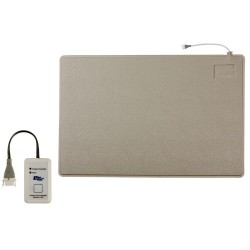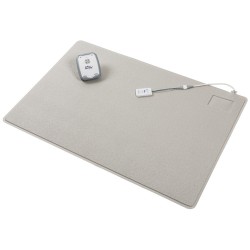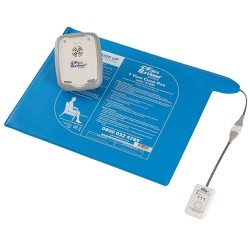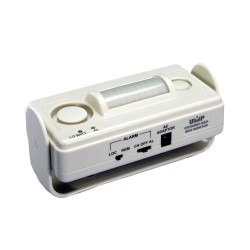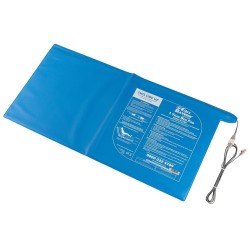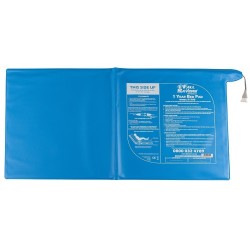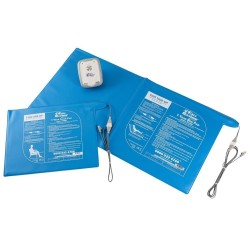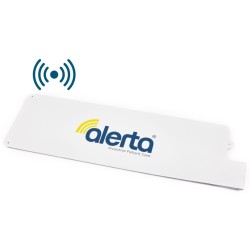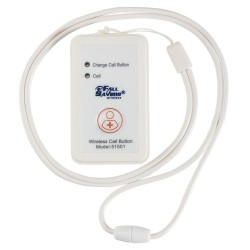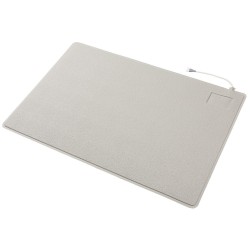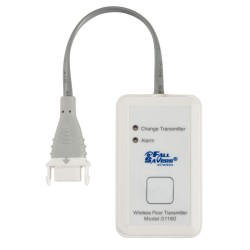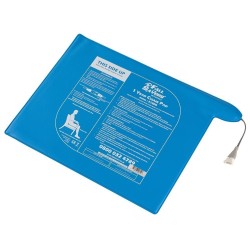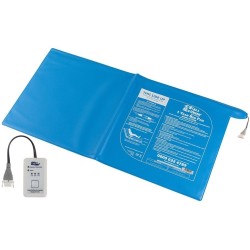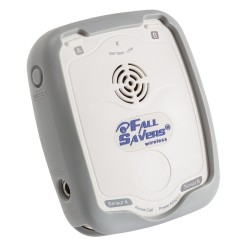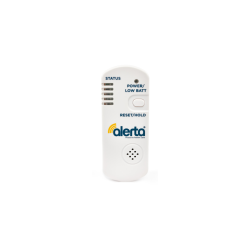
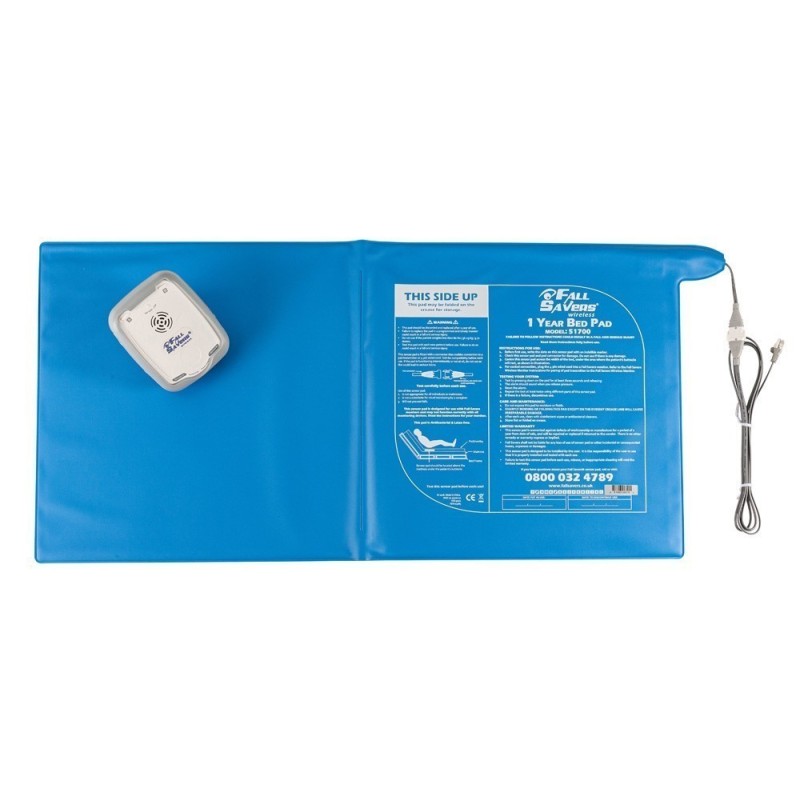


The Fall Savers Wireless Monitor with Wired Bed Pad is a hybrid monitoring system that combines a wired sensor pad with a wireless monitor. The bed sensor pad connects directly to the Fall Savers Wireless Monitor via a physical cable, providing a guaranteed wired signal path from the sensor to the monitor at the patient location. The monitor then transmits alerts wirelessly to the broader alert system - pager, nurse call panel or alert receiver - at the staff response point. This architecture provides wired sensor reliability without wireless transmission uncertainty between sensor and monitor, while retaining wireless alert delivery flexibility for staff notification away from the patient's room.
| Specification | Detail |
|---|---|
| Product Code | NCL-51011 |
| Sensor Connection | Wired - direct cable from bed pad to monitor |
| Alert Output | Wireless - monitor transmits to alert system |
| Sensor Placement | On mattress, beneath sheet |
| Alert Trigger | Pressure release - patient exits bed |
| Application | Care homes, NHS wards, home care |
NICE Guideline NG147 (Falls in Older People) recommends that fall prevention monitoring is reliable and that alert failures are minimised: the wired sensor-to-monitor connection in this system eliminates the wireless transmission variable at the most critical point in the alert chain - between the sensor detecting the bed exit and the monitor receiving the signal. CQC Regulation 12 (Safe Care and Treatment) is served by the hybrid architecture: wired sensor connection ensures the monitoring system functions consistently in environments where wireless signal quality between the sensor location and the monitor may be variable - for example, in rooms with construction materials that attenuate wireless signals. CQC Regulation 17 (Good Governance) is supported by the visual verifiability of the wired sensor connection: care staff can confirm the sensor pad is connected to the monitor by checking the physical cable, providing an unambiguous operational status check that wireless connections cannot provide by visual inspection alone.
How is the wired bed pad connected to the Wireless Monitor, and does the cable create a trip hazard?
The bed sensor pad connects to the Fall Savers Wireless Monitor via a cable supplied with the unit. The cable should be routed along the bed frame or wall to minimise cable exposure on open floor areas, and secured with cable clips or trunking where a permanent installation is planned. The monitor is typically positioned on the bedside table or wall-mounted near the bed, keeping the cable run short and manageable. As with all wired bedside monitoring connections, cable management should be assessed as part of the room setup to confirm the cable does not cross walking areas. The cable length should be checked against the specific room layout before installation to confirm it reaches the monitor position without requiring a cable run across an open floor area.
When should this hybrid wired-to-wireless system be chosen over the fully wireless Wireless Bed Package?
The hybrid wired bed pad system is preferred when: the care environment has variable wireless signal quality between the sensor location and the monitor position that has caused or could cause missed alerts with a fully wireless sensor; the clinical governance requirement is for a physically verifiable sensor-to-monitor connection; or the specific room layout makes a short wired cable run between the bed pad and the monitor more practical than a wireless sensor that must maintain signal integrity across a greater distance. The fully wireless Wireless Bed Package is preferred when cable management at the bedside is not feasible, when the bed is repositioned frequently, or when the care setting does not have concerns about wireless signal reliability in the specific room.
Part of our comprehensive Patient Sensor Alarms range. Wireless patient alarms provide flexible, cable-free fall prevention and resident safety monitoring across care homes and home care settings.