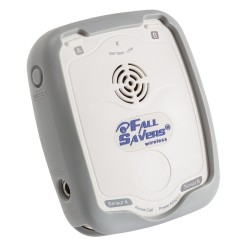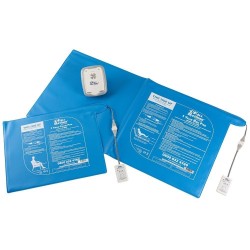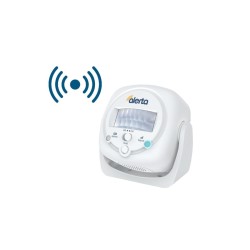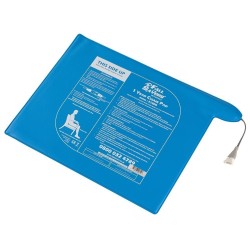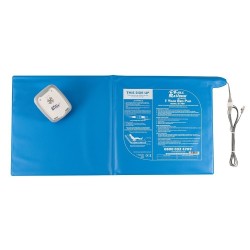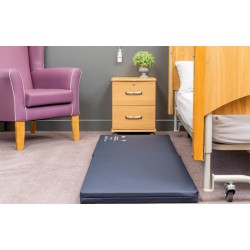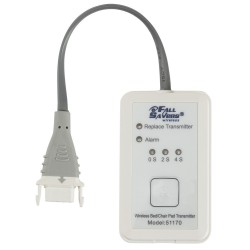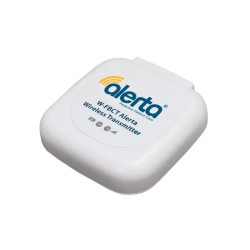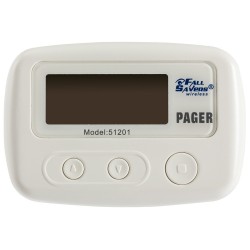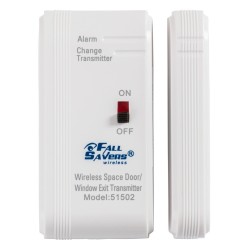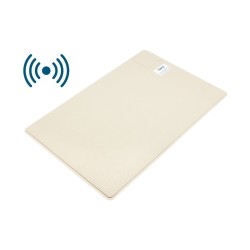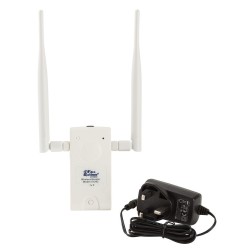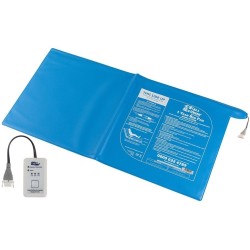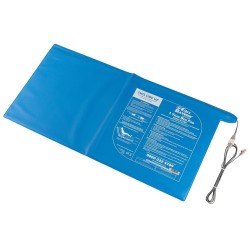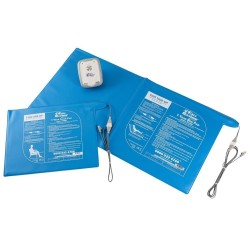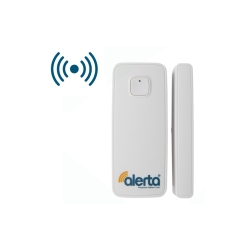
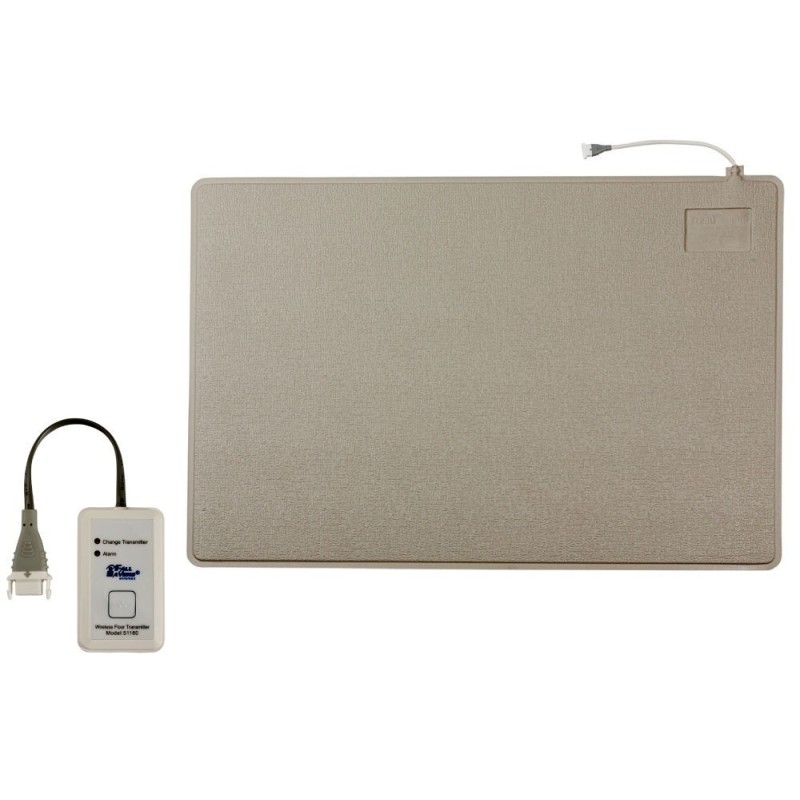

The TreadNought Hybrid Floor Sensor with Transmitter is a heavy-duty wireless floor sensor pad with an integrated transmitter, designed for care environments where standard sensor mats are not durable enough to withstand sustained daily use. When stepped on, the sensor detects the pressure and the integrated transmitter wirelessly alerts the paired Fall Savers receiver, enabling immediate staff response. The slip-resistant surface reduces the floor-level hazard that smooth sensor pads can introduce, and the reinforced construction withstands repeated foot pressure, wheelchair traffic and mobility equipment loading. A compatible Fall Savers receiver or monitor is required separately.
| Specification | Detail |
|---|---|
| Product Code | NCL-51601 |
| Type | Heavy-duty floor sensor with integrated wireless transmitter |
| Construction | Reinforced hybrid - high-traffic rated |
| Placement | Bedside, doorway, corridor or communal area |
| Alert Trigger | Foot pressure on sensor surface |
| Transmitter | Integrated - no separate transmitter required |
| Surface | Slip-resistant |
| Receiver Required | Compatible Fall Savers receiver or monitor (sold separately) |
NICE Guideline NG147 (Falls in Older People) supports floor sensor monitoring as an early-alert fall prevention measure in high-risk areas including bed exits, doorways and bathroom approaches. The TreadNought Hybrid Floor Sensor is specifically appropriate for these locations in care environments where high foot traffic would degrade standard sensor mats, causing monitoring gaps as the sensor pad deteriorates through repeated compression - the reinforced hybrid construction maintains consistent detection sensitivity across a longer service life under high-traffic conditions. CQC Regulation 12 (Safe Care and Treatment) requires that monitoring equipment is maintained in effective operational order: equipment that degrades rapidly under normal use creates an undetected monitoring gap, while the TreadNought's extended durability reduces the maintenance frequency required to keep detection performance at the clinically required standard. CQC Regulation 17 (Good Governance) is supported by the longer replacement cycle: equipment maintenance documentation for the TreadNought will record fewer replacement events than standard sensor pads in comparable high-traffic locations.
What makes the TreadNought "hybrid" - what does the hybrid construction consist of?
The TreadNought Hybrid Floor Sensor's hybrid construction refers to the combination of a reinforced outer shell or casing with the pressure-sensitive sensor elements inside, creating a sensor that has both the detection sensitivity required for fall prevention monitoring and the structural durability required for high-traffic care environments. Standard sensor mats typically use thinner, more flexible materials that prioritise sensitivity and low profile but sacrifice durability under heavy repeated compression. The TreadNought balances both: the reinforced outer construction distributes and absorbs the repeated mechanical stress of foot traffic, wheelchair and mobility aid pressure, while the internal sensor elements maintain consistent pressure detection. The result is a sensor pad that functions correctly for longer in high-traffic locations where standard pads would develop detection failures or structural damage.
Is the TreadNought suitable for use in wet environments such as bathroom doorways?
The TreadNought Hybrid Floor Sensor is designed for care environment use and its durability characteristics make it more suitable than standard sensor pads for locations with higher environmental demands. For bathroom doorway monitoring specifically, confirm with the supplier whether the specific unit is rated for use in wet or high-moisture environments before installation, as the transmitter electronics inside the unit require protection from water ingress. Standard care home bathroom doorway positions are typically not continuously wet but may experience intermittent moisture from spillage or condensation. If the bathroom doorway position will expose the sensor to direct water contact - for example, from shower use in a wet room - confirm the unit's ingress protection rating and consider whether a door or window transmitter monitoring the bathroom door opening is a more appropriate monitoring method for that specific location.
Part of our comprehensive Patient Sensor Alarms range. Wireless patient alarms provide flexible, cable-free fall prevention and resident safety monitoring across care homes and home care settings.