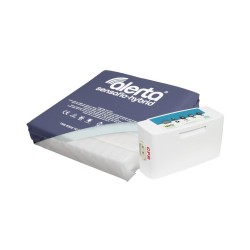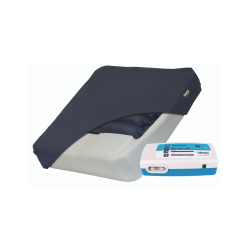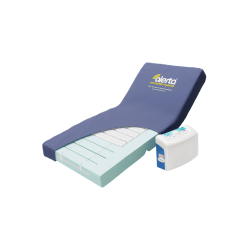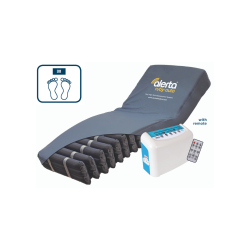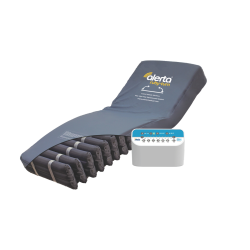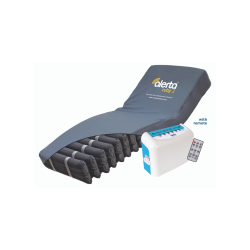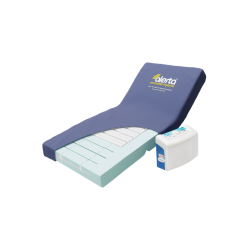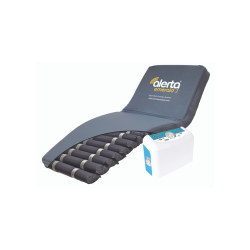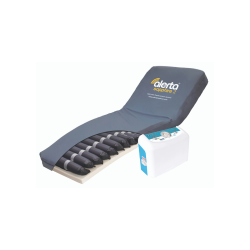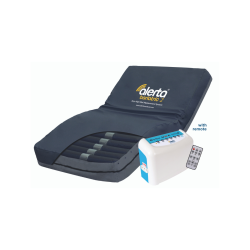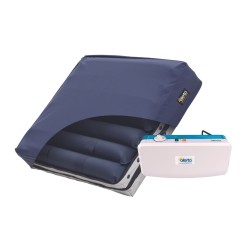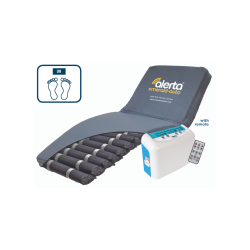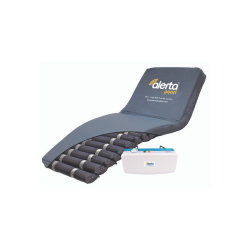
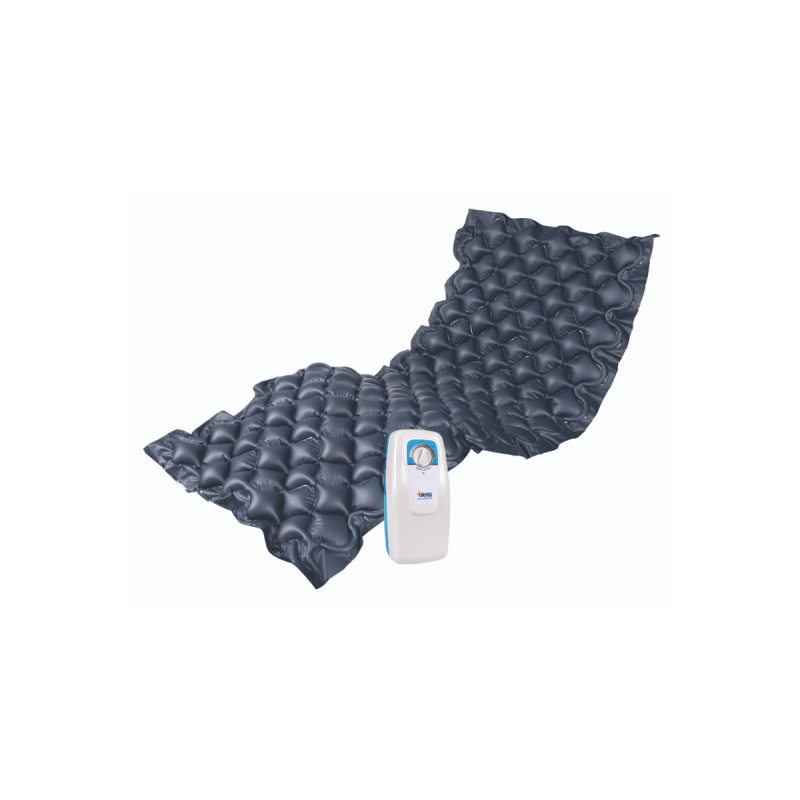


The Alerta Bubble 2 Overlay Pad is a compact alternating pressure mattress overlay system for patients at low risk of pressure ulcer development, as classified by the Waterlow Risk Assessment Scale. The alternating cell mechanism cycles pressure between adjacent cell groups, periodically offloading tissue at bony prominences and allowing capillary reperfusion at the skin-to-surface interface - the therapeutic mechanism that underpins NICE Guideline CG179's recommendation for alternating pressure in clinical pressure care protocols. The overlay format places the system on top of the existing mattress without replacing it, providing alternating pressure benefits within the patient's usual sleep environment. CPR tubes are easily removable for emergency deflation, tuck-in flaps secure the overlay to the mattress during use, and antimicrobial, water-resistant materials meet clinical infection control requirements.
| Specification | Detail |
|---|---|
| Product Code | NCL-ALT-9001 |
| Type | Alternating pressure overlay pad |
| Risk Level | Low risk (Waterlow 10-14) |
| Pressure Mechanism | Alternating cell cycling |
| CPR Access | Easily removable CPR tubes for rapid deflation |
| Securing | Tuck-in extension flaps |
| Cover Material | Water-resistant, antimicrobial |
| Cleaning | Machine washable |
| Application | Hospitals, care homes, nursing environments |
NICE Guideline CG179 (Pressure Ulcers: Prevention and Management) recommends that patients identified as being at risk of pressure ulcer development receive a pressure-redistributing surface as part of their pressure care plan, with alternating pressure surfaces indicated for patients where static surface pressure redistribution is assessed as insufficient for the individual's risk level. The Bubble 2 Overlay Pad provides alternating pressure for low-risk patients where the primary goal is prevention rather than treatment. CQC Regulation 12 (Safe Care and Treatment) requires that care providers implement evidence-based pressure care protocols: failure to provide appropriate pressure-relieving equipment for at-risk patients is a documented cause of avoidable pressure damage that CQC inspects as a care quality indicator. The EPUAP/NPIAP/PPPIA international pressure ulcer guidelines align with NICE CG179 in recommending alternating pressure surfaces as an active intervention for at-risk patients, with the overlay format appropriate for low-risk patients who do not require the full surface replacement of a dedicated alternating pressure mattress system.
What is the difference between an overlay pad and a full alternating pressure mattress replacement system?
An overlay pad, like the Bubble 2, is placed on top of the existing hospital or care home mattress and connects to a pump unit that cycles the alternating pressure between cell groups. The existing mattress remains in place beneath the overlay. A full alternating pressure mattress replacement system replaces the existing mattress entirely, with the alternating pressure surface becoming the patient's primary sleep surface. Overlay systems are appropriate for low to moderate risk patients whose underlying mattress provides acceptable baseline support, and have the advantage of being quickly deployable and removable without changing the bed setup. Full replacement systems are typically indicated for higher-risk patients where the existing mattress does not provide sufficient baseline support or where the overlay adds excessive overall height that affects patient transfer safety.
How should the Bubble 2 Overlay Pad be cleaned between patients?
The Bubble 2's antimicrobial, water-resistant materials allow surface disinfection between uses using a compatible clinical disinfectant wipe or spray in accordance with the care home or ward's infection control protocol. The machine washable construction also allows full laundering at the appropriate temperature for the specific cover material - confirm the maximum wash temperature from the product label before washing. Between patients, the overlay should be cleaned and disinfected in accordance with the facility's patient contact equipment decontamination policy. Any component showing visible damage, loss of water resistance or compromised integrity should be withdrawn from use and replaced, as damaged materials may not achieve the required disinfection standard.