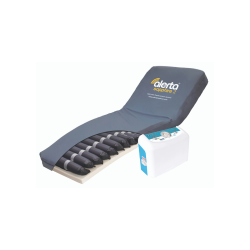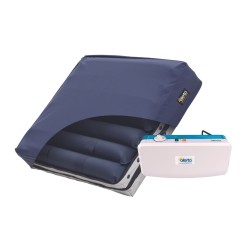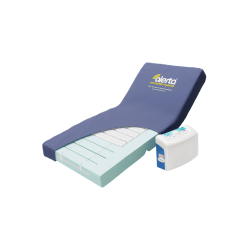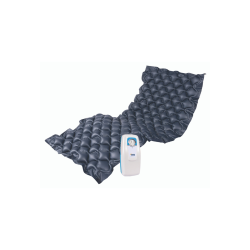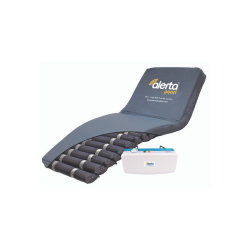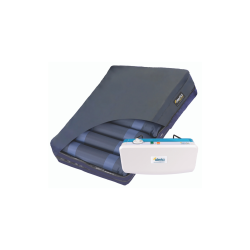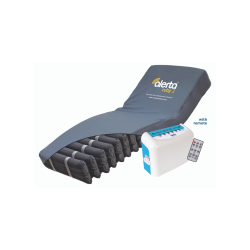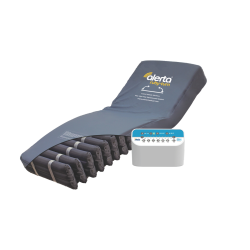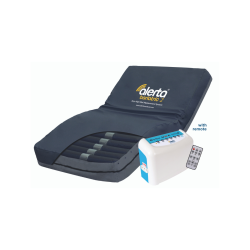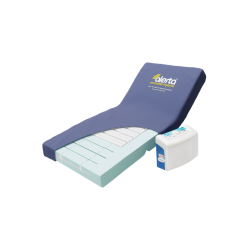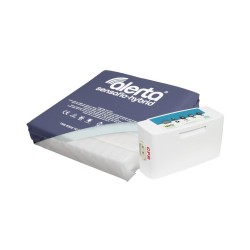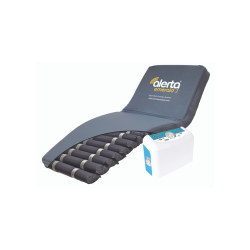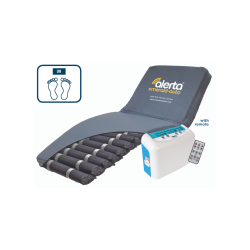
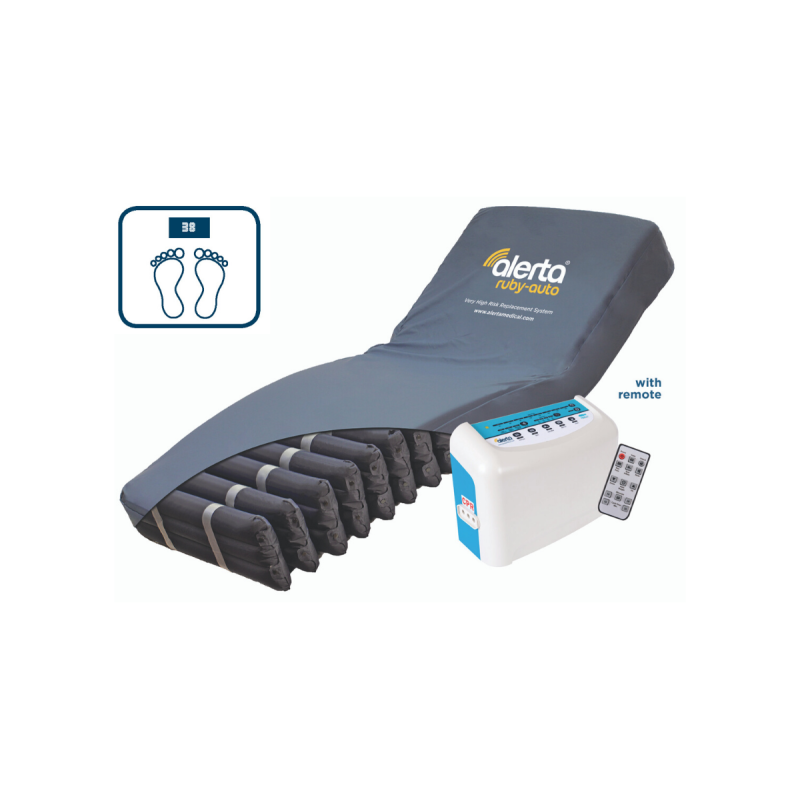


The Alerta Ruby Auto is a fully automatic alternating pressure replacement system that detects patient weight on placement and auto-calibrates all pressure settings without manual intervention. The 5-inch cell-on-cell design with 8-inch in-use height delivers maximum therapeutic immersion for very high-risk patients. SensaCare Truflo Technology continuously monitors weight distribution and adjusts inflation levels in real time. The auto-sensing function removes the need for staff to manually configure pump settings, reducing setup time and eliminating the risk of incorrect pressure delivery during shift changes or emergency admissions.
| Specification | Detail |
|---|---|
| Product Code | NCL-ALT-9009 |
| Type | Fully automatic replacement system |
| Risk Level | Very high risk (Waterlow 20+) |
| Cell Design | Cell-on-cell (5-inch dual stacked) |
| In-Use Height | 8 inches |
| Pressure Technology | SensaCare Truflo Technology (auto-sensing) |
| Setup | Fully automatic - no manual calibration |
| CPR Access | Quick-release deflation |
| Cover Material | Water-resistant, antimicrobial, machine washable |
| Application | Hospitals, care homes, NHS environments |
Automatic weight-sensing replacement systems reduce human configuration error in pressure care delivery, supporting NICE Guideline CG179 recommendations for appropriate pressure redistribution. CQC Regulation 12 requires that medical equipment is correctly configured for each patient. The auto-calibration function supports this requirement by removing manual setup variables.
What is the advantage of automatic weight-sensing over manual pump settings?
Manual pump systems require nursing staff to set the correct pressure dial based on patient weight, which introduces the risk of incorrect settings during shift handovers, agency staff cover, or emergency admissions. The auto-sensing function detects patient weight on placement and calibrates pressure delivery without human input, maintaining consistent care quality regardless of staffing levels or operator experience.
How does the Ruby Auto compare to the standard Ruby 2?
Both systems use cell-on-cell design with 8-inch in-use height for very high-risk patients. The standard Ruby 2 requires initial manual pressure setting. The Ruby Auto detects weight automatically and self-calibrates. The Auto variant is preferred in high-turnover environments where multiple patients use the same system, or in settings with variable staffing where consistent manual configuration cannot be guaranteed.