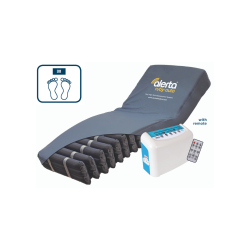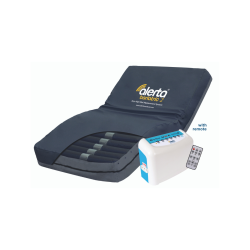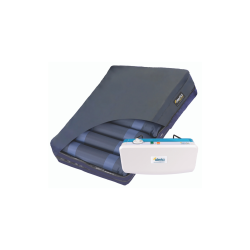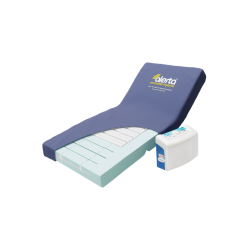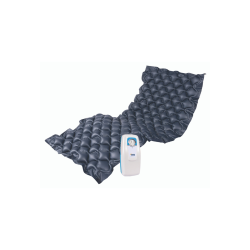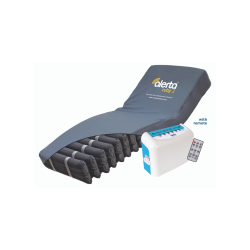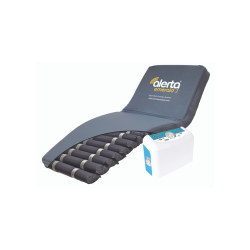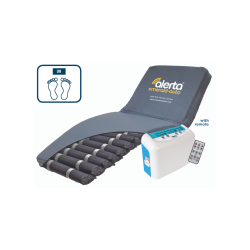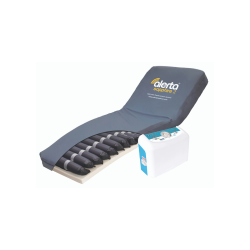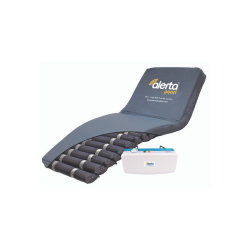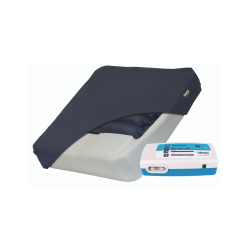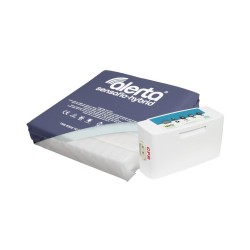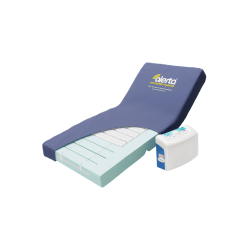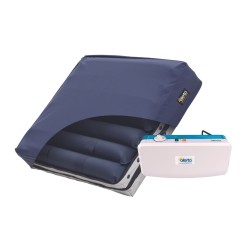
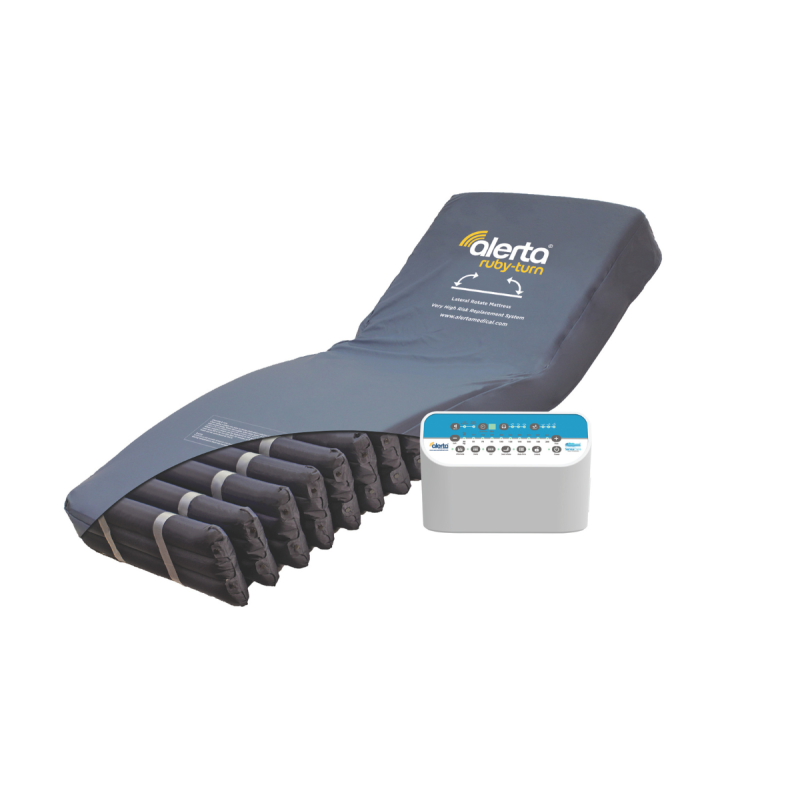


The Alerta Ruby Turn is a full replacement system combining alternating pressure with powered lateral turning for patients at very high risk of pressure damage. The system automatically repositions the patient at programmable intervals by inflating cells on alternating sides of the mattress, gently rolling the patient to relieve sustained pressure on bony prominences. This reduces the manual handling burden on care staff and supports consistent repositioning throughout the night, even when staffing levels are reduced. The 5-inch cell-on-cell design with 8-inch in-use height delivers maximum therapeutic immersion alongside the turning function.
| Specification | Detail |
|---|---|
| Product Code | NCL-ALT-9450 |
| Type | Lateral turning replacement system |
| Risk Level | Very high risk (Waterlow 20+) |
| Cell Design | Cell-on-cell (5-inch dual stacked) |
| In-Use Height | 8 inches |
| Turning Function | Powered lateral turning at programmable intervals |
| Pressure Technology | SensaCare Truflo Technology |
| CPR Access | Quick-release deflation |
| Cover Material | Water-resistant, antimicrobial, machine washable |
| Application | Hospitals, care homes, NHS environments |
NICE Guideline CG179 recommends regular repositioning for patients at risk of pressure damage. Powered lateral turning supports this requirement by automating the repositioning cycle, reducing reliance on manual handling by care staff. CQC Regulation 12 requires that pressure care interventions are appropriate to individual risk. The Manual Handling Operations Regulations 1992 support the use of powered repositioning systems to reduce musculoskeletal injury risk to care staff performing manual patient turns.
How does the lateral turning function work?
The system inflates cells on alternating sides of the mattress at programmable intervals, gently rolling the patient by approximately 30 degrees to each side. This periodic repositioning relieves sustained pressure on the sacrum, heels, and other bony prominences without requiring manual patient turning by care staff. The turning interval and angle can be adjusted to suit individual clinical requirements.
Does the lateral turning replace manual repositioning entirely?
The lateral turning function reduces the frequency of manual repositioning required but does not eliminate it entirely. Clinical staff should continue to conduct visual skin assessments at scheduled intervals and reposition the patient manually when clinically indicated. The turning function is most effective as part of a documented pressure care plan that combines automated and manual repositioning based on individual risk assessment.