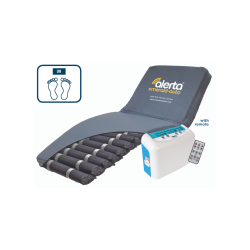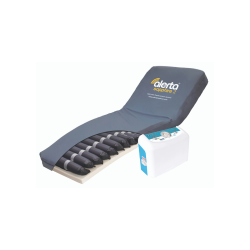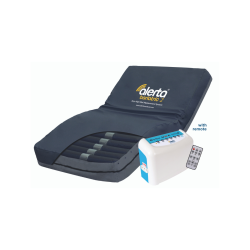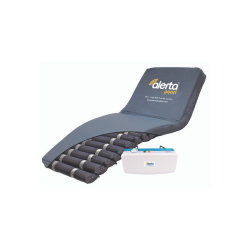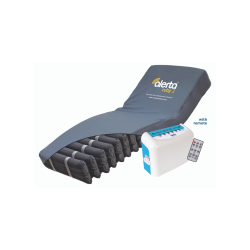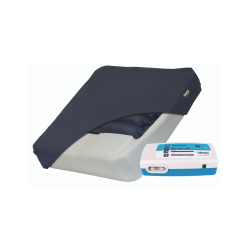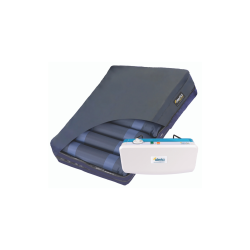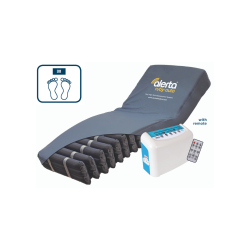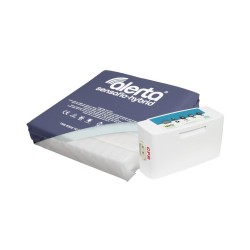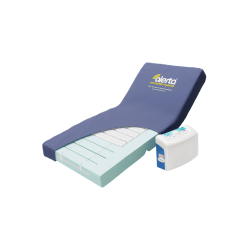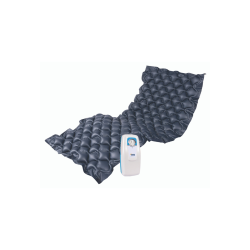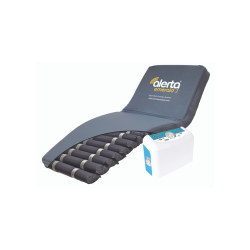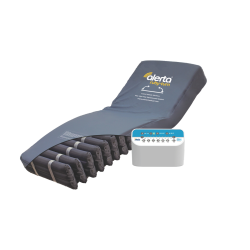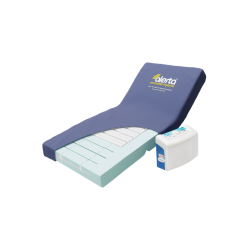
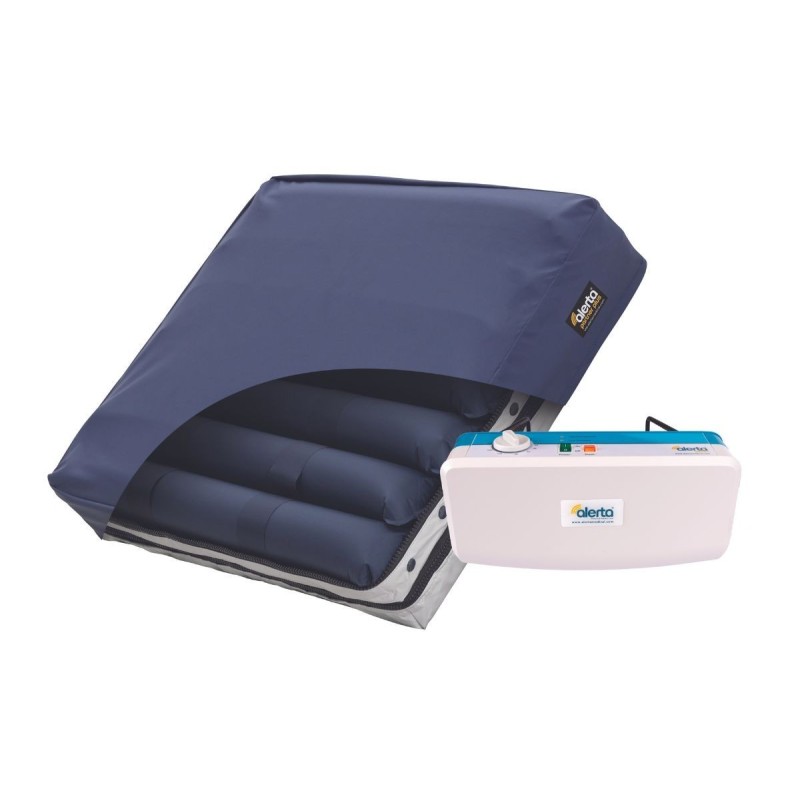


The Alerta Partner Plus Cushion System is an advanced alternating pressure cushion for seated patients at very high risk of pressure ulcer development - the highest Waterlow risk classification, where static pressure redistribution surfaces are insufficient and alternating pressure is the clinically indicated intervention. The Partner Plus provides the same alternating cell mechanism as the Partner but with a 250kg safe working load rather than 150kg, accommodating patients for whom both very high Waterlow risk and higher body weight are compounding clinical factors. Independently removable Nylon TPU-coated cells support clinical pressure mapping evaluation and targeted maintenance, and the 360-degree zipper with multi-stretch vapour-permeable antimicrobial PU cover addresses microclimate, shear and friction in line with EPUAP/NPIAP pressure injury prevention guidelines.
| Specification | Detail |
|---|---|
| Product Code | NCL-ALT-214/02B |
| Type | Alternating pressure cushion system |
| Risk Level | Very high risk (Waterlow 20+ with significant factors) |
| Cells | Nylon TPU-coated, independently removable |
| Base | Sealed 2-inch foam |
| Max SWL | 250kg |
| Cover | 360-degree zipper, multi-stretch vapour-permeable PU |
| Cover Cleaning | Antimicrobial, machine washable |
| Transport Mode | Yes - pump pause for safe patient transfer |
| Pressure Mapping | Clinical pressure mapping evaluation included |
NICE Guideline CG179 (Pressure Ulcers: Prevention and Management) places very high-risk patients at the most intensive level of pressure care requirement, with alternating pressure as the indicated surface intervention where static surfaces have been assessed as insufficient. The Partner Plus is specified for this clinical population. The EPUAP/NPIAP/PPPIA international guidelines identify the interface pressure at the ischial tuberosities in seated patients as the primary driver of seated pressure injury, and specify that pressure-relieving seating equipment for very high-risk patients must address sustained interface pressure, shear and microclimate simultaneously - the Partner Plus's alternating mechanism, multi-stretch cover and vapour-permeable construction address all three. CQC Regulation 12 (Safe Care and Treatment) requires that the pressure care equipment specification matches the patient's assessed risk: providing a high-risk specification system for a very high-risk patient is a documented care quality shortfall that CQC inspection of pressure care governance may identify as a failure to meet the standard. The Partner Plus's clinical pressure mapping evaluation provides documented evidence that the specific system achieves the required pressure redistribution for the individual patient.
What is the clinical difference between the Partner Cushion System and the Partner Plus, and when should each be specified?
The primary differences between the Partner and Partner Plus are the safe working load and the clinical risk level they are specified for. The Partner is rated to 150kg and specified for patients at high risk. The Partner Plus is rated to 250kg and specified for patients at very high risk. Where a patient is at high risk and within the 150kg SWL, the Partner is the appropriate specification. Where a patient is at very high risk - typically identified by a Waterlow score with significant additional risk factors, existing Stage 1 or 2 pressure damage, or a history of repeated pressure injury - the Partner Plus provides the higher-specification intervention matched to the clinical requirement. For patients at very high risk who exceed 150kg, the Partner Plus's 250kg SWL makes it the only appropriate specification in this product range for that clinical and weight combination.
How is clinical pressure mapping evaluation used with the Partner Plus, and what does it demonstrate?
Clinical pressure mapping uses a sensor mat placed between the patient and the cushion surface to measure the interface pressure at all contact points simultaneously, producing a visual pressure map of the patient-cushion interface during the alternating cycle. For the Partner Plus, pressure mapping confirms that the alternating cycle is achieving sufficient offloading at the patient's specific bony prominence locations - ischial tuberosities, sacrum, coccyx - during the low-pressure phase of the cycle, and that the high-pressure phase does not exceed the ischaemia threshold at adjacent tissue locations. The resulting pressure map data supports the individual's pressure care plan documentation, provides evidence that the specified equipment is clinically appropriate for the specific patient, and contributes to the CQC Regulation 17 governance record for very high-risk pressure care management in the care home or NHS ward setting.