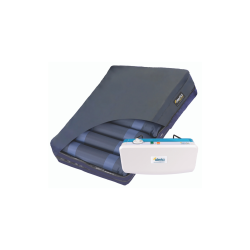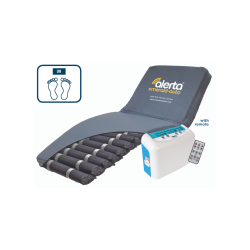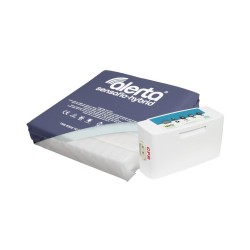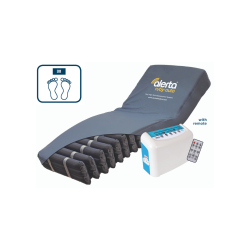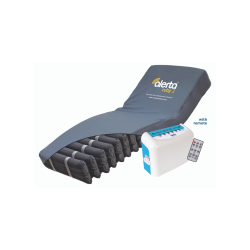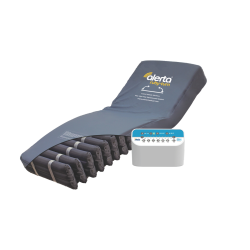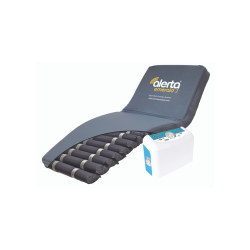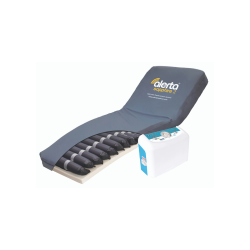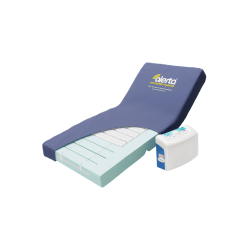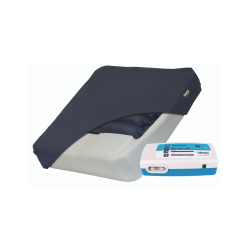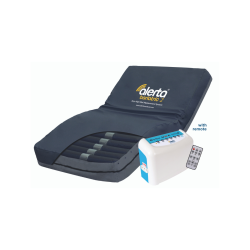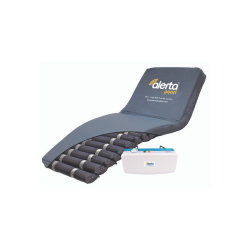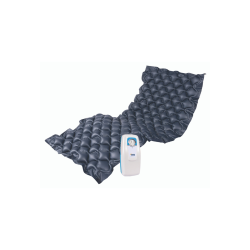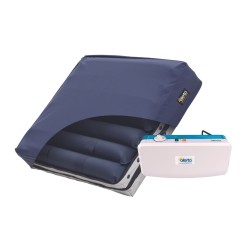
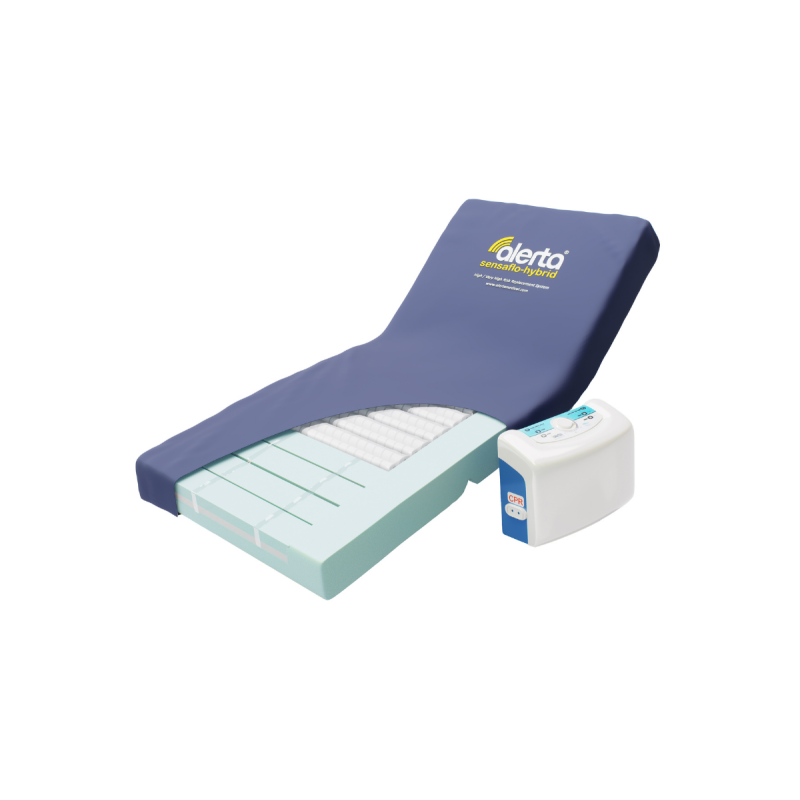


The Alerta Sensaflo Hybrid is a 4-in-1 hybrid replacement system for patients at very high risk of pressure ulcer development. The foam-filled air cell design combines static foam immersion with active alternating pressure cycling within each cell, delivering dual-action redistribution. Four operating modes allow clinical staff to adjust the mattress function as the patient's risk level changes: full alternating, static support, step-down therapy for wound recovery, and fire evacuation for emergency egress. SensaCare Truflo Technology continuously auto-regulates pressure levels. With a 6-inch in-use height, the system replaces the existing mattress entirely.
| Specification | Detail |
|---|---|
| Product Code | NCL-ALT-HYB2/05 |
| Type | 4-in-1 hybrid replacement system |
| Risk Level | Very high risk (Waterlow 20+) |
| Cell Design | Foam-filled air cells |
| In-Use Height | 6 inches |
| Operating Modes | Alternating, static, step-down, evacuation |
| Fire Evacuation | Built-in evacuation system |
| Pressure Technology | SensaCare Truflo Technology |
| CPR Access | Quick-release deflation |
| Cover Material | Water-resistant, antimicrobial, machine washable |
The 4-in-1 hybrid design supports NICE Guideline CG179 recommendations across the full pressure care pathway, from prevention through active treatment to step-down recovery. The built-in fire evacuation function supports compliance with the Regulatory Reform (Fire Safety) Order 2005 for care settings accommodating patients with reduced mobility. CQC Regulation 12 requires both appropriate pressure care provision and adequate emergency evacuation procedures.
What are the four operating modes?
Alternating mode cycles air cells for active pressure redistribution. Static mode provides continuous foam-supported contact. Step-down mode delivers reduced-intensity cycling during wound recovery phases. Evacuation mode enables the mattress to function as a slide-capable platform for emergency patient extraction during fire evacuation. Clinical staff select the mode based on the patient's current risk assessment and care pathway stage.
What are foam-filled air cells?
Each air cell contains a foam insert inside the air chamber. When the cell inflates, the foam and air work together to provide immersion. When the cell deflates during the alternating cycle, the foam insert prevents the patient from bottoming-out onto the mattress base. This dual-action design maintains a baseline of pressure redistribution even during the deflation phase of each cycle.