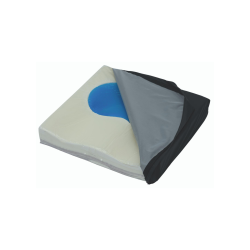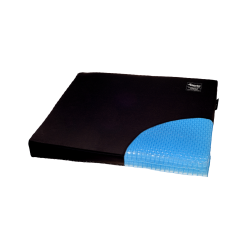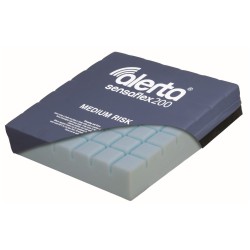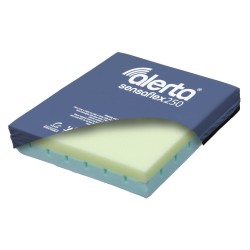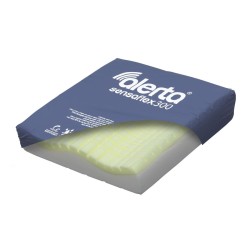
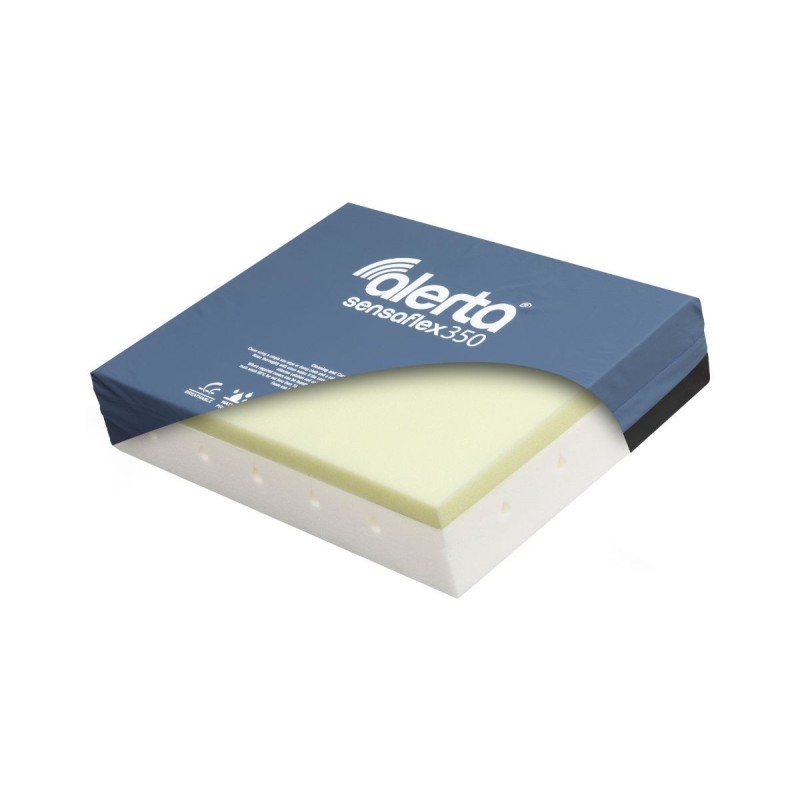

The Alerta Sensaflex 350 Bariatric Foam Cushion is a high-risk memory foam pressure relief seat cushion for bariatric patients, providing body-contouring pressure redistribution that accommodates the greater seated body weight and associated compound pressure injury risk factors of bariatric users. Memory foam conforms to the seated body contours to distribute the higher applied load across the maximum contact surface, reducing peak interface pressure at the ischial tuberosities, sacrum and coccyx. Multi-stretch vapour-permeable antimicrobial PU cover for microclimate management, foam autoclavable at 134°C, BS7177: Crib 5 fire compliant.
| Specification | Detail |
|---|---|
| Product Code | NCL-ALT-350 |
| Type | Bariatric static memory foam seat cushion |
| Risk Level | High risk - bariatric specification |
| Foam Construction | Viscoelastic memory foam - body-contouring |
| Cover | Multi-stretch, vapour-permeable PU |
| Cover Treatment | Antimicrobial, machine washable |
| Foam Sterilisation | Autoclavable at 134°C |
| Fire Compliance | BS7177: Crib 5 |
| Application | Bariatric patients in care homes, hospitals, clinical seating |
NICE Guideline CG179 (Pressure Ulcers: Prevention and Management) identifies obese patients as a specific at-risk population where the pressure care surface specification must account for both elevated interface pressure from greater body weight and the physiological risk factors associated with obesity. The EPUAP/NPIAP/PPPIA guidelines specifically address bariatric patients in their seating guidance, noting that standard cushions may be insufficient for bariatric patients and that the cushion specification must consider both weight capacity and the greater body surface area requiring pressure redistribution. CQC Regulation 12 (Safe Care and Treatment) requires that equipment is appropriate for the individual: specifying a standard-weight cushion for a bariatric patient at high pressure injury risk is a documented care quality shortfall. CQC inspectors assess whether bariatric patients have been provided with equipment appropriate for their body weight and dimensions as part of the safe care assessment for this patient group, and care homes should confirm that both the weight capacity and the clinical specification of the cushion are documented in the bariatric patient's pressure care plan.
What is the safe working load of the Sensaflex 350, and is it suitable for all bariatric patients?
The safe working load of the Sensaflex 350 should be confirmed from the product documentation supplied with the specific unit, as this specification determines whether the cushion is appropriate for the individual patient's body weight. Bariatric patients span a wide weight range, and not all bariatric-specified products have the same safe working load. The cushion's weight capacity must exceed the patient's body weight with an appropriate safety margin. For patients whose weight approaches or exceeds the cushion's safe working load, a higher-capacity bariatric cushion or an alternating pressure cushion system with an appropriate bariatric weight rating should be considered. The prescribing clinician or occupational therapist should confirm the safe working load of the specified equipment against the patient's body weight before deployment.
When should a high-risk bariatric patient be considered for the Sensaflex 350 rather than the bariatric Sensaflex 3000/4 mattress?
The Sensaflex 350 cushion and the Sensaflex 3000/4 bariatric mattress address different aspects of the same patient's pressure care requirement: the cushion addresses seated pressure injury risk, and the mattress addresses bed-based pressure injury risk. They are not alternatives to each other but complementary components of a complete bariatric pressure care plan that covers both the sleeping and seated periods. A bariatric patient at high pressure injury risk who spends time both in bed and seated should be assessed for both a bariatric mattress and a bariatric seat cushion as separate elements of their pressure care plan, specified independently based on the risk assessment findings for each position. Providing one without the other leaves a gap in the pressure care plan that does not reflect the clinical requirement for the full daily care period.
Part of our specialist Pressure Care Systems range. Pressure relief cushions provide targeted support for wheelchair users and care home residents at risk of pressure damage.