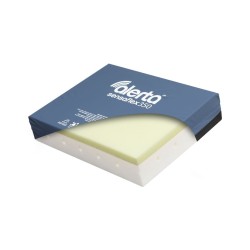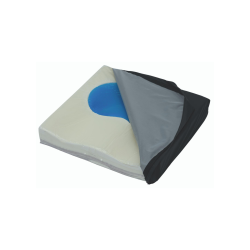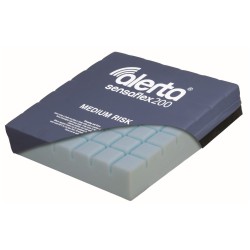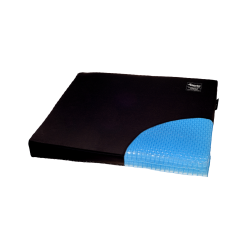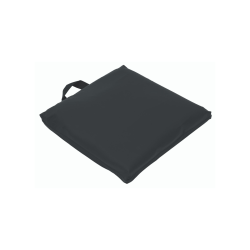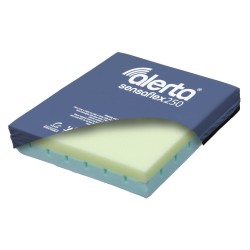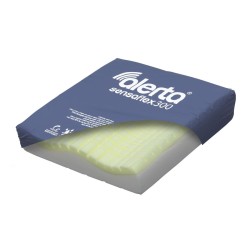
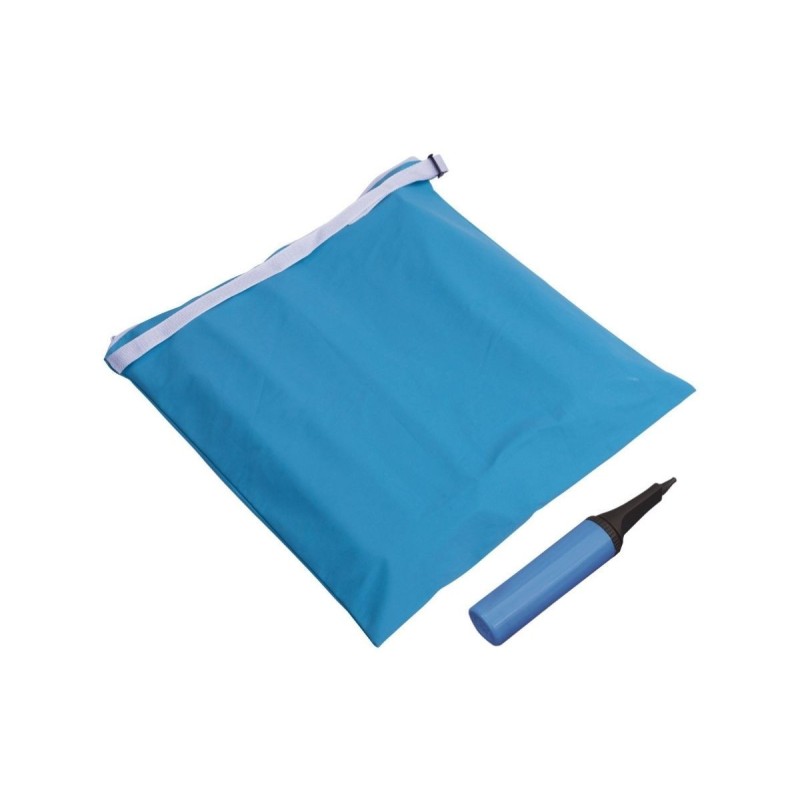

The Alerta Air Cushion with Pump is an adjustable air-filled seat cushion for high-risk patients and those with existing Stage 1 and Stage 2 pressure ulcers, providing patient-specific interface pressure calibration through the air inflation pump. The adjustable pressure enables clinical titration to the individual patient's body weight, skin condition and bony prominence profile, allowing interface pressure to be set for both prevention and active treatment - with lower pressure targets for treatment over existing tissue damage than for prevention in the same patient. Dimensions: 46x46x3cm. Removable machine washable cover at 60°C. Reusable between patients after appropriate cleaning. Clinical supervision advised with significant skin damage.
| Specification | Detail |
|---|---|
| Product Code | NCL-ALT-203 |
| Type | Adjustable air-filled seat cushion with pump |
| Risk Level | High risk - including Stage 1-2 pressure ulcer treatment |
| Dimensions | 46 x 46 x 3 cm (18 x 18 x 1 inch) |
| Pressure | Adjustable via air inflation pump |
| EPUAP Stage | Stage 1 and Stage 2 pressure ulcer treatment |
| Cover | Removable, machine washable at 60°C |
| Cushion Cleaning | Wipe clean with soap and lukewarm water |
| Reuse | Between patients after appropriate cleaning |
| Clinical Note | Supervision advised where significant skin damage is present |
NICE Guideline CG179 (Pressure Ulcers: Prevention and Management) recommends that patients with existing pressure ulcers receive a pressure redistribution surface appropriate to both their risk level and the stage of the existing damage. The EPUAP/NPIAP/PPPIA guidelines specify that surfaces used over existing pressure damage should achieve lower interface pressure targets than preventive surfaces, and that the pressure target should be adjusted based on the stage of the damage and the individual's clinical assessment. The adjustable air cushion enables the clinician to set different pressure targets for prevention (higher inflation for support) and treatment (lower inflation for maximum offloading), a clinical distinction that fixed-medium foam and gel surfaces cannot implement. CQC Regulation 12 (Safe Care and Treatment) requires that patients with existing pressure damage receive active treatment surfaces, not simply preventive equipment: the air cushion's treatment capability for Stage 1 and Stage 2 ulcers fulfils this requirement for seated patients. CQC Regulation 17 (Good Governance) requires that the pressure setting is documented in the patient's pressure care plan with the clinical rationale, and that changes to the setting are recorded as the patient's condition changes.
How is the correct air pressure determined for an individual patient, and who should adjust it?
The correct air pressure is determined through a clinical assessment process guided by the prescribing clinician, tissue viability nurse or occupational therapist. The initial inflation should position the cushion to support the patient's seated weight while leaving a measurable gap between the patient's bony prominences and the chair surface beneath the cushion - typically assessed by the "hand check" method, inserting a flat hand between the cushion and the chair surface directly beneath the ischial tuberosities with the patient seated. If a flat hand cannot be inserted, the cushion is over-inflated. If too much space is present, the cushion is under-inflated and providing insufficient postural support. Capillary refill assessment at the ischial tuberosities after a period of sitting confirms adequate offloading. The pressure should be reassessed if the patient's weight changes significantly or if skin assessment at the seated bony prominences indicates inadequate offloading.
Is the Alerta Air Cushion appropriate for Stage 3 and Stage 4 pressure ulcers, or only Stage 1 and 2?
The Alerta Air Cushion is specified for Stage 1 and Stage 2 pressure ulcers and high-risk prevention. For Stage 3 and Stage 4 pressure ulcers - which involve full-thickness skin loss and tissue loss respectively - the clinical requirement for seated pressure care is significantly more intensive than for Stage 1-2. Stage 3-4 ulcers at seated bony prominences typically require referral to a tissue viability specialist and prescription of specialist seating equipment that may include custom or specialist pressure management cushions beyond the capabilities of the adjustable air cushion. The product notes that clinical supervision is advised where significant skin damage is present: for Stage 3-4 tissue injury, this supervision should be provided by a tissue viability nurse or equivalent specialist before specifying any seated pressure management equipment, and the clinician may determine that repositioning to relieve seated pressure entirely is required as part of the treatment plan.
Part of our specialist Pressure Care Systems range. Pressure relief cushions provide targeted support for wheelchair users and care home residents at risk of pressure damage.