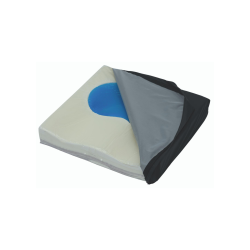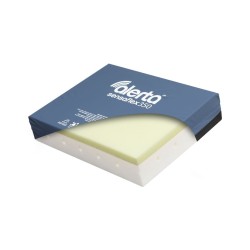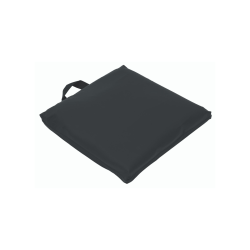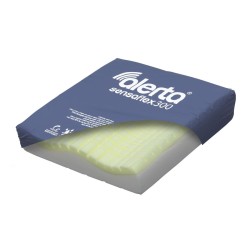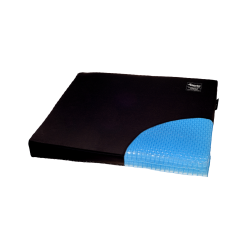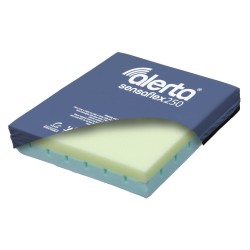
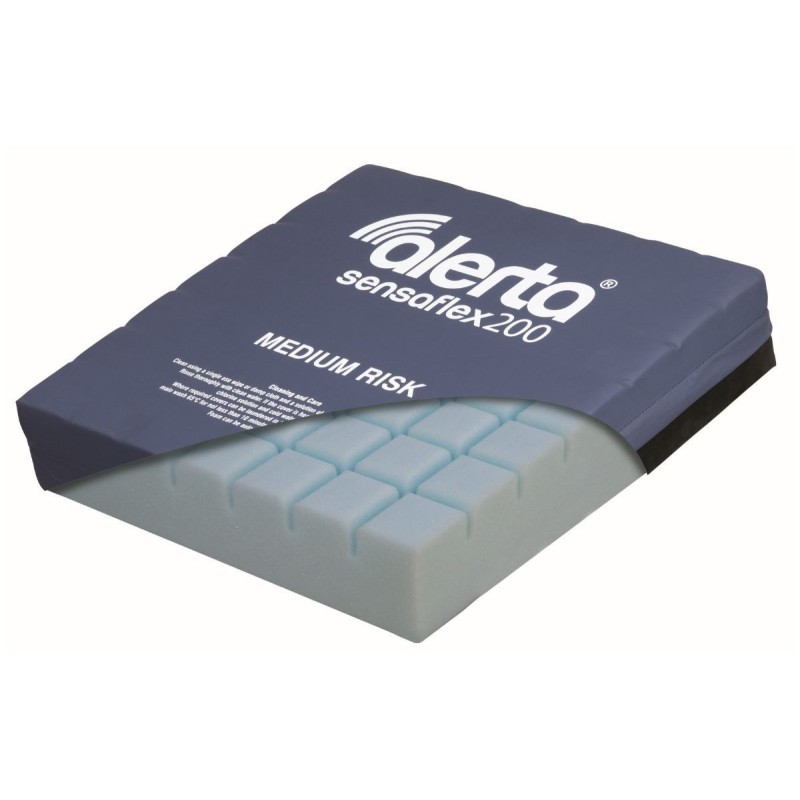

The Alerta Sensaflex 200 Foam Cushion is a medium-risk pressure relief seat cushion with castellated foam for patients assessed at medium risk on the Waterlow Risk Assessment Scale or equivalent clinical tool. The castellated foam surface reduces peak interface pressure at the ischial tuberosities, sacrum and coccyx during prolonged sitting by increasing contact area deformation under load. The multi-stretch vapour-permeable PU cover reduces shear and friction at the seated skin-to-cover interface, addressing both the pressure redistribution and shear components of seated pressure injury risk. Antimicrobial cover machine washable at high temperatures, foam autoclavable at 134°C, BS7177: Crib 5 fire compliant.
| Specification | Detail |
|---|---|
| Product Code | NCL-ALT-200 |
| Type | Static foam seat cushion |
| Risk Level | Medium risk (Waterlow 15-19) |
| Foam Construction | Castellated foam |
| Cover | Multi-stretch, vapour-permeable PU |
| Cover Treatment | Antimicrobial with white underside |
| Foam Sterilisation | Autoclavable at 134°C |
| Fire Compliance | BS7177: Crib 5 |
| Application | Care homes, hospitals, home care seating |
NICE Guideline CG179 (Pressure Ulcers: Prevention and Management) specifies that patients identified as at risk during seated periods should be provided with a pressure-redistributing seat cushion matched to their assessed risk level. Seated pressure injury is a distinct clinical concern from bed-based pressure injury: the interface pressures at the ischial tuberosities during sitting significantly exceed those at the sacrum during supine lying for comparable patients, making seated pressure care an equally important component of the overall pressure management plan. CQC Regulation 12 (Safe Care and Treatment) requires that pressure care planning covers both sleeping and seated periods: a patient who has an appropriate bed-based pressure care surface but sits without a specified pressure redistribution cushion for extended periods during the day does not have a complete pressure care plan. The EPUAP/NPIAP guidelines recommend that all patients who are identified as at risk and spend time sitting should receive a pressure redistribution cushion as part of their care plan, regardless of whether they also have a pressure redistribution mattress.
Can the Sensaflex 200 cushion be used on a wheelchair as well as a standard chair?
The Sensaflex 200 is designed for use on standard armchairs, care home chairs and clinical seating, and can also be used on manual or powered wheelchairs where the seat dimensions are appropriate for the cushion size. For wheelchair use, confirm that the cushion dimensions fit the wheelchair seat width and depth, that the cushion does not interfere with the wheelchair's armrest, footrest or anti-tip functions, and that the combined height of the wheelchair seat base plus cushion does not compromise the patient's seated posture, footrest height or transfer safety. For patients who use a wheelchair as their primary mobility device and are at risk of seated pressure injury, occupational therapy assessment of the appropriate seating and cushion combination is recommended before specifying any seated pressure care equipment for wheelchair use.
How does the Sensaflex 200 differ from the Sensaflex 250, and when should each be selected?
The Sensaflex 200 uses castellated foam and is specified for medium-risk patients. The Sensaflex 250 uses memory foam and is specified for high-risk patients. The Waterlow risk category determines the primary selection decision: medium-risk patients receive the 200, high-risk patients receive the 250. Memory foam in the 250 achieves a higher degree of anatomical conformance to the seated body contour than castellated foam in the 200, providing greater interface pressure redistribution at bony prominences - appropriate for the higher clinical requirement of the high-risk category. When a patient's risk assessment changes from medium to high risk, the cushion specification should be upgraded to the Sensaflex 250 at the next review, in the same way that a mattress upgrade would be triggered by a change in assessed risk.
Part of our specialist Pressure Care Systems range. Pressure relief cushions provide targeted support for wheelchair users and care home residents at risk of pressure damage.