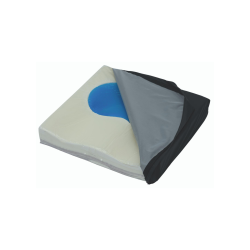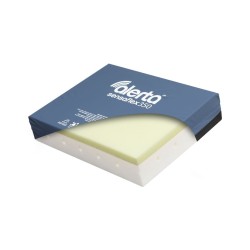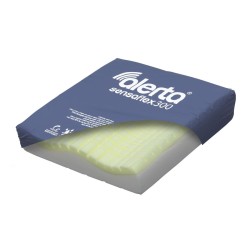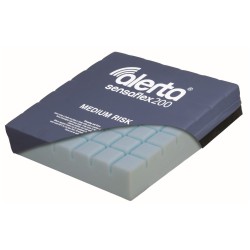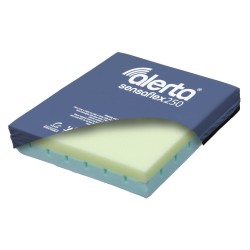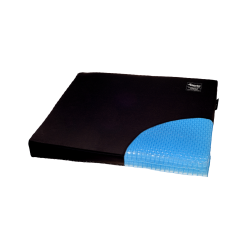
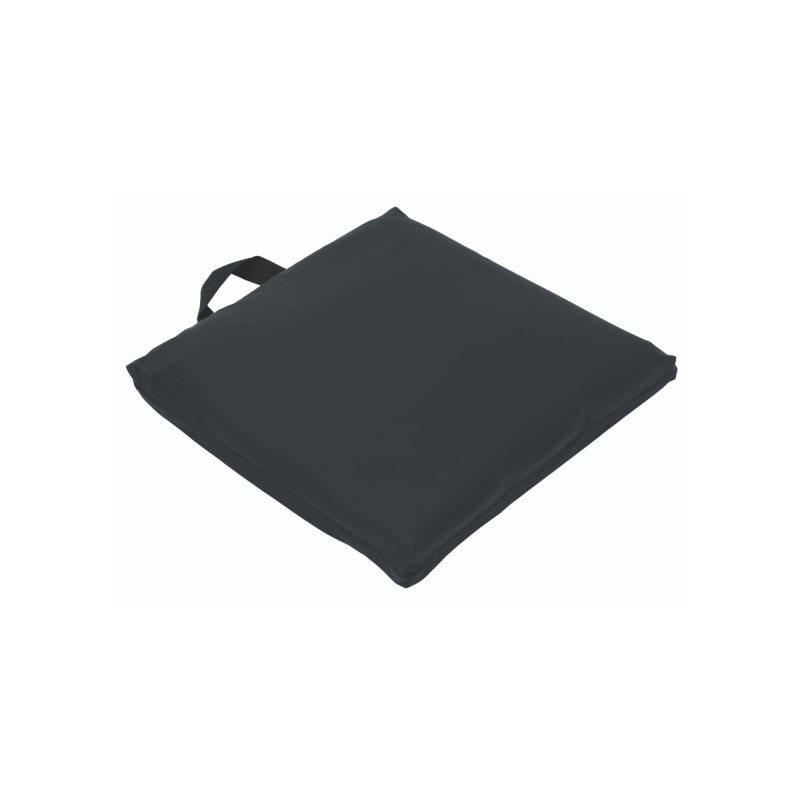


The Alerta Gel Cushion is a low-profile seat cushion at 43x43x2.5cm filled with polyurethane SensaGel engineered to mimic natural body fat, providing pressure redistribution through lateral load distribution and bony prominence conformance with anti-shear lateral movement that reduces friction at the seated skin-to-surface interface. The SensaGel is guaranteed not to harden, leak or dry out even if accidentally punctured, maintaining clinical performance throughout the cushion's service life. Multi-stretch waterproof vapour-permeable PU cover with M1 fire resistance. Safe working load: 100kg. The low 2.5cm profile is appropriate where higher-profile cushions would compromise seating configuration.
| Specification | Detail |
|---|---|
| Product Code | NCL-ALT-201 |
| Type | Low-profile gel seat cushion |
| Dimensions | 43 x 43 x 2.5 cm (17 x 17 x 1 inch) |
| Max SWL | 100kg |
| Filling | Polyurethane SensaGel - mimics body fat properties |
| Anti-Shear | Lateral movement reduces friction and shear |
| Cover | Multi-stretch, waterproof, vapour-permeable PU |
| Fire Resistance | M1 classification |
| Puncture Resistance | Guaranteed not to harden, leak or dry out if punctured |
| Application | Patients where low profile and shear reduction are primary requirements |
NICE Guideline CG179 (Pressure Ulcers: Prevention and Management) and the EPUAP/NPIAP guidelines identify shear as a primary causative factor in pressure injury alongside sustained interface pressure, and note that pressure redistribution surfaces should address shear as well as peak interface pressure for effective pressure injury prevention. The Gel Cushion's lateral movement anti-shear mechanism is a specific clinical advantage for patients where shear injury is a primary concern - for example, patients who spend time in a semi-reclined position where gravity generates forward sliding shear on the sacrum and coccyx, or patients with spastic or involuntary movements that create repetitive shear at the seated skin surface. The 100kg safe working load positions this cushion for standard-weight patients within its SWL. CQC Regulation 10 (Dignity and Respect) is supported by the low 2.5cm profile: the cushion adds minimal visible height to the chair, maintaining the appearance of normal seating without the institutional look of thicker clinical cushions, which may be clinically and psychologically important for ambulant patients in care home lounge environments.
What does it mean that the SensaGel is guaranteed not to harden, leak or dry out if punctured, and how does this differ from other gel cushions?
Many gel-filled seat cushions use a fluid or semi-fluid gel that can leak from punctures, harden over time as the gel compound changes properties, or dry out if the gel medium evaporates through minor damage. These failure modes mean the cushion may lose its pressure redistribution properties without visible deterioration, creating a clinical risk where the cushion appears intact but no longer functions effectively. The SensaGel's polyurethane composition is formulated to retain its pressure redistribution properties without these failure modes: a punctured SensaGel cushion continues to function because the gel does not flow out of the puncture site, does not harden with age, and does not dry out with extended use. This extends the serviceable life of the cushion and eliminates the specific maintenance concern of checking for gel leakage or hardening that fluid-gel cushions require.
Is the 100kg safe working load a clinical limitation, and what should be done for patients who approach or exceed this limit?
The 100kg safe working load is a specification that limits the Alerta Gel Cushion to patients whose body weight is within this range. For patients who approach or exceed 100kg, the structural integrity and pressure redistribution performance of the cushion may be compromised, creating both a safety risk and a clinical risk that the cushion is no longer functioning as a pressure redistribution device for the heavier patient. For patients at or above the 100kg limit, the GelCube Cushion at 200kg SWL, the Gel-Visco Cushion at 155kg SWL, or a bariatric foam cushion specification should be considered based on the specific patient's clinical requirement and weight. The prescribing clinician or occupational therapist should confirm that the specified cushion's safe working load is appropriate for the individual patient's body weight before deployment.
Part of our specialist Pressure Care Systems range. Pressure relief cushions provide targeted support for wheelchair users and care home residents at risk of pressure damage.