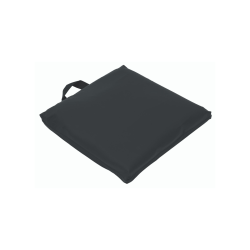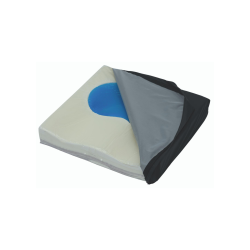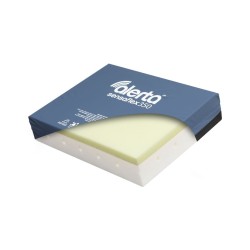
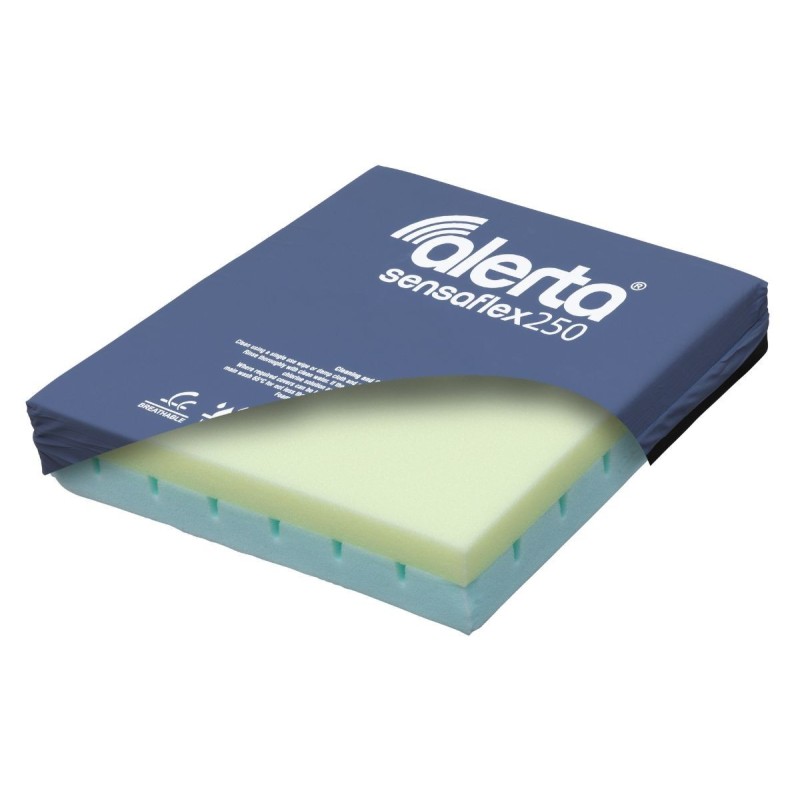

The Alerta Sensaflex 250 Foam Cushion is a high-risk pressure relief seat cushion with memory foam (viscoelastic foam) that conforms to the seated patient's anatomical contours, distributing interface pressure across the ischial tuberosities, sacrum and coccyx through body-specific deformation. The memory foam's viscoelastic properties maintain anatomical conformance under sustained seated load, providing consistent pressure redistribution for high-risk patients during extended sitting periods. Multi-stretch vapour-permeable antimicrobial PU cover, machine washable, foam autoclavable at 134°C, BS7177: Crib 5 fire compliant. Matched to high-risk patients assessed at Waterlow 20+ or equivalent clinical risk classification.
| Specification | Detail |
|---|---|
| Product Code | NCL-ALT-250 |
| Type | Static memory foam seat cushion |
| Risk Level | High risk (Waterlow 20+) |
| Foam Construction | Viscoelastic memory foam - body-contouring |
| Cover | Multi-stretch, vapour-permeable PU |
| Cover Treatment | Antimicrobial, machine washable |
| Washing Temperature | Up to 95°C for thermal sanitisation |
| Foam Sterilisation | Autoclavable at 134°C |
| Fire Compliance | BS7177: Crib 5 |
| Application | Care homes, hospitals, clinical seating environments |
NICE Guideline CG179 (Pressure Ulcers: Prevention and Management) identifies high-risk patients who spend time seated as requiring a high-specification pressure redistribution cushion, with the specification matched to the individual's assessed risk level. Memory foam provides greater anatomical conformance than castellated foam, achieving more complete distribution of seated body weight across the contact surface and reducing peak interface pressure at bony prominences to a greater degree - the clinical justification for upgrading from the Sensaflex 200 castellated foam to the Sensaflex 250 memory foam when the patient's Waterlow assessment places them in the high-risk category. CQC Regulation 12 (Safe Care and Treatment) requires that seated pressure care equipment is specified for the individual's risk level and that the specification is reviewed when clinical status changes. CQC Regulation 17 (Good Governance) requires that the cushion specification is documented in the patient's care plan, including the risk assessment that justifies the high-risk memory foam specification rather than a lower-specification static foam cushion.
For a high-risk patient, when would the Sensaflex 250 memory foam be appropriate rather than an alternating pressure cushion system?
The Sensaflex 250 is appropriate for high-risk patients who can be repositioned on a regular schedule, whose skin integrity is currently maintained without existing pressure damage, and for whom the clinical assessment indicates that high-specification static memory foam redistribution is sufficient for the individual's risk profile. An alternating pressure cushion system - such as the Alerta Partner or Partner Plus - is typically indicated when the patient's clinical assessment shows existing pressure damage at Stage 2 or above, when regular repositioning is not achievable, or when previous static foam specification has been insufficient to prevent pressure damage despite correct use. The prescribing clinician's assessment of the individual's skin status, repositioning capacity and clinical history determines whether static memory foam or alternating pressure is the appropriate specification for a specific high-risk patient.
Does memory foam in a seat cushion wear out, and how often should the Sensaflex 250 be replaced?
Memory foam in seat cushions degrades through sustained compression over time, losing the viscoelastic properties that enable anatomical conformance and pressure redistribution. A cushion that has undergone significant compression degradation will no longer provide the interface pressure reduction it was specified for, creating a clinical risk that may not be visually apparent - the cushion may still look intact while no longer functioning as a pressure redistribution surface. Care homes should include regular cushion assessment in their pressure care equipment maintenance programme, checking for visible deformation, loss of recovery after compression, and changes in surface consistency. The specific replacement interval depends on the intensity of use, patient weight, and the individual cushion's condition on assessment. Any cushion showing signs of compression degradation should be replaced regardless of its age, and the replacement documented in the equipment maintenance record under CQC Regulation 17 (Good Governance).
Part of our specialist Pressure Care Systems range. Pressure relief cushions provide targeted support for wheelchair users and care home residents at risk of pressure damage.