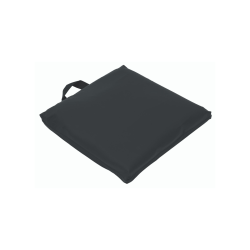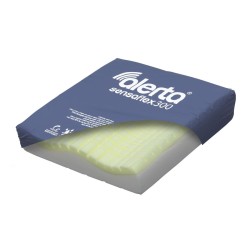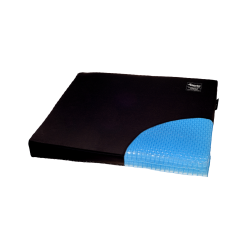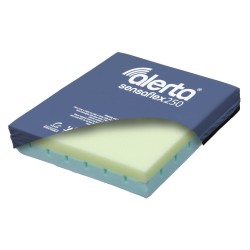
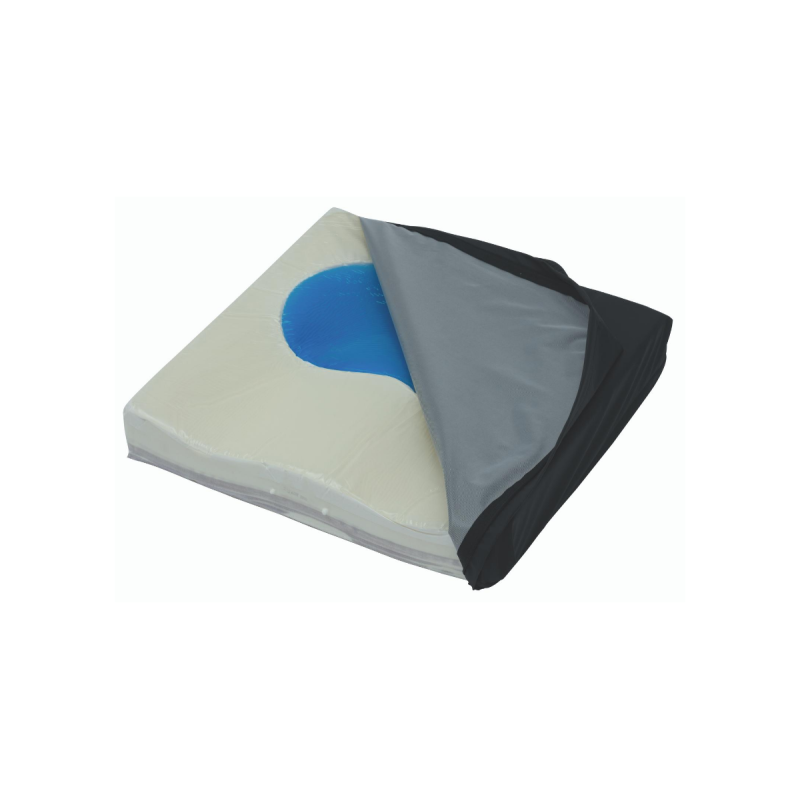


The Alerta Gel-Visco Cushion combines a contoured moulded viscoelastic foam base with a dual-density polyurethane SensaGel insert to provide both seated pressure redistribution and postural alignment support. The ergonomic contoured shape maintains the seated pelvis in a neutral position, preventing anterior pelvic tilt and forward sliding that flat cushions cannot address, while the SensaGel insert concentrates gel deformation at the ischial tuberosities for maximum pressure redistribution at the primary seated bony prominence sites. Dimensions: 43x43x8cm. Safe working load: 155kg. Multi-stretch vapour-permeable M1 fire-resistant PU cover, machine washable to 90°C.
| Specification | Detail |
|---|---|
| Product Code | NCL-ALT-202 |
| Type | Contoured gel-visco seat cushion |
| Risk Level | Medium to high risk with postural support requirement |
| Dimensions | 43 x 43 x 8 cm (17 x 17 x 3 inches) |
| Max SWL | 155kg |
| Construction | Contoured viscoelastic foam base + dual-density SensaGel insert |
| Cover | Multi-stretch, vapour-permeable PU |
| Fire Resistance | M1 classification |
| Washing Temperature | Up to 90°C |
| Application | Patients requiring combined pressure relief and postural support |
NICE Guideline CG179 (Pressure Ulcers: Prevention and Management) addresses seated pressure injury in the context of overall seating assessment, recognising that postural instability in seated patients increases shear forces at the sacrum and coccyx as patients slide forward and are repositioned - creating shear injury in addition to the direct pressure injury that an unstable posture generates at bony prominences. The Gel-Visco Cushion's ergonomic contoured shape addresses postural stability alongside pressure redistribution, making it clinically appropriate for patients whose seated pressure injury risk is compounded by poor postural control or the forward-sliding pattern that flat cushions do not prevent. CQC Regulation 10 (Dignity and Respect) is relevant to the postural stability benefit: patients who slide forward in their chairs repeatedly require more frequent staff repositioning interventions, which can be experienced as intrusive and undignified - a cushion that maintains seated position independently reduces both the frequency of this intervention and the patient's experience of dependency in maintaining their seated position. Occupational therapy assessment is recommended to confirm the Gel-Visco's postural compatibility with the specific patient's seated posture, chair dimensions and mobility level.
Can the Gel-Visco Cushion be used with patients who have pelvic asymmetry or scoliosis?
The Gel-Visco Cushion's ergonomic contoured shape is designed for patients with a symmetrical seated posture. For patients with pelvic asymmetry, scoliosis or significant postural deviation from the neutral seated position, the standard contoured shape may not provide the postural support appropriate for the specific deformity, and may create uneven pressure distribution that increases rather than reduces pressure injury risk at the more loaded side of the asymmetric posture. Occupational therapy or specialist seating assessment is strongly recommended for patients with pelvic asymmetry or scoliosis before specifying any contoured seating cushion, including the Gel-Visco: the assessment will determine whether a standard contoured shape, a custom-moulded shape, or a flat cushion with additional postural supports is the most appropriate specification for the individual's seated anatomy.
Is the 8cm thickness of the Gel-Visco Cushion clinically appropriate for all seating heights?
The 8cm thickness of the Gel-Visco Cushion raises the patient's seated height by 8cm above the chair seat. This height addition has implications for footrest height in wheelchairs, the relationship between the patient's seated knee height and table height, and the ease of standing from the chair during transfers. For care home armchairs with fixed seat heights, an 8cm height increase may make the chair uncomfortably high or make standing from the chair easier or harder depending on the individual's mobility and lower limb length. Before specifying the Gel-Visco, confirm that the 8cm additional height is compatible with the patient's primary chair or wheelchair dimensions, footrest settings and transfer method. If the height is not compatible, the lower-profile alternatives in the Sensaflex foam range or the GelCube at 5cm height may be more appropriate for the specific seating configuration.
Part of our specialist Pressure Care Systems range. Pressure relief cushions provide targeted support for wheelchair users and care home residents at risk of pressure damage.