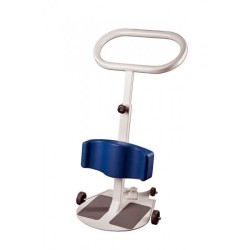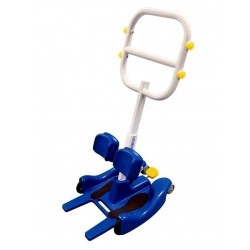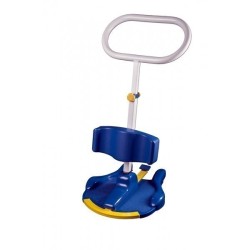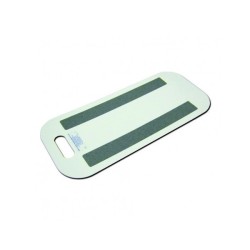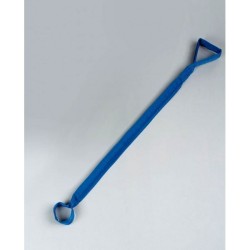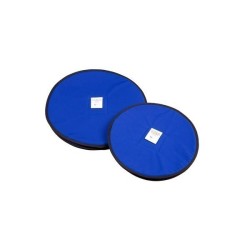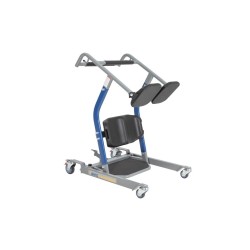
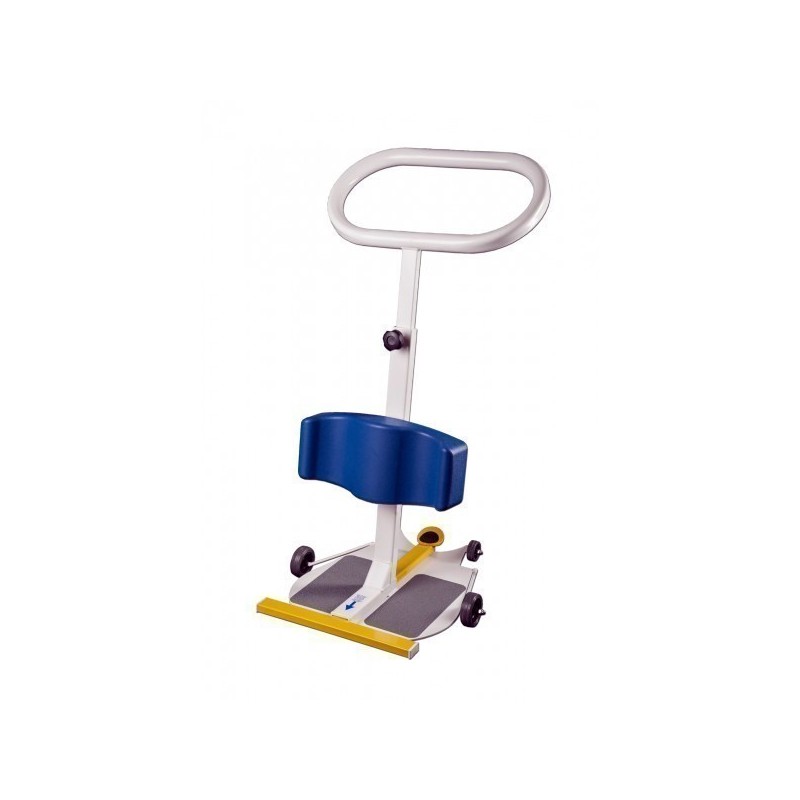


The Rota Stand Solo LOCO-311 is a 200kg SWL pivot transfer stand featuring a patented T-bar base mechanism that enables single-carer operation for sit-to-stand and pivot transfers between adjacent seated surfaces. The T-bar stabilises the Rota Stand automatically during the transfer without requiring a second carer to counterbalance the device - a significant operational and cost advantage in care home and NHS ward environments where two-carer transfers impose a staffing overhead that single-carer transfer systems can reduce. The client pulls themselves to standing on the large handlebar, with the carer supporting and guiding rather than counterbalancing, enabling a more dignified and participatory transfer for the client alongside the staffing efficiency benefit for the care provider.
| Specification | Detail |
|---|---|
| Reference | LOCO-311 |
| Safe Working Load (SWL) | 200kg |
| Key Feature | Patented T-bar base - enables single-carer operation |
| Frame | Height adjustable |
| Handlebar | Large, for secure client grip during standing |
| Wheels | Central for positioning after client foot placement |
| Carer Requirement | Single carer (no counterbalancing required) |
LOLER 1998 applies to the Rota Stand Solo as a patient-contact standing transfer device. The T-bar mechanism is the critical structural component that enables the device's single-carer function: LOLER thorough examinations must specifically inspect the T-bar and its attachment to the base for wear, deformation or damage, as T-bar failure under load during a transfer would remove the stabilising function and create a sudden fall risk for both the client and the carer. MHOR 1992 TILE assessment should confirm that the client is able to grip the handlebar with sufficient strength to initiate and maintain the standing phase, as the Solo's design depends on the client actively pulling themselves up rather than being lifted. For clients with significantly reduced upper limb strength, the standard Rota Stand LOCO-102 with its combined frame and shin support may be more appropriate than the Solo.
How does the T-bar mechanism enable single-carer operation without counterbalancing?
The T-bar extends across the base of the Rota Stand Solo, creating a wide stabilising foot at both sides of the device. When the client pulls down on the handlebar to initiate standing, the T-bar distributes the downward force across a wide base footprint that resists the tipping moment created by the pulling action. Without the T-bar, the pulling force would create a forward tip in the device, requiring a carer behind the device to counterbalance. The T-bar geometry eliminates this tipping tendency, allowing the device to remain stable under the pulling force without a counterbalancing carer - this is the patented innovation that makes single-carer operation safe without an additional person on the opposite side of the device from the client.
For which clients is the Rota Stand Solo LOCO-311 not appropriate?
The Solo is not appropriate for clients who cannot actively grip the handlebar with sufficient upper limb strength to initiate the standing movement - the device is designed for clients who can pull themselves to standing with guidance, not for clients who require the carer to lift them to standing. It is also not appropriate for clients with significant cognitive impairment who cannot follow the transfer sequence instructions reliably, as the solo-carer format provides less physical oversight than a two-carer transfer. For these clients, the standard Rota Stand LOCO-102 with a two-carer approach, or a passive hoist system, is the appropriate specification. An occupational therapy assessment should determine which transfer system is appropriate for each client's individual physical and cognitive capacity.
Part of our specialist Patient Moving and Handling Equipment range, supporting safe patient transfers across care homes, hospitals, and home care environments.