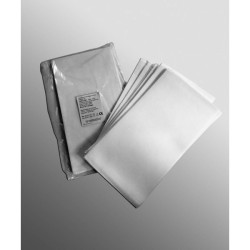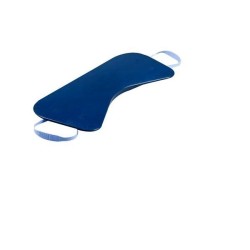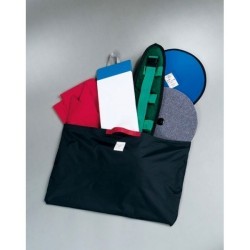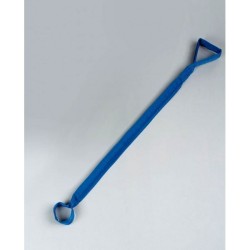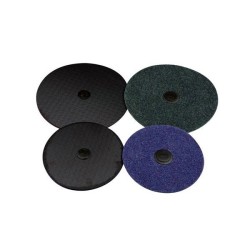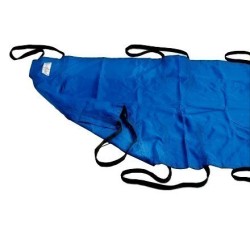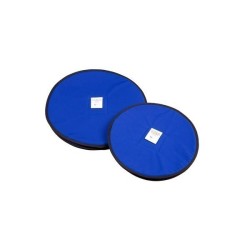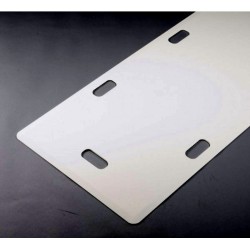
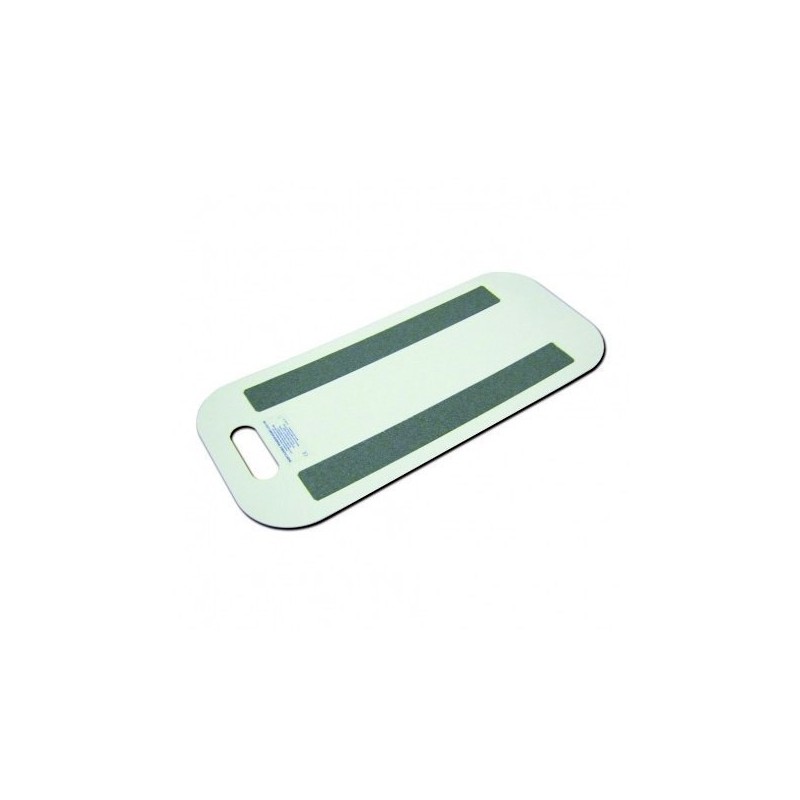

The Flexible Transfer Slide is a compact, flexible patient transfer board designed for non and semi weight-bearing patients making transfers between two surfaces either independently or with carer assistance. At 60cm × 27cm with a 127kg weight limit, it is particularly suited to ambulance service use for chair-to-carry-chair, chair-to-ambulance-stretcher and similar short-distance transfers in the confined, variable-surface environments of emergency and non-emergency patient transport. The flexible construction allows the slide to conform to curved surfaces and bridges slight height differentials between surfaces that rigid transfer boards cannot accommodate, making it the appropriate specification for the variable surface conditions of ambulance and community emergency transfer scenarios.
| Specification | Detail |
|---|---|
| Dimensions | 60cm × 27cm (short flexible format) |
| Weight Limit | 127kg |
| Construction | Flexible - conforms to curved and non-planar surfaces |
| Use | Independent patient transfer or carer-assisted |
| Indication | Non or semi weight-bearing patients |
| Setting | Ambulance, community emergency, acute clinical |
Manual Handling Operations Regulations 1992 apply equally to ambulance service patient transfers, which represent a significant proportion of paramedic and ambulance crew musculoskeletal injury incidents in the UK. The Flexible Transfer Slide reduces the physical load of seated patient transfers in ambulance settings by providing a low-friction sliding surface that allows the patient to be moved with minimal lifting force, directly reducing the musculoskeletal injury risk for ambulance crews performing multiple patient transfers per shift. The flexible construction specifically addresses the ambulance environment challenge where the surfaces involved in a transfer are not always at exactly the same height, angle or flatness - the board conforms to the surface transition rather than requiring the carers to compensate for surface misalignment through additional physical effort.
Can the Flexible Transfer Slide be used for patients who are fully non-weight-bearing?
Yes. The Flexible Transfer Slide is appropriate for patients who are completely non-weight-bearing through their lower limbs provided they have sufficient upper body strength and trunk control to participate in the sliding transfer - moving themselves across the board surface with or without carer guidance. For fully non-weight-bearing patients who cannot contribute to the transfer at all (for example, unconscious or completely dependent patients), a passive hoist or ambulance stretcher loading system is the appropriate transfer method, as the slide requires at least minimal patient cooperation to achieve a safe, controlled transfer. The slide is most effective for patients who are non-weight-bearing due to a lower limb injury or condition but retain upper body function sufficient to assist with the sliding movement.
How does the Flexible Transfer Slide differ from rigid transfer boards?
Rigid transfer boards provide a flat, stable bridge between two surfaces at exactly the same height, but cannot conform to height differences, curved surfaces or the slight angles that occur between a patient's wheelchair seat and an ambulance carry chair in a real-world environment. The flexible construction of the Flexible Transfer Slide allows it to bend slightly to accommodate these variations, bridging the surface transition smoothly without a step edge that could catch the patient during the slide. For planned clinical transfers between two surfaces that can be aligned to the same height, a rigid board provides a firmer, more stable surface; for ambulance and emergency transfers where surface alignment cannot be fully controlled, the flexible format is the practical advantage.
Part of our specialist Patient Moving and Handling Equipment range, supporting safe patient transfers across care homes, hospitals, and home care environments.