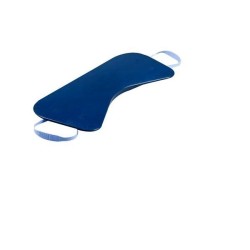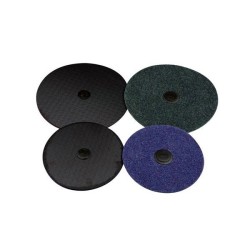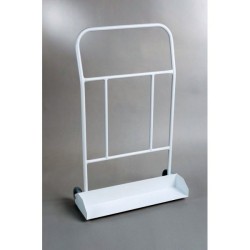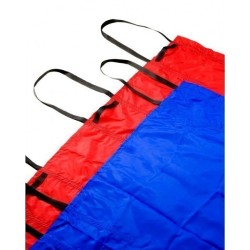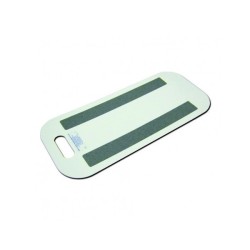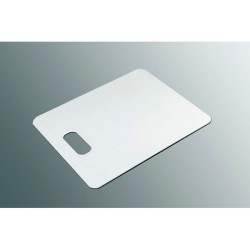
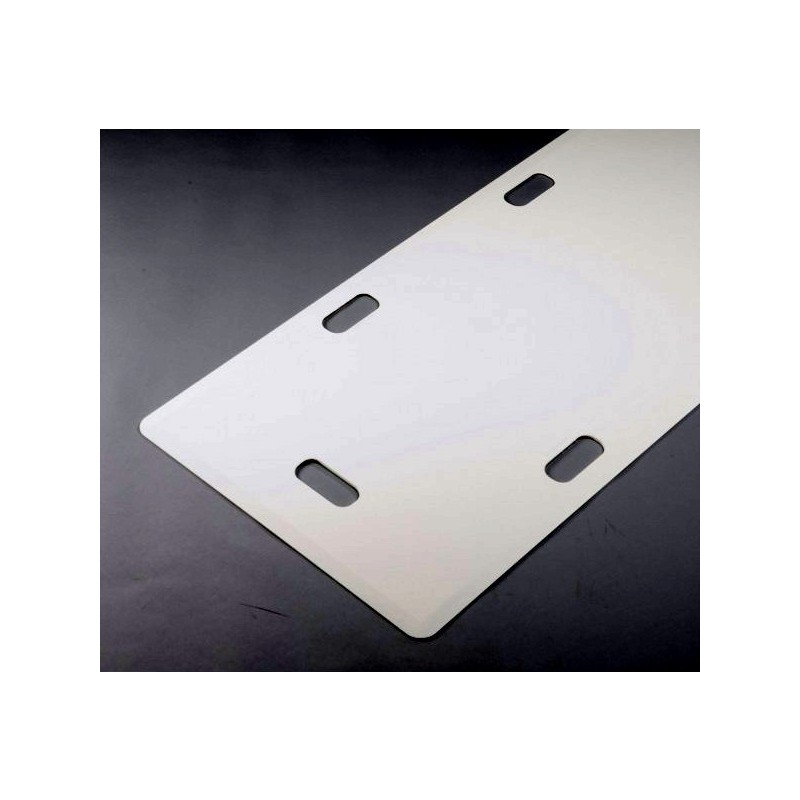

The Lateral Transfer Slide is a rigid patient handling board with a smooth upper surface and non-slip base, designed to bridge the gap between a bed and adjacent trolley or surface to create a continuous low-friction pathway for a supine lateral patient transfer without lifting. Used in conjunction with an approved transfer sheet (such as the Select Healthcare Transfer Sheet), the Lateral Transfer Slide provides the rigid platform across which the patient slides during a lateral transfer sequence, with the transfer sheet providing the upper layer friction reduction and carers gripping the sheet handholds to control the lateral movement without bending or stretching over the patient.
| Specification | Detail |
|---|---|
| Upper Surface | Smooth for low-friction patient sliding |
| Base | Non-slip to anchor against mattress during transfer |
| Edges | Tapered for easy 30%-tilt insertion under patient |
| Use | With approved transfer sheet (not as standalone) |
| Applications | Bed to trolley, bed to examination table, same-height lateral transfers |
| Type | Reusable |
Manual Handling Operations Regulations 1992 TILE risk assessment identifies lateral patient transfers as a high-risk task requiring equipment intervention wherever reasonably practicable. The Lateral Transfer Slide directly addresses the load and task dimensions of the TILE framework: it reduces the friction component of the transfer force (lowering the load), and the tapered-edge non-slip design simplifies the insertion and positioning tasks (reducing task complexity). MHOR 1992 guidance requires that equipment selected for patient handling tasks is appropriate for the specific patient and task: the Lateral Transfer Slide is specified for supine lateral transfers where the patient cannot actively contribute to the transfer, and should not be used for seated or standing transfer scenarios where different equipment is appropriate.
What is the 30% tilt technique for inserting the Lateral Transfer Slide?
The 30% tilt technique involves using the transfer sheet to tension the patient slightly towards one side - approximately 30 degrees from supine - creating enough space on the opposite lateral surface for the tapered edge of the Lateral Transfer Slide to be inserted from the far side of the bed. Once the slide is partially inserted, the patient is gently lowered back towards supine, settling their weight onto the slide surface. The slide is then pushed further beneath the patient until it bridges the gap between the two surfaces. The 30-degree tilt is sufficient to create an insertion gap without creating a fall risk for the patient or excessive manual handling load for the carers holding the tilt.
Can the Lateral Transfer Slide be used without a transfer sheet for a solo carer?
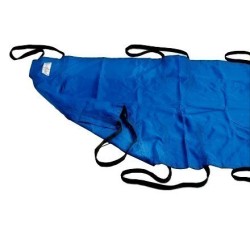
No. The Lateral Transfer Slide is not designed for standalone use - it requires a transfer sheet placed over the patient to provide the handholds for carer grip and the upper-layer friction reduction that makes the patient's movement across the slide controllable. Without a transfer sheet, carers would need to grip the patient or the slide directly, which creates both a manual handling risk (awkward posture, no defined grip) and a patient dignity concern. The correct system is slide beneath the patient plus transfer sheet over the patient, with carers gripping the sheet handholds. This is also a two-person minimum task: one carer to position and stabilise, one to pull, with additional carers for larger patients or longer transfer distances.
Part of our specialist Patient Moving and Handling Equipment range, supporting safe patient transfers across care homes, hospitals, and home care environments.