
Static Foam Mattresses
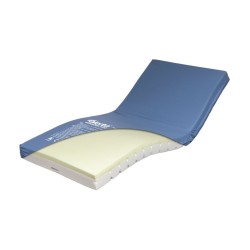
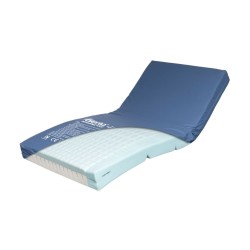
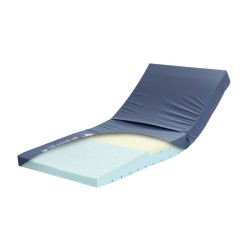
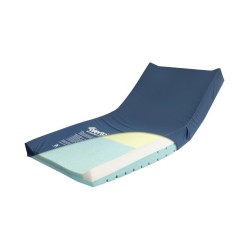
Static foam mattresses in viscoelastic, high-specification, and profiling-compatible formats for pressure redistribution in care homes and NHS settings, supporting NICE CG179 prevention protocols for low to medium pressure ulcer risk patients.
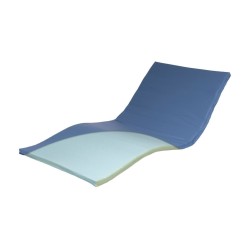
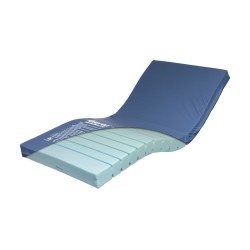
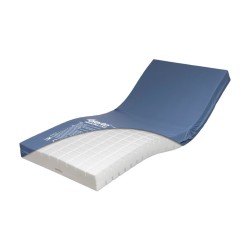
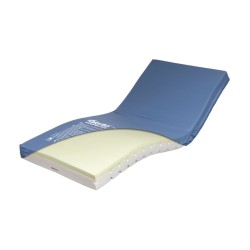
Selecting the Right Static Foam Mattress for Pressure Ulcer Prevention
Clinical Summary: Static foam mattresses provide continuous pressure redistribution without mechanical components, and are the minimum equipment standard under NICE CG179 for patients at risk of pressure ulcers. High-specification foam is recommended for low to medium risk patients, with viscoelastic memory foam appropriate for medium to higher risk presentations where active systems are not yet indicated.
Static Foam Mattress Specifications
- Standard Reactive Foam: Entry-level pressure redistribution for low-risk patients in general residential and low-dependency care settings. Standard hospital foam does not meet NICE CG179 minimum standards for at-risk patients.
- High-Specification Foam (HSF): Meets NICE CG179 minimum requirements for patients identified as at risk, with superior pressure redistribution properties compared to standard foam. The recommended minimum for any CQC-registered care home resident identified as at risk.
- Viscoelastic Memory Foam: Temperature-sensitive foam that moulds to body contours, distributing pressure across a wider surface area, appropriate for medium to higher risk patients and those with existing skin integrity concerns.
- Profiling Bed Compatible Formats: Articulated or cut-and-fold foam construction that flexes with profiling bed sections during electric adjustment, maintaining pressure redistribution performance across all profiling positions.
Clinical Compliance and Specification Standards
Static foam mattresses supplied by Care Supplies meet NICE CG179 minimum standards where specified for high-specification or viscoelastic formats. Standard foam mattresses do not meet these standards and should not be used for residents identified as at risk in CQC-registered care homes. Mattress specification should be matched to individual Waterlow, Braden, or equivalent risk assessment outcomes, with documented review when clinical status changes. Mattress compatibility with profiling bed models should be confirmed at point of procurement, and all mattresses should be accompanied by a washable, moisture-vapour permeable cover that does not impair pressure redistribution performance.
| Foam Type | Pressure Risk Level | Primary Application | Key Standard |
|---|---|---|---|
| Standard Reactive Foam | Low risk only | General residential, low-dependency | Below NICE CG179 minimum |
| High-Specification Foam | Low to medium risk | CQC care home minimum standard | NICE CG179 |
| Viscoelastic Memory Foam | Medium to high risk | Nursing care, complex needs | NICE CG179 / EPUAP |
| Bariatric Foam | All risk levels, high weight | Bariatric patient management | MHRA Bariatric Guidance |
Frequently Asked Questions
Q: What foam mattress does NICE CG179 recommend for care home residents at risk of pressure ulcers?
A: NICE CG179 recommends that patients identified as at risk of pressure ulcers receive a minimum of a high-specification foam mattress. Standard hospital foam mattresses do not meet this requirement. Viscoelastic foam mattresses are appropriate for higher risk patients where active alternating pressure systems are not yet indicated by clinical assessment.
Q: Are static foam mattresses compatible with electric profiling beds?
A: Yes. Profiling-compatible foam mattresses are available with articulated or cut-and-fold foam construction that flexes with the profiling sections during electric adjustment. It is important to confirm mattress and profiling bed compatibility at procurement to ensure pressure redistribution performance is maintained across the full range of bed positions.