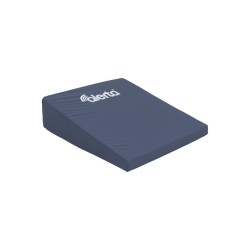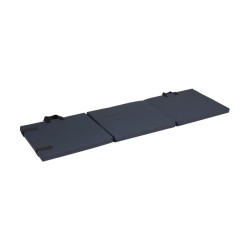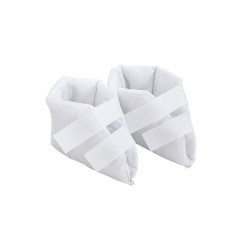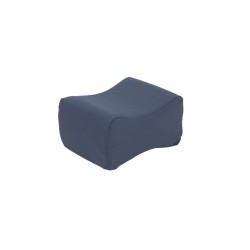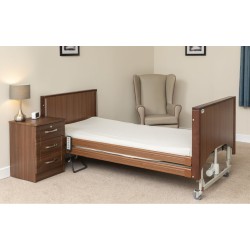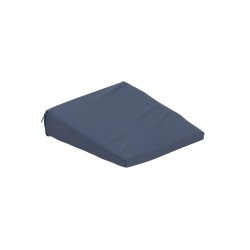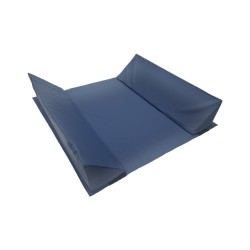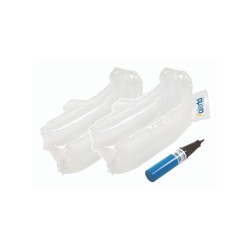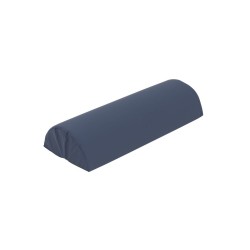
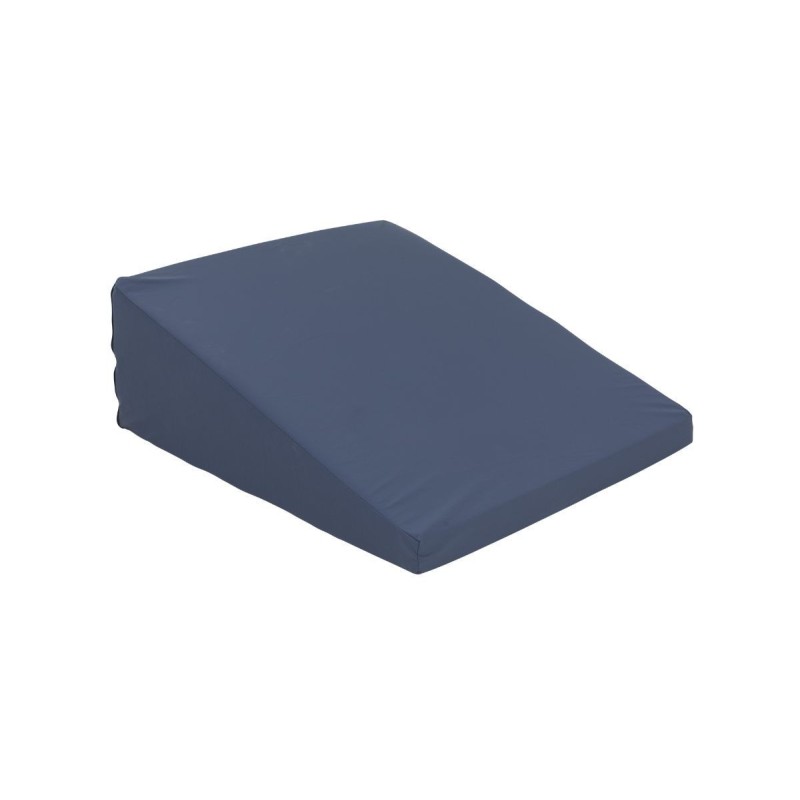

The Alerta Patient Foam Wedge Large provides the highest elevation angle in the Alerta foam wedge range at 25cm to 5cm across a 60cm square footprint. The 25cm maximum height creates a pronounced incline suited to clinical applications requiring significant body segment elevation: head-of-bed positioning for respiratory or oesophageal management, post-surgical lower limb elevation to reduce oedema, lateral 30-degree postural support under the trunk, or pronounced lower leg elevation to significantly reduce pressure at the sacrum and heels. The same 60cm square footprint as the medium wedge allows either size to be selected based on the required angle without changing the underlying support surface configuration.
| Specification | Detail |
|---|---|
| Product Code | NCL-ALT-PW-L |
| Dimensions | 60 x 60cm |
| Height Profile | 25cm (high end) to 5cm (low end) |
| Core Material | Foam |
| Cover | Waterproof, breathable, flame retardant |
| Cover Properties | Antibacterial |
| Primary Uses | Head-of-bed elevation, significant lower limb and body elevation |
The Alerta Patient Foam Wedge Large supports high-angle positioning protocols relevant to NICE CG179 (Pressure Ulcers: Prevention and Management). NICE CG179 recommends that positioning for pressure injury prevention is coordinated with any clinical positional requirements for other conditions; where head-of-bed angle is prescribed for respiratory or oesophageal reasons, the large wedge can support that angle while contributing to pressure redistribution. For patients where head-of-bed elevation directly affects clinical status, the specific angle should be clinically prescribed and monitored. CQC Regulation 12 (Safe Care and Treatment) requires that positioning aids and any clinically prescribed positions are documented. The flame retardant cover supports BS 7177 requirements and the waterproof antibacterial cover supports NHS IPC standards.
Is the large wedge suitable for lateral 30-degree tilt positioning?
Yes. NICE CG179 recommends a 30-degree lateral tilt as an alternative repositioning position to full lateral positioning. The large wedge is placed under the trunk at the back to maintain the 30-degree tilt, with the patient resting semi-laterally. The 25cm maximum height provides sufficient elevation for the trunk at 30 degrees for most adult body dimensions. The multi support cushion (NCL-ALT-PW-M2) is a narrower alternative for this application where the wider wedge footprint is impractical.
Are there clinical situations where the large wedge is not appropriate?
Yes. The 25cm elevation angle creates a steep incline that can cause patients to slide toward the lower end of the wedge, particularly in supine positions where gravity acts along the slope. For patients with reduced trunk control who cannot maintain their position on the wedge, the large incline may increase shear forces rather than reduce them. Where shear is a concern, a lower-angle wedge or a profiling bed adjustment is more appropriate. A physiotherapist or OT assessment is recommended before introducing the large wedge for immobile patients.
Part of our specialist Patient Comfort and Care range. Positioning and comfort aids promote dignity, pressure relief, and safe repositioning for care home residents and home care clients.