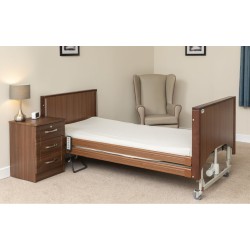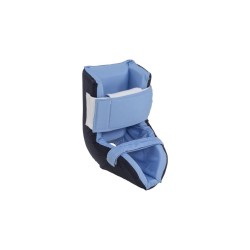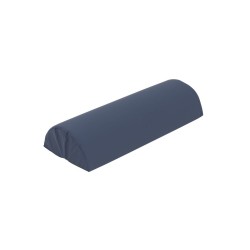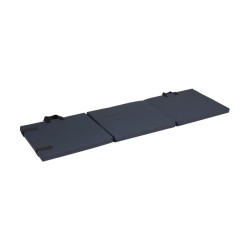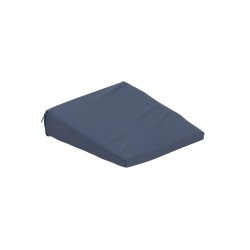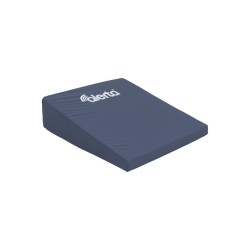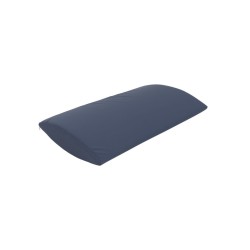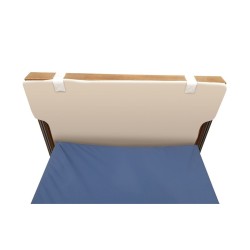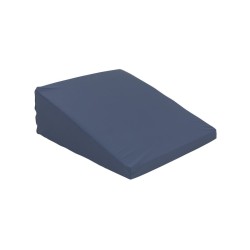
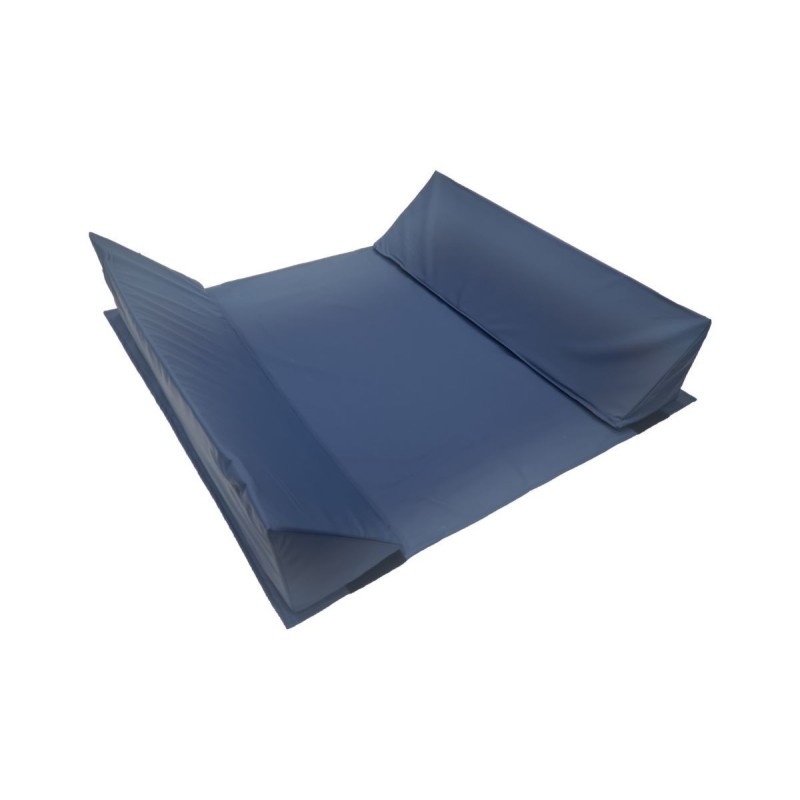

The Alerta Safety Side Wedge Set provides bedside positioning support and fall prevention without the use of side rails, addressing both the clinical need for bedside safety and the regulatory requirement for least-restrictive interventions. High-density foam wedges covered in breathable, phthalate-free PU fabric are secured to the bed with an integrated draw sheet and two adjustable straps, keeping the wedges stable during patient movement. The 99cm wide by 94cm long by 20cm high dimensions cover a substantial section of each bed side; two sets along the full bed length provide complete bilateral coverage. The non-restrictive design supports MCA 2005 least-restrictive principles and reduces the MHRA entrapment risks associated with side rail use.
| Specification | Detail |
|---|---|
| Product Code | NCL-ALT-116 |
| Dimensions | 99cm wide x 94cm long x 20cm high |
| Core Material | High-density foam |
| Cover | Breathable, stretchable, impermeable PU fabric |
| Cover Properties | Antibacterial, phthalate-free |
| Fixings | Draw sheet and 2 integrated securing straps |
| Full Coverage | 2 sets for full bed length bilateral coverage |
The Alerta Safety Side Wedge Set is a less-restrictive bedside safety alternative to side rails, directly relevant to the Mental Capacity Act 2005 (MCA 2005) least-restrictive principle. MHRA Bed Rail Safety Guidance identifies seven entrapment zones associated with side rail use; the wedge set eliminates these entrapment risks by providing a soft foam barrier rather than a rigid rail. CQC Regulation 12 (Safe Care and Treatment) requires that bedside fall prevention measures are individually risk-assessed and documented. NICE NG147 (Falls in Older People) supports environmental fall prevention measures; the wedge set provides a bedside fall prevention barrier that does not restrict the patient within the bed. The wipe-clean phthalate-free PU cover supports NHS IPC compliance for reusable bedside equipment.
How does the safety wedge set compare to side rails for fall prevention?
Side rails provide a rigid barrier but carry MHRA-identified entrapment risks and require a documented MCA 2005 capacity assessment before fitting. The foam wedge set provides a softer physical barrier: a patient experiencing disorientation or unintended rolling is gently redirected, whereas a patient actively attempting bed exit can move the wedge. The wedge set is appropriate where a least-restrictive bedside barrier is the clinical goal; side rails are appropriate where a more defined physical barrier is clinically indicated following individual assessment.
How are the wedges secured to prevent them moving during patient movement?
The draw sheet passes under the mattress to anchor the wedge, and two integrated straps provide additional securing at the wedge body. The straps should be checked and adjusted at each use to confirm secure positioning. For pressure-relieving mattresses, confirm that the draw sheet does not compromise the mattress interface performance under NICE CG179 guidance.
Part of our specialist Patient Comfort and Care range. Positioning and comfort aids promote dignity, pressure relief, and safe repositioning for care home residents and home care clients.