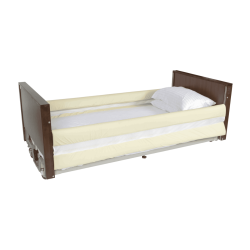
- Currently Unavailable
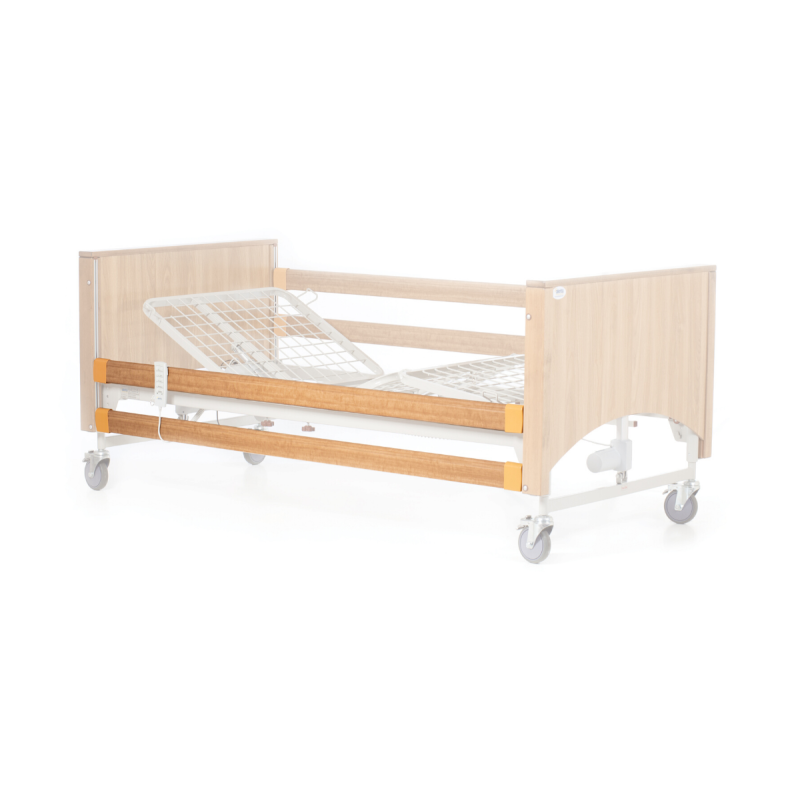

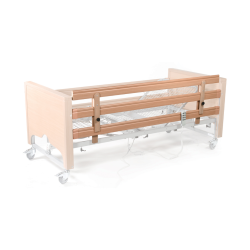
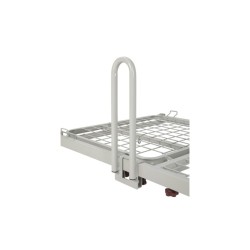
The Lomond Standard Length Side Rails provide full head-to-foot lateral protection for patients on Lomond profiling beds. Supplied as a complete set of four rails (two per side), the rails deliver consistent containment across the full mattress length. The rails integrate with the Lomond bed frame mounting points and maintain secure attachment across all profiling positions including ultra-low height and Trendelenburg tilt. Compatible with both oak and walnut Lomond Low Bed and Bariatric Bed variants. Individual patient risk assessment is mandatory before installation in accordance with MHRA entrapment prevention guidance.
| Specification | Detail |
|---|---|
| Type | Standard length side rails (set of 4) |
| Configuration | 2 rails per side (head and foot sections) |
| Compatibility | Lomond Low Bed and Lomond Standard profiling beds |
| Finish | Compatible with oak and walnut frames |
| Mounting | Integrated frame mounting points |
| Assessment | Individual patient risk assessment required (MHRA) |
| Application | Care homes, hospitals, nursing environments |
Bed side rails must be individually risk-assessed before installation in accordance with MHRA guidance on bed rail safety and entrapment prevention. CQC Regulation 12 requires that bed rail use is individually assessed, documented in the care plan, and regularly reviewed for each patient. A blanket policy of applying rails to all beds is not compliant with CQC or MHRA expectations. Gap dimensions between the rail, mattress, and headboard must comply with published safety standards to prevent head, neck, or limb entrapment. Rails should be inspected for secure fitting and mechanical integrity before each use.
What are the main risks associated with bed side rails?
The primary risk is entrapment, where a patient becomes trapped between the rail and the mattress, between rail sections, or between the rail and the headboard. MHRA guidance requires that gap dimensions are measured and assessed against published safety thresholds. Patients with cognitive impairment, agitation, or a tendency to climb over rails are at elevated entrapment risk and may be safer without rails. The assessment must weigh fall risk against entrapment risk for each individual.
Do side rails need individual assessment for each patient?
Yes. CQC and MHRA both require that bed rail use is individually assessed, documented, and regularly reviewed. The assessment should consider the patient's mobility, cognitive state, sleep behaviour, medication effects, and history of bed exit attempts. A decision to use or not use rails must be recorded in the care plan, and the assessment should be repeated whenever the patient's condition or medication changes.