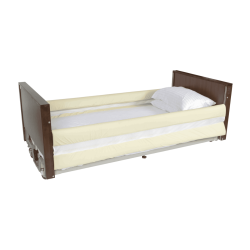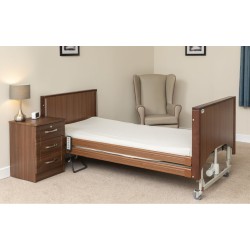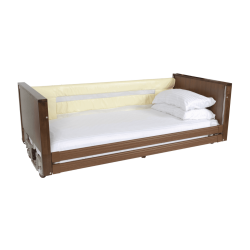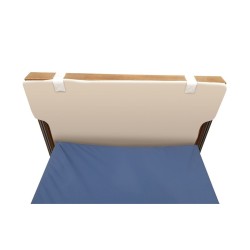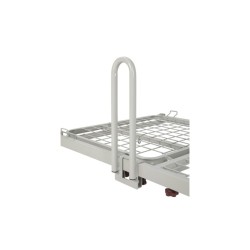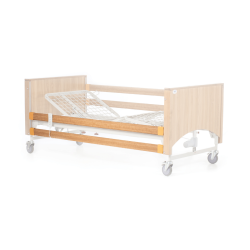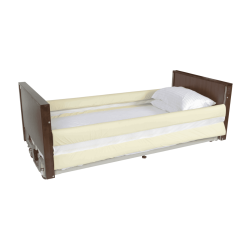
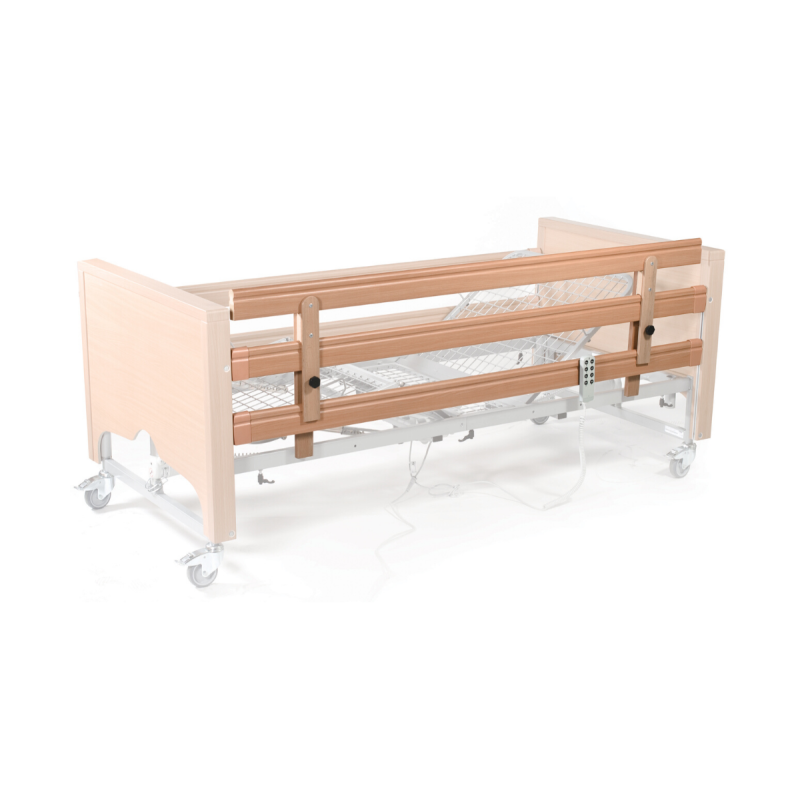

The Lomond Single High Side Rail is an extra-height rail for fitting to one side of a Lomond profiling bed. Single-side rail use is indicated for wall-adjacent beds (where the wall prevents bed exit on one side and the rail is only required on the accessible side), for patients with unilateral mobility impairment where the risk of bed exit is principally from one side, or where an occupational therapist has assessed a single rail as providing the optimal balance of fall prevention and patient access. The extra-high profile provides additional coverage height above the standard Lomond rail specification and is available in oak and walnut finishes to match the installed bed frame.
| Specification | Detail |
|---|---|
| Quantity | Single rail (one side only) |
| Rail Height | Extra-high specification |
| Oak Product Code | NCL-ALT-LB-HSRO |
| Walnut Product Code | NCL-ALT-LB-HSRW |
| Attachment | Tool-free, fits Lomond bed frame |
| Bed Compatibility | Lomond Community, Standard, Floor 2 |
Single-side rail use must be based on an individual bed rail risk assessment under MHRA Bed Rail Safety Guidance. The assessment must cover all 7 entrapment zones on the side where the rail is fitted, and document the clinical rationale for single rather than bilateral rail use. MCA 2005 requires a capacity assessment where the patient may lack capacity to consent to rail fitting; the decision must be documented as a best interests decision where capacity is absent. CQC Regulation 12 (Safe Care and Treatment) requires that rail use is individually justified and reviewed; a single-sided assessment does not preclude later review where the patient's mobility or fall risk changes. NICE NG147 falls prevention guidance supports least-restrictive rail use; a single rail where bilateral rails are not clinically indicated is the least-restrictive approach. Bed rail bumpers for the extra-high rail (3-bar bumpers) should be assessed as part of the risk assessment.
When is a single high rail preferred over a full set of 4 long rails?
A single rail on one side is the least-restrictive option where bilateral full-length rails are not clinically required. Common indications include: wall-adjacent beds where the wall prevents exit on one side; patients with unilateral weakness who are principally at risk from one side; or where an OT assessment concludes that a single rail provides sufficient fall prevention support without the cognitive impact and feeling of restriction that bilateral rails may cause for some patients, particularly in dementia care.
Does an extra-high rail require extra-high bumpers?
Yes. An extra-high single rail is a 3-bar configuration (the standard 2-bar profile plus the additional upper section). Standard 2-bar bumpers will not cover the upper bar section, leaving the extra height unpadded. The Alerta 3 Bar Bed Rail Bumpers with Netting are the correct specification for any extra-high rail placement and should be assessed and fitted alongside the single high rail where the risk assessment indicates bumpers are required.
Part of our comprehensive Medical Beds and Accessories range. Bed accessories optimise clinical functionality and resident safety in care home and nursing home environments.