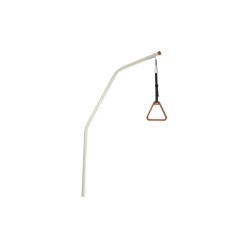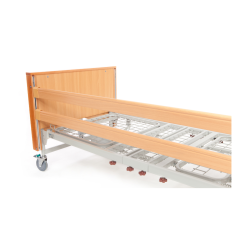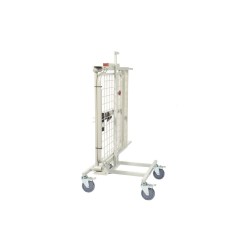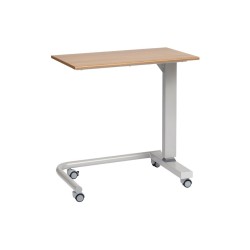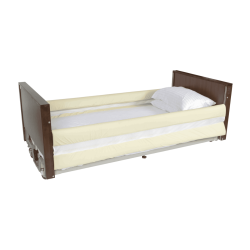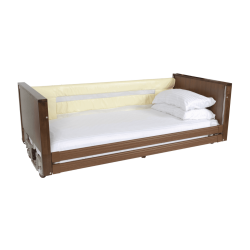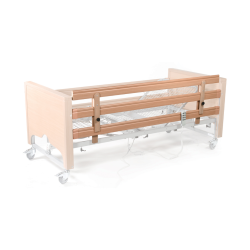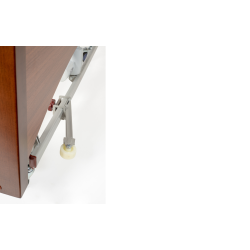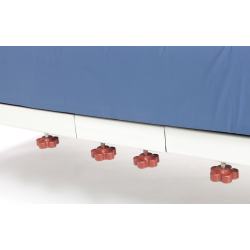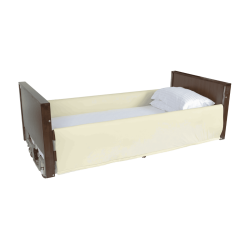
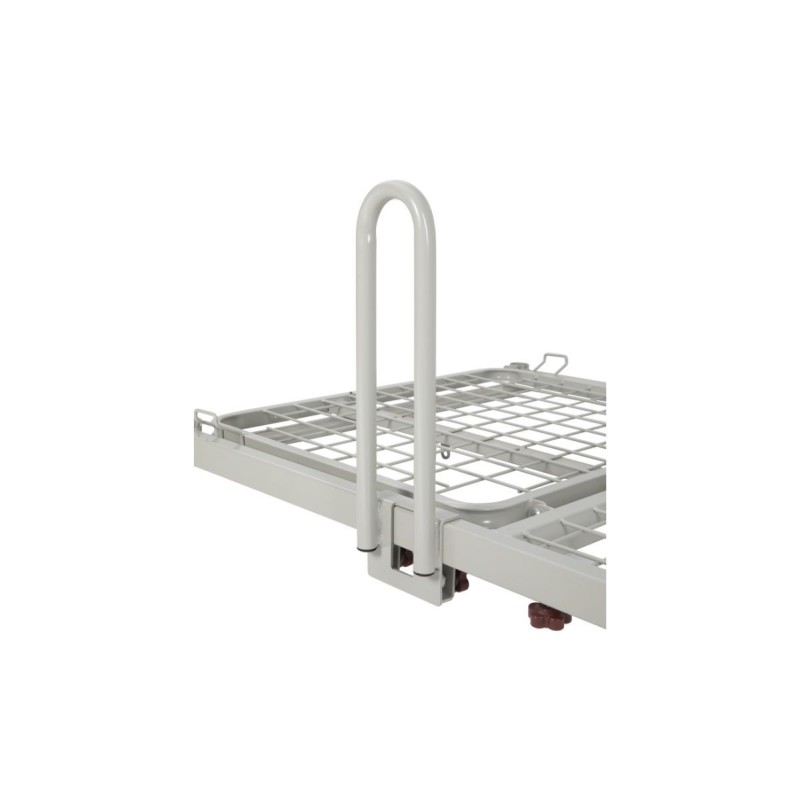


The Lomond Bed Assisting Lever attaches to the metal bedside bars of the Lomond profiling bed and provides a stable ergonomic grip handle for patients to use during bed entry, exit and in-bed repositioning. Patients with sufficient upper limb strength can grip the lever to pull themselves to a sitting position, shift position laterally or control their exit to a standing position without carer assistance. Tool-free installation via ergonomic hand wheels allows care staff to fit, adjust and remove the lever without specialist equipment and to reposition it along the rail to the optimal location for the patient's reach and grip preference. The lever is compatible with the full Lomond profiling bed range.
| Specification | Detail |
|---|---|
| Attachment Method | Ergonomic hand wheels onto metal bedside bars |
| Assembly | Tool-free fitting, repositioning and removal |
| Position | Adjustable along bedside rail length |
| Bed Compatibility | Lomond Community, Standard, Floor 2 |
| Primary Function | Patient-controlled bed entry, exit and repositioning |
The Lomond Bed Assisting Lever supports CQC Regulation 10 (Dignity and Respect) by enabling patients to manage their own bed entry, exit and repositioning where upper limb function permits, reducing reliance on carer assistance for basic mobility tasks. Promoting patient independence in daily activities is a core component of CQC Regulation 10 compliance in care home settings. MHOR 1992 (Manual Handling Operations Regulations) exposure for care staff is reduced where patients can independently perform repositioning tasks; the assisting lever creates this independence pathway without requiring major environmental changes. For patients recovering from surgery or managing neuromuscular conditions, an occupational therapist assessment is recommended before introducing the lever to confirm grip strength and control are sufficient for safe independent use.
Is an OT assessment required before using the assisting lever?
For patients with clear upper limb strength and intact grip, an OT assessment may not be required before introducing the lever for straightforward bed repositioning. However, for patients recovering from surgery (particularly upper limb, shoulder or spinal procedures), those with neuromuscular conditions or reduced grip strength, or those with cognitive impairment who may use the lever incorrectly, an OT assessment is recommended. The assessment confirms whether the patient has the strength, coordination and understanding to use the lever safely and without risk of increased falls or injury.
Does the assisting lever work on the Floor 2 ultra-low bed?
Yes. The assisting lever is compatible with the Lomond Floor 2 bed, which is particularly relevant because the Floor 2 is often specified in settings where patient independence in repositioning is a primary care plan goal. On the Floor 2 at 9cm, patients may also benefit from the assisting lever to help push themselves from the low sleeping position to a higher seated position before standing. Confirm that the bedside bar configuration on the specific Floor 2 installation is compatible with the lever's hand wheel attachment before fitting.
Part of our comprehensive Medical Beds and Accessories range. Bed accessories optimise clinical functionality and resident safety in care home and nursing home environments.