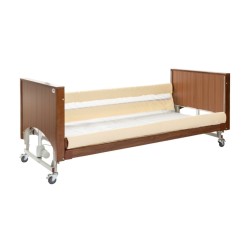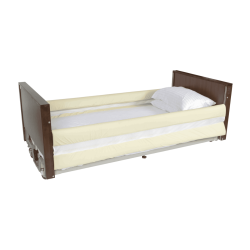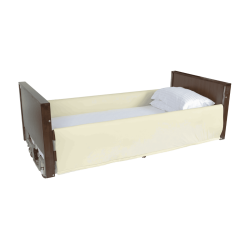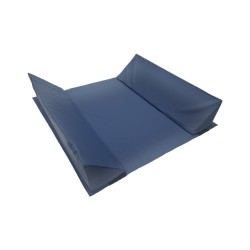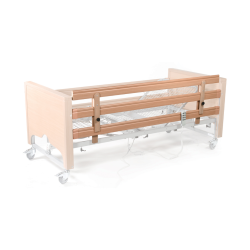
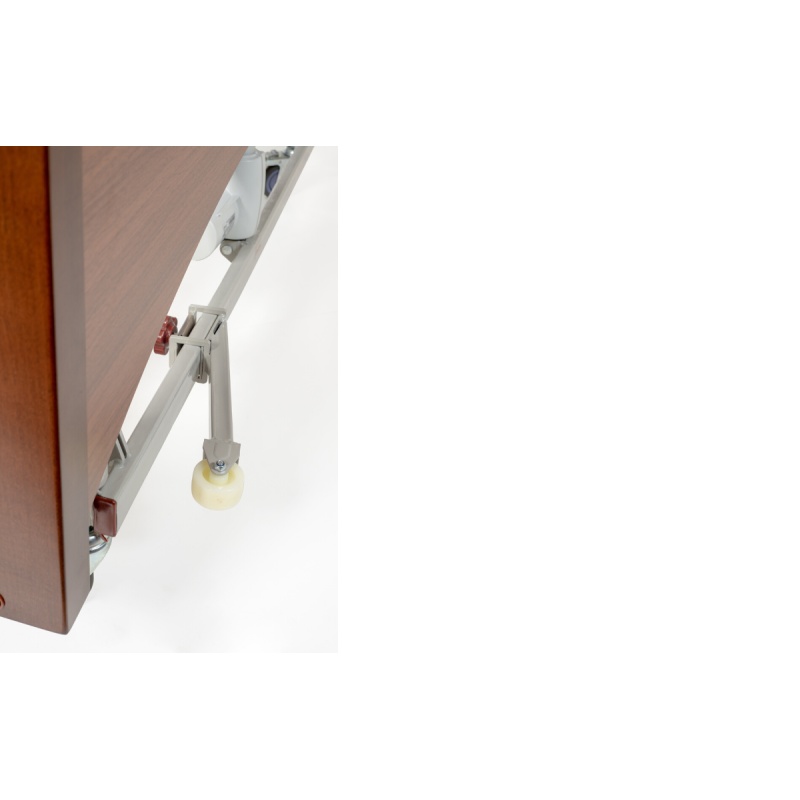

The Lomond Bed Wall Protector and Back-Guard attaches to the rear of the Lomond profiling bed frame to prevent the bed end from making direct contact with walls and wall-mounted infrastructure during electric height and backrest adjustments. Electric profiling beds move the bed end backward relative to the wall during certain positioning changes - particularly during height elevation and Trendelenburg movements - creating repeated contact between the bed frame and the wall surface. Over time, this contact causes paint wear, plaster erosion and damage to wall-mounted sockets, nurse call panels and other fixed infrastructure. The back-guard fits to the Lomond frame without tools and absorbs this contact before it reaches the wall surface.
| Specification | Detail |
|---|---|
| Attachment Position | Rear of Lomond bed frame |
| Function | Wall, socket and infrastructure protection during bed adjustment |
| Bed Compatibility | Lomond Community, Standard, Floor 2 |
| Assembly | Tool-free fit and removal |
| Bed Function Impact | None - does not affect electric motor, handset or positioning |
CQC Regulation 17 (Good Governance) requires care providers to maintain their premises in good repair and manage the care environment to a standard that supports safe, high-quality care delivery. Unprotected profiling bed contact with walls and infrastructure contributes to accumulated maintenance and repair requirements that, if unaddressed, can affect the quality of the care environment. The Lomond Back-Guard is a preventive maintenance accessory that directly supports compliance with the physical environment requirements under CQC Regulation 17. Where care rooms house electric profiling beds and the beds are repositioned regularly, fitting the back-guard from initial installation is preferable to retrospective repairs to damaged wall surfaces and infrastructure.
Is the wall protector needed if the bed is not positioned directly against a wall?
The back-guard is most critical where the bed head is positioned within approximately 30cm of a wall, socket or nurse call point, as electric bed movements can close this gap during height adjustment and Trendelenburg movements. Where beds are positioned well clear of all walls and infrastructure, the risk of contact is lower. However, bed positions change as rooms are reconfigured for different patients; fitting the back-guard from installation prevents contact damage under any future room arrangement.
Does the back-guard affect the bed's electric functions?
No. The back-guard attaches to the outer rear of the Lomond frame and does not contact any motor, cable, sensor or control component. All 10 handset functions - height, backrest, leg rest, Trendelenburg and reverse Trendelenburg - operate normally with the back-guard fitted. The back-guard is a passive structural accessory with no electrical or mechanical interface with the bed system.
Part of our comprehensive Medical Beds and Accessories range. Bed accessories optimise clinical functionality and resident safety in care home and nursing home environments.