
Patient Lifting Hoists
Patient lifting hoists in mobile floor and ceiling track formats for safe full-dependency patient transfers in care homes and NHS settings, LOLER 1998 compliant, MHRA registered, and compatible with principal UK sling formats.
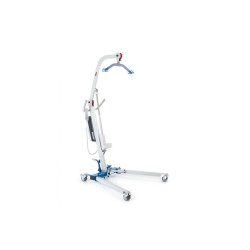
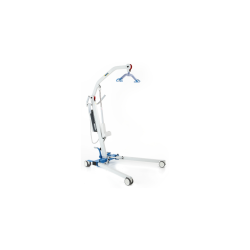
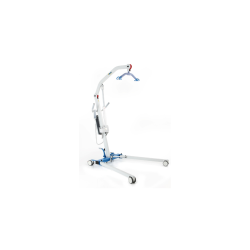
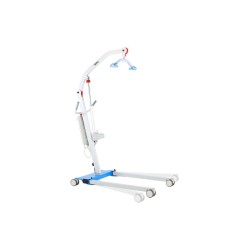
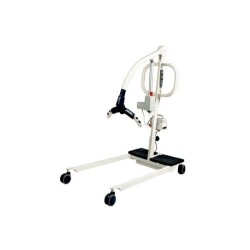
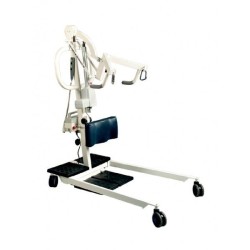
Patient Lifting Hoists for Safe Full-Dependency Patient Transfers
Clinical Summary: Patient lifting hoists provide safe mechanical lifting for full-dependency patients during bed-to-chair, chair-to-toilet, bathing, and repositioning transfers, eliminating manual lifting by care staff and reducing musculoskeletal injury risk to zero for the lifting component of the transfer. All patient hoists used in UK care homes and NHS settings are subject to LOLER 1998, requiring six-monthly thorough examination by a competent person and documented pre-use inspection checks.
Patient Hoist Types
- Mobile Floor Hoists: Wheeled mobile hoists providing flexible full-dependency patient lifting across all room configurations, with powered mast and boom for sling attachment and patient lifting, suited to care homes where ceiling track installation is not in place or not practical. The most widely used patient hoist format in UK care homes.
- Ceiling Track Hoists: Fixed ceiling-mounted track and hoist motor systems providing hoist coverage along defined track routes between bed, chair, bathroom, and transfer points, eliminating the physical effort of manoeuvring a mobile hoist and maximising transfer efficiency in high-use rooms.
- Bariatric Hoists: High-capacity mobile and ceiling track hoists rated from 250kg to 500kg and above for bariatric patient transfers, with reinforced boom, higher-capacity motors, and wider sling attachment bars for safe lifting of bariatric patients within MHRA bariatric pathway requirements.
- Sit-to-Stand Hoists: Powered stand assist devices providing guided sit-to-stand support for patients with some residual weight-bearing ability, offering a less restrictive transfer option than full suspension hoists where the patient can actively participate in the standing process.
Clinical Compliance and LOLER Standards
Patient lifting hoists supplied by Care Supplies carry MHRA registration and comply with BS EN ISO 10535 (hoists for the transfer of disabled persons) and LOLER 1998. LOLER requires thorough examination of patient hoists by a competent person every six months, with written examination reports retained and available for CQC inspection. Pre-use visual inspection checks by care staff should be documented daily, covering boom and mast function, battery charge level, sling attachment points, and spreader bar condition. Hoist safe working load must exceed the combined weight of the patient plus sling, and this must be confirmed before each patient use. Staff must be trained in hoist use and sling selection as part of the mandatory manual handling training required under MHOR 1992.
| Hoist Type | Installation | Capacity Range | Key Standard |
|---|---|---|---|
| Mobile Floor Hoist | No installation, flexible | 160kg to 300kg typical | LOLER 1998 / BS EN ISO 10535 |
| Ceiling Track Hoist | Fixed ceiling installation | 150kg to 300kg typical | LOLER 1998 / BS EN ISO 10535 |
| Bariatric Hoist | Mobile or ceiling track | 250kg to 500kg+ | LOLER 1998 / MHRA Bariatric |
| Sit-to-Stand Hoist | Mobile | 130kg to 200kg typical | LOLER 1998 / MHOR 1992 |
Frequently Asked Questions
Q: How often do patient hoists need LOLER inspection in a care home?
A: LOLER 1998 requires patient hoists to be thoroughly examined by a competent person every six months, as they are lifting equipment used to lift people. The examination must produce a written report which should be retained and made available to CQC on request. Missing or out-of-date LOLER examination records are a frequent CQC inspection finding and can result in regulatory action. Hoist slings are also subject to six-monthly LOLER examination and must not be used beyond their examination due date.
Q: What is the difference between a mobile hoist and a ceiling track hoist?
A: A mobile floor hoist is a wheeled unit that is moved to the patient and positioned for each transfer, requiring floor space for manoeuvre. A ceiling track hoist is permanently mounted on a ceiling rail running between fixed transfer points, with a motor unit that travels along the track. Ceiling track hoists require installation works but eliminate the effort of manoeuvring a mobile unit, reduce floor space requirements, and provide consistent transfer routes in high-use rooms such as bedrooms with en-suite bathrooms.