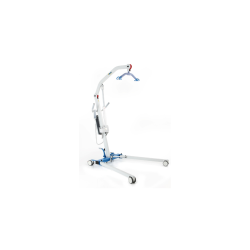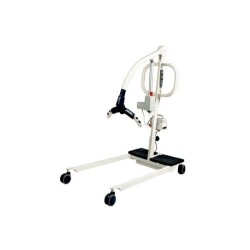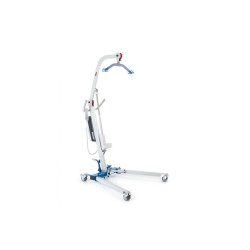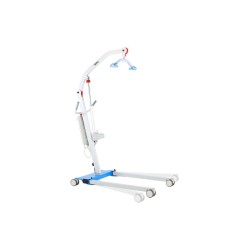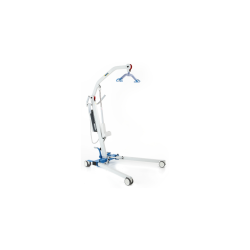
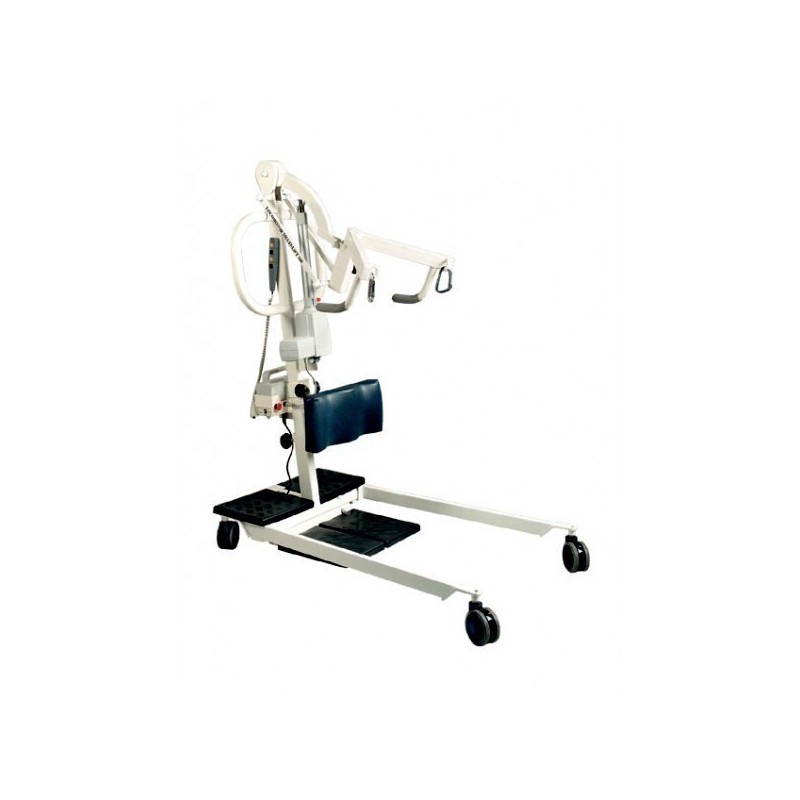

The Multi-Lift Patient Hoist is a dual-function mobile hoist that operates both as a conventional sling-based mobile hoist for non-weight-bearing patients and as a powered standing aid for weight-bearing patients, with a tool-free head change between the two modes. In conventional hoist mode, the integral shin pad supports the patient's legs and prevents lateral swing during transfer, providing more controlled handling than a standard hoist without a shin pad. In stander mode, the same unit supports the patient from a seated position to standing for toileting, dressing, washing and positional changes, without the carer needing to manually lift. The 5kg stander attachment handling weight makes the mode change practical for a single carer. Powered leg opening enables close access positioning around beds, chairs and toilets at 160kg capacity.
| Specification | Detail |
|---|---|
| Hoist Type | Dual-function: conventional mobile hoist and powered stander |
| Maximum SWL | 160kg (25 stones) |
| Leg Opening | Powered |
| Shin Pad | Height and width adjustable |
| Spreader Bar | Unique proprietary fixings for sling attachment safety |
| Stander Attachment | Tool-free mode change; 5kg handling weight |
| Primary Clinical Use | Non-weight-bearing patients (hoist mode); weight-bearing patients (stander mode) |
The Multi-Lift Patient Hoist is subject to LOLER 1998 (Lifting Operations and Lifting Equipment Regulations) in both operating modes, as it is used to lift people. LOLER 1998 requires 6-monthly thorough examination by a competent person in each mode, with written examination reports retained on site. CQC Regulation 12 (Safe Care and Treatment) requires that LOLER examination records are maintained and accessible to inspectors. The unique spreader bar fixings must be used with compatible slings that are individually assessed and prescribed for the patient under MHOR 1992 and LOLER 1998; non-compatible slings must not be used. The dual-function capability requires that all carers using the unit are trained and assessed as competent in both operating modes before using the hoist independently; CQC Regulation 18 (Staffing) requires that care staff are appropriately trained for the equipment they use. MHOR 1992 is addressed in both modes by eliminating manual patient lifting.
Can a single carer change the hoist between conventional and stander modes?
The stander attachment is designed to be changed by a carer without tools, and at 5kg handling weight, the mode change is within the range that can be managed by a single carer under MHOR 1992 guidance. However, the decision about whether a single-carer mode change is appropriate for a specific care environment and patient population should be confirmed in the care team's manual handling risk assessment, as environmental factors (space around the hoist, floor surface, carer ergonomics during the change) also affect the MHOR 1992 assessment.
What is the benefit of the shin pad in conventional hoist mode?
In a standard mobile hoist without a shin pad, the patient's legs can swing laterally during transfer, creating discomfort, reducing the patient's sense of security and potentially causing contact with the hoist frame or furniture. The Multi-Lift's shin pad supports the patient's lower legs in a fixed position throughout the lift, preventing swing and providing a more controlled, calmer transfer experience. The height and width adjustability of the shin pad allows it to be fitted correctly across different patient heights and leg lengths, which is important for both comfort and effectiveness.
Part of our specialist Patient Moving and Handling Equipment range, providing CQC and LOLER compliant patient lifting solutions for care homes, NHS trusts, and home care settings across the UK.