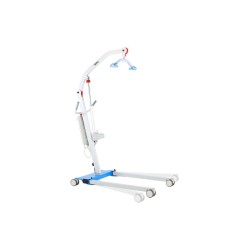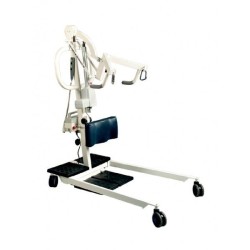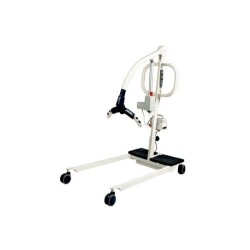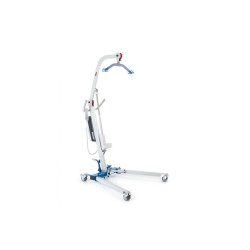
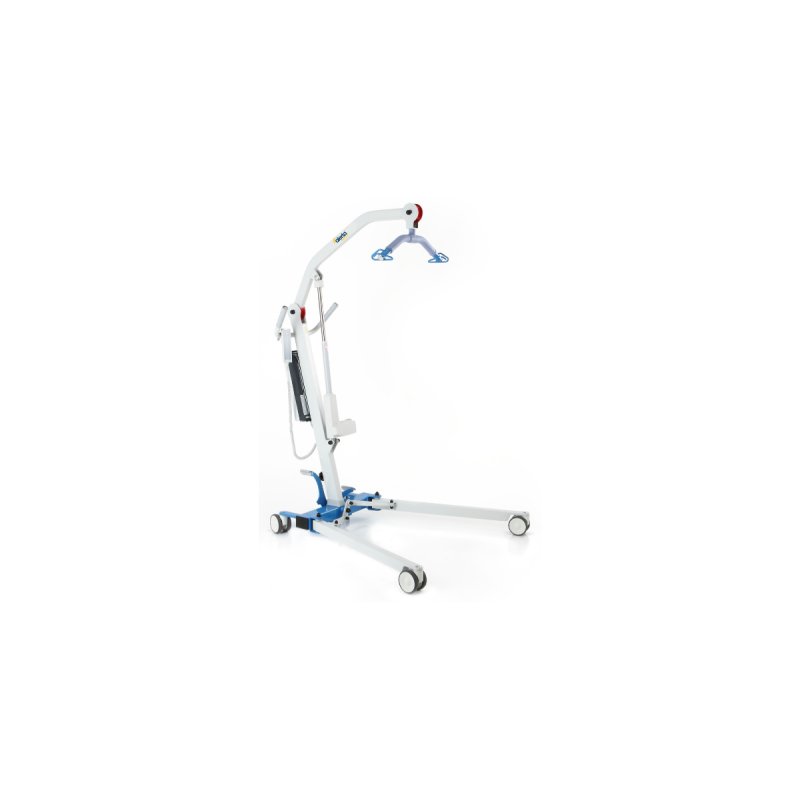

The Alerta Powerlifter Midi 150 is a mid-range mobile transfer hoist positioned between the compact Mini 135 and the heavy-duty Maxi 175, offering a 150kg safe working load for hospitals, nursing homes and residential care environments where a balance of capacity and manoeuvring footprint is required. The TiMotion control system provides smooth, motorised lift with emergency stop protection, visual and audible battery alerts, and dual control operation from either the handset or the control box. The 360-degree rubber-coated anti-swing spreader bar minimises lateral patient movement during lifts. Tool-free two-section disassembly and braked rear castors support practical deployment across care settings.
| Specification | Detail |
|---|---|
| Hoist Type | Mobile transfer hoist |
| Maximum SWL | 150kg |
| Control System | TiMotion (handset and control box) |
| Safety Features | Emergency stop, visual and audible battery alert |
| Spreader Bar | 360-degree rotation, anti-swing rubber coating |
| Castors | Braked rear castors |
| Disassembly | Tool-free two-section disassembly |
The Alerta Powerlifter Midi 150 is subject to LOLER 1998 as equipment used to lift people. LOLER 1998 requires 6-monthly thorough examination by a competent person, with the written examination report retained on site. CQC Regulation 12 (Safe Care and Treatment) requires that LOLER records are maintained and accessible to inspectors reviewing care home hoist management. Selecting the Midi 150 requires confirmation that its 150kg SWL exceeds the weight of the heaviest patient it will be used with, including the sling weight; where patient weight approaches or exceeds 150kg, the Powerlifter Maxi 175 should be specified. MHOR 1992 is addressed by replacing manual lifting with mechanically assisted transfer. Patient slings used with this hoist must be assessed and selected for each individual patient; using a sling not prescribed for the patient is a LOLER and MHOR 1992 compliance failure.
How does the Midi 150 differ from the Mini 135 and the Maxi 175?
The key difference is SWL: Mini 135 (135kg), Midi 150 (150kg), Maxi 175 (175kg). The Midi 150 is the mid-point specification, suited to care settings where a 135kg limit is insufficient but a full Maxi 175 footprint is not required. All three models share the TiMotion control system, 360-degree anti-swing spreader bar and two-section disassembly; the Maxi 175-E adds an electric legspread system which neither the Mini nor Midi carry. Hoist selection should be based on the SWL requirement of the patient population, not on size preference alone.
How many carers are needed to operate the Powerlifter Midi 150?
MHOR 1992 guidance and most care organisation policies require a minimum of two carers during hoist transfers: one to operate the hoist controls and monitor the patient, and one to guide the patient and position the landing site. Single-carer hoist use may be assessed as acceptable by an OT for specific patients in specific transfer scenarios under a documented manual handling risk assessment, but this must be individually assessed and is not a general default. The dual control capability (handset and control box) on the Midi 150 does not reduce the minimum carer requirement.
Part of our specialist Patient Moving and Handling Equipment range, providing CQC and LOLER compliant patient lifting solutions for care homes, NHS trusts, and home care settings across the UK.