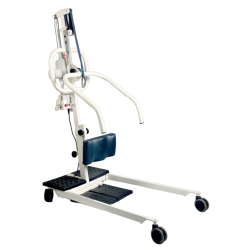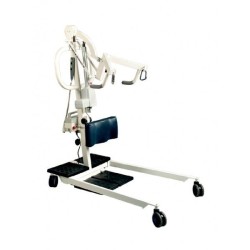
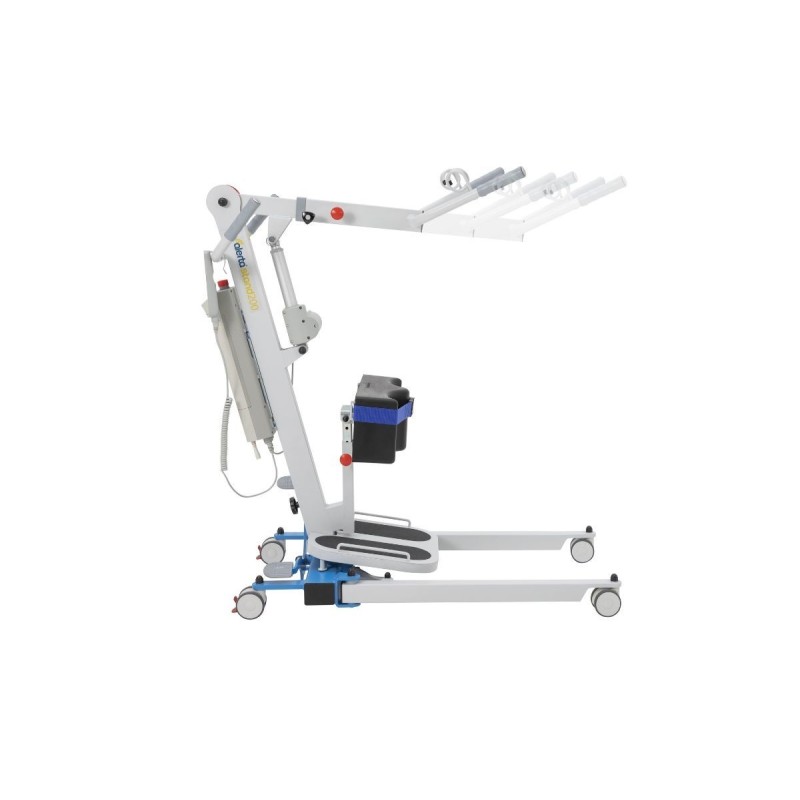


The Alerta Stand 200 Powerlifter is an electric standing hoist designed to assist users in transitioning from a seated position to a standing position, supporting both rehabilitation and routine care tasks such as toileting, dressing and position changes. The TiMotion control system delivers smooth motorised lift with dual operation capability from both the handset and the control box, allowing the carer to control the lift from the most ergonomically appropriate position. At 200kg capacity, the Stand 200 covers a broad patient weight range and the adjustable legs accommodate different chair widths and care environment configurations. The disassemblable frame enables transport between care rooms and between service sites without specialist lifting equipment.
| Specification | Detail |
|---|---|
| Hoist Type | Electric standing hoist |
| Maximum SWL | 200kg |
| Control System | TiMotion (handset and control box) |
| Safety Features | Emergency stop, visual and audible battery level indicators |
| Legs | Adjustable for different chair/bed widths |
| Arm | Multi-position for varied user postural needs |
| Frame | Disassemblable for transport and storage |
The Alerta Stand 200 Powerlifter is subject to LOLER 1998 (Lifting Operations and Lifting Equipment Regulations) as a device used to lift people. LOLER 1998 requires that all hoists used on people undergo a thorough examination by a competent person at intervals not exceeding 6 months, and that the examination report is retained as a documented record. CQC Regulation 12 (Safe Care and Treatment) requires that LOLER examination records are maintained and accessible to inspectors. MHOR 1992 (Manual Handling Operations Regulations) is directly addressed by the Stand 200: standing transfers assisted by the hoist eliminate the need for carers to manually lift patients from a seated position, reducing MHOR 1992 risk for the care team. CQC Regulation 10 (Dignity and Respect) is supported by the smooth electric lift, which provides a calmer, more controlled standing experience than manual assisted standing.
What is the difference between a standing hoist and a transfer hoist?
A standing hoist (such as the Stand 200) is designed to assist users who retain partial weight-bearing ability to rise from a seated position to standing, using the hoist for support and motorised lift assistance. A transfer hoist (such as the Powerlifter Mini, Midi or Maxi) uses a sling to fully support a non-weight-bearing or minimal-weight-bearing user and lift them clear of a surface for transfer between locations. The standing hoist is used in rehabilitation and for patients who can bear weight on their legs; the transfer hoist is used for patients who cannot.
How often does the Stand 200 need to be serviced under LOLER 1998?
LOLER 1998 requires a thorough examination by a competent person every 6 months for lifting equipment used to lift people. This thorough examination is distinct from routine user checks, which should be carried out visually before each use. The thorough examination must be carried out by a competent person (typically a specialist engineer or approved service provider) and a written examination report must be retained on site for inspection. CQC inspectors check LOLER examination records as part of their review of safe care practices.
Part of our specialist Patient Moving and Handling Equipment range. Patient stand aids support safe assisted standing and rehabilitation in care homes and NHS settings.