
Patient Slings
Patient slings in universal, divided leg, standing, and specialist formats for use with patient hoists in care homes and NHS settings, MHRA registered, LOLER 1998 compliant, and selected through individual sling assessment for each patient.
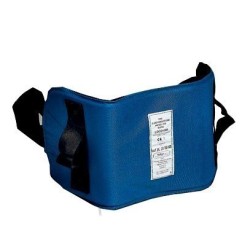
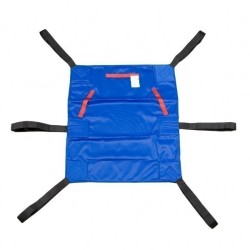

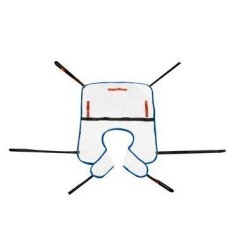
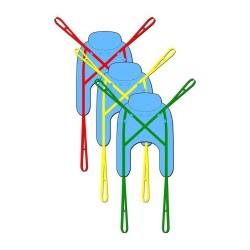
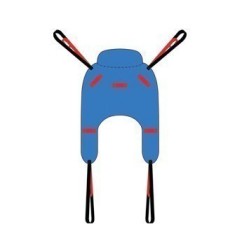
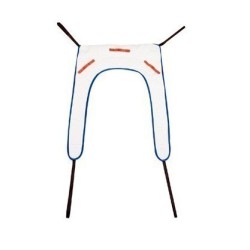
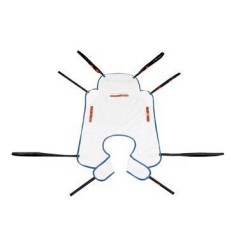
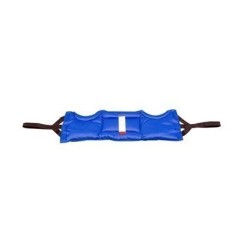
Patient Slings for Safe Hoist Transfers and Clinical Lifting
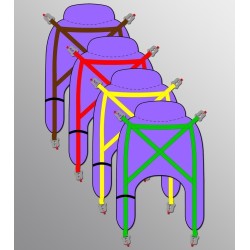
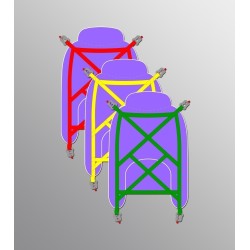
Clinical Summary: Patient slings are the interface between the patient and hoist lifting system, and correct sling selection is as important as hoist selection for safe, comfortable, and effective patient transfers. Slings must be individually assessed for each patient to ensure correct size, fabric, and configuration for the patient body profile, transfer needs, skin condition, and postural requirements, with individual sling assessment documented in the manual handling plan under MHOR 1992 and LOLER 1998.
Patient Sling Types
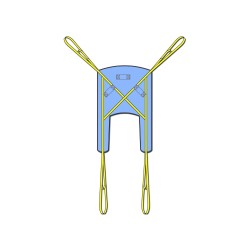
- Universal Slings: General-purpose hoist slings providing full-body support from shoulders to thighs, suitable for a wide range of transfer applications including bed-to-chair, chair-to-toilet, and bathing transfers for patients without specific postural or anatomical considerations. The most widely used sling format in UK care homes for general transfer applications.
- Divided Leg Slings: Slings with separate leg sections providing independent lower limb support during toilet, commode, and bathing transfers where access to the perineal area is required for personal care delivery or where leg position management is important for comfort and pressure management.
- Standing Slings: Shorter slings designed for use with sit-to-stand hoists, supporting the patient around the trunk and thighs during the standing movement without full suspension, appropriate for patients with partial weight-bearing ability using an active transfer approach.
- Specialist Slings: Amputee slings for patients with single or bilateral lower limb amputations, hammock slings for patients requiring full head and trunk support, bariatric slings for patients exceeding standard sling weight capacities, and paediatric slings for children requiring hoist transfers.
Clinical Compliance and Sling Safety Standards
Patient slings supplied by Care Supplies carry MHRA registration and comply with LOLER 1998, which requires slings to be thoroughly examined by a competent person every six months alongside the hoist to which they are attached. Slings must carry a permanent label showing the safe working load, patient weight range, compatible hoist types, and laundering instructions. Individual sling assessment should be carried out to establish correct sling size, fabric, and configuration for each patient, with the assessment documented in the manual handling plan. Slings should be inspected before each use for signs of fabric damage, seam integrity, and attachment point condition, and withdrawn from use immediately if any damage is found. Sling laundering should follow manufacturer temperature instructions to maintain fabric integrity and attachment point function.
| Sling Type | Primary Transfer Application | Key Patient Requirement | Key Standard |
|---|---|---|---|
| Universal Sling | General bed, chair, bathing transfers | Full dependency, no specific needs | LOLER 1998 / MHRA |
| Divided Leg Sling | Toilet, commode, bathing transfers | Perineal access required | LOLER 1998 / MHRA |
| Standing Sling | Sit-to-stand hoist transfers | Partial weight-bearing | LOLER 1998 / MHOR 1992 |
| Specialist Sling | Amputee, bariatric, paediatric | Specific anatomical or weight needs | LOLER 1998 / MHRA |
Frequently Asked Questions
Q: How often do patient slings need LOLER inspection?
A: Patient slings are subject to LOLER 1998 as accessories to lifting equipment and require six-monthly thorough examination by a competent person, at the same frequency as the hoist. Sling examination records must be retained alongside hoist examination records. Slings must also be inspected by care staff before each individual use, and withdrawn from use if any damage to fabric, seams, or attachment points is found. Slings must never be used beyond their LOLER examination due date.
Q: Can the same sling be shared between multiple patients in a care home?
A: Current infection control guidance recommends that hoist slings are patient-specific and not shared between patients, due to the risk of cross-infection from skin and bodily fluid contamination that standard laundering may not fully eliminate for all pathogen types. Each patient requiring hoist transfers should have their own individually assessed and labelled sling, laundered between uses to manufacturer temperature specifications. Shared slings should only be used where single-use alternatives are available, with single-use disposable slings the recommended solution for infection control environments.