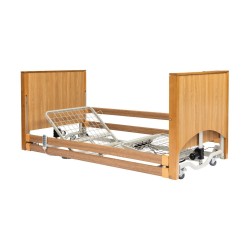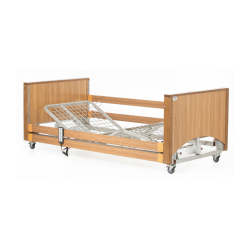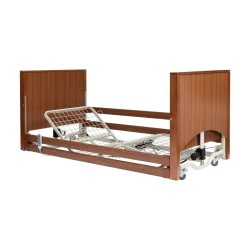
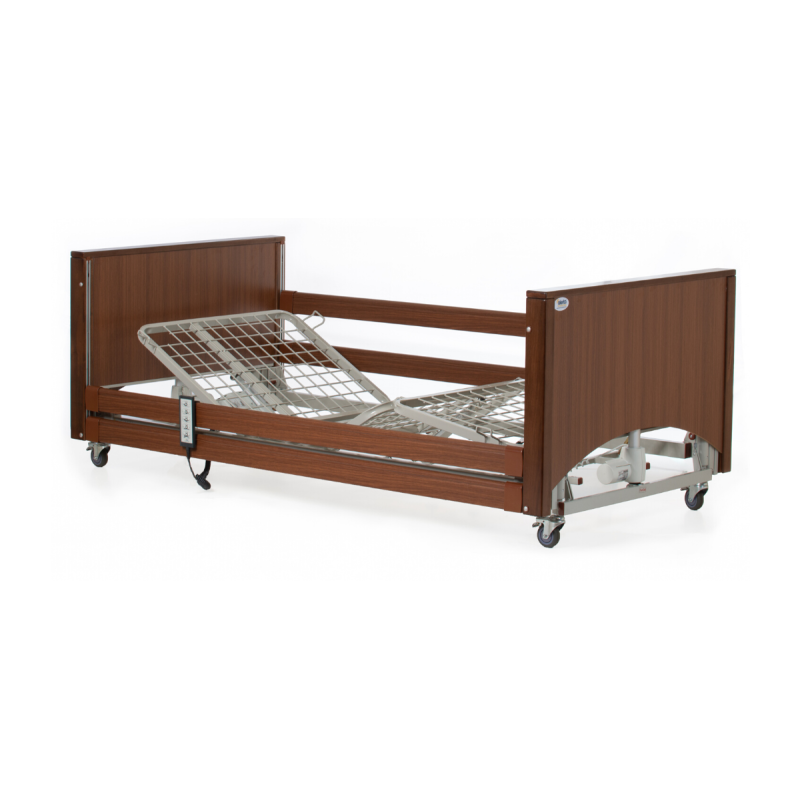

The Alerta Lomond Low Bed in oak finish delivers the same clinical functionality as the walnut variant with a warm oak aesthetic suited to residential care home environments. The ultra-low 20cm minimum height reduces fall injury risk for patients assessed as high falls risk. Full electric profiling includes backrest elevation, knee break, overall height adjustment, and Trendelenburg tilt via handset control. The 250kg safe working load supports a broad patient weight range. Compatible with alternating pressure mattress systems including the full Alerta range.
| Specification | Detail |
|---|---|
| Product Code | NCL-ALT-LB-LO |
| Bed Type | Ultra-low electric profiling |
| Minimum Height | 20cm (ultra-low for falls prevention) |
| Safe Working Load | 250kg |
| Profiling Functions | Backrest, knee break, height, Trendelenburg |
| Finish | Oak |
| Control | Electric handset |
| Mattress Compatibility | Standard and alternating pressure systems |
| Application | Care homes, hospitals, nursing environments |
Profiling beds with powered mechanisms fall within LOLER 1998 scope, requiring six-monthly thorough examination. CQC Regulation 12 requires bed equipment in registered settings to be maintained, inspected, and appropriate for assessed needs. The oak finish is designed for residential care environments where domestic aesthetics support patient dignity and wellbeing alongside clinical functionality.
What is the difference between the walnut and oak Lomond Low Bed?
The clinical specification is identical across both finishes. The walnut and oak options allow care home operators to select a finish that complements the decor of the care environment. Residential care settings often prefer domestic-style finishes to support a non-institutional atmosphere in residents' bedrooms.
Can this bed be used with floor-level crash mats?
Yes. At its 20cm ultra-low setting, the Lomond Low Bed is compatible with floor-level crash mats placed alongside the bed to further reduce injury risk during unassisted bed exits. The bed height should be set to its lowest position during overnight periods for patients on a falls prevention care plan, with crash mats positioned on the anticipated exit side.