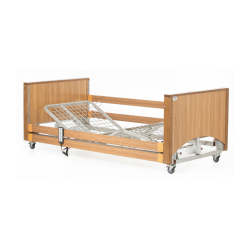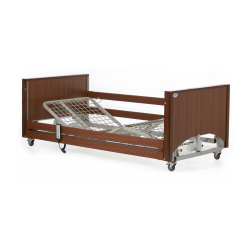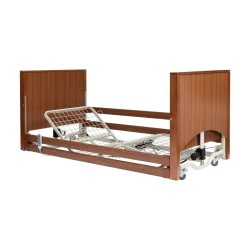
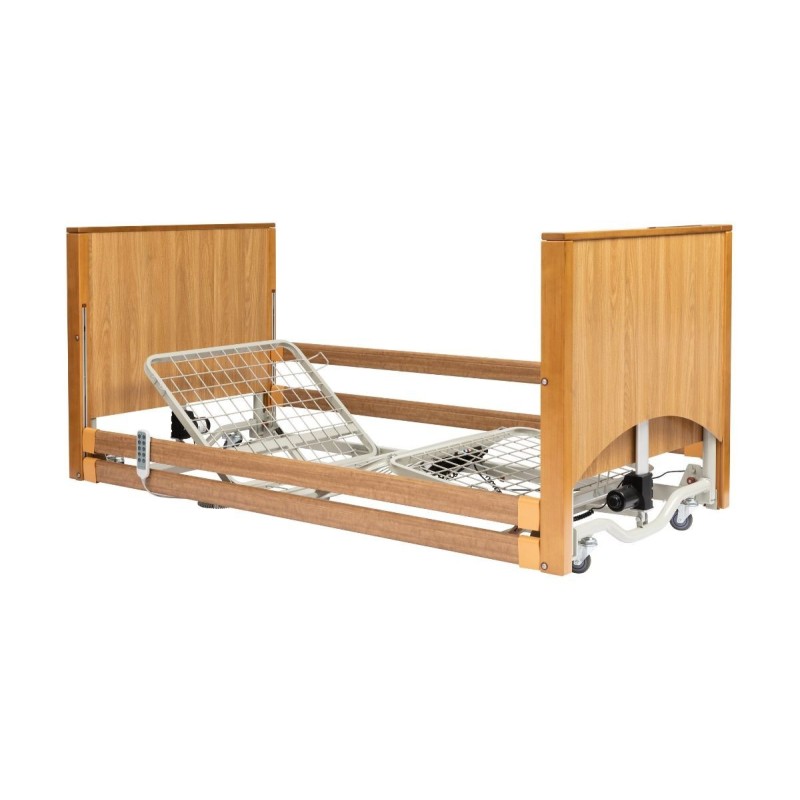

The Alerta Lomond Floor 2 Bed lowers to 9cm from the floor - the ultra-low position specified in NICE NG147 (Falls in Older People) clinical guidance as a primary environmental intervention for patients at high risk of fall-related injury. At 9cm, the bed position reduces injury severity from unassisted bed exits and falls, while keeping the patient accessible for care staff without requiring a full height change. The auto-regression backrest is the Floor 2's key mechanical differentiator: as the backrest elevates, it simultaneously moves backward along the platform, counteracting the shear and friction forces that cause the patient to slide toward the foot end. This is clinically significant in dementia care, post-operative rehabilitation and complex care placements where patient repositioning is frequent.
| Specification | Detail |
|---|---|
| Minimum Height | 9cm from floor |
| Height Range | 9-70cm |
| Maximum SWL | 200kg |
| Outer Dimensions | 102x213cm |
| Platform Sections | 4-section with anti-slip grip surface |
| Castor Size | 3-inch braking castors |
| Backrest Mechanism | Auto-regression (backrest moves backward during elevation) |
| Handset | 10-function, lockable |
| Positioning | Trendelenburg, Reverse Trendelenburg, Backrest, Leg Rest |
| Transport | Integrated transport system |
| Compatible Accessories | Extra-high side rails, 20cm extension kit (sold separately) |
| Assembly | Tool-free assembly and dismantling |
| Finish | Walnut |
| Warranty | 3-year frame; 2-year motors and electrics |
The Lomond Floor 2 Bed meets BS EN 60601-2-52 requirements for medical electrical equipment in medical bed applications. The 9cm minimum height directly supports NICE NG147 (Falls in Older People) multifactorial falls prevention guidance and is appropriate for care settings implementing low-level bed protocols as part of a documented falls prevention plan under CQC Regulation 12 (Safe Care and Treatment). MHOR 1992 manual handling requirements are addressed through the full height adjustment range: carers can raise the bed to an ergonomically appropriate working height for care tasks before returning it to the ultra-low position. NICE NG97 (Dementia: assessment, management and support) supports low bed use as a least-restrictive fall prevention measure. Where side rails are fitted, MHRA bed rail safety guidance requires a risk assessment covering the seven entrapment zones and, where applicable, a Mental Capacity Act 2005 assessment.
What is the auto-regression backrest and why does it matter clinically?
As the backrest rises, it simultaneously moves backward along the mattress platform. This counteracts the tendency of the patient to slide toward the foot end during backrest elevation - a movement caused by shear and friction forces. For patients who cannot actively reposition themselves (dementia, post-operative, neurological presentations), this reduces the need for manual carer intervention during backrest adjustment and lowers shear exposure on the skin surface, which is relevant to NICE CG179 pressure injury prevention in at-risk patients.
Is the Lomond Floor 2 Bed appropriate for dementia care?
Yes. The 9cm ultra-low position is widely specified in dementia care environments where unassisted bed exits are common and fall injury prevention is a primary care plan objective. NICE NG97 supports least-restrictive fall prevention measures; a low bed position achieves fall injury reduction without requiring physical rail restraint. A documented falls prevention care plan and regular review under CQC Regulation 12 are required.
Part of our comprehensive Medical Beds and Accessories range. Low profiling beds reduce falls risk and support safe manual handling in care homes and residential settings.