
Low Profiling Beds
Low profiling beds adjusting to near-floor level for falls risk management in care homes and hospital wards, reducing injury risk for high-falls-risk patients while retaining full electric profiling, backrest, knee-break, and height adjustment.
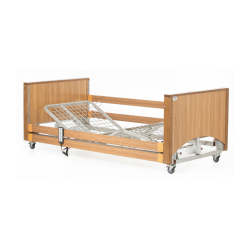
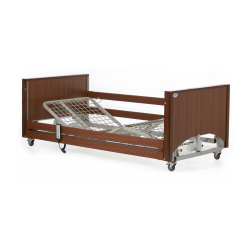
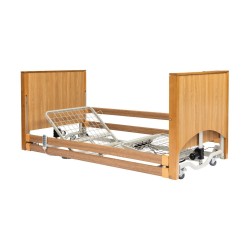
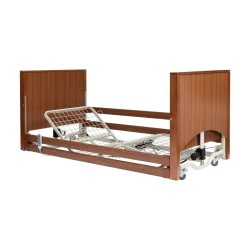
Low Profiling Beds for Falls Prevention and High-Risk Patient Management
Clinical Summary: Low profiling beds reduce the minimum bed height to approximately 15 to 20cm from floor level, directly reducing fall injury risk for confused, mobile, or high-falls-risk patients. Specification should be supported by documented individual falls risk assessment in line with NICE clinical guideline CG161 and CQC evidence of person-centred falls prevention care planning.
Clinical Applications and Falls Prevention
- Ultra-Low Position: Adjusts to 15 to 20cm from floor level depending on the model, substantially reducing the height and impact force of a bed fall for high-risk patients, directly supporting injury prevention outcomes in residential and nursing care settings.
- Full Profiling Function Retained: Low profiling beds retain all standard profiling functions including backrest, knee-break, and height adjustment, supporting clinical positioning and pressure care management alongside the primary falls prevention application.
- Compatibility with Safety Accessories: Low profiling beds are compatible with appropriate bed rails, mattress retainers, and pressure relief surfaces, enabling a complete falls prevention and pressure care environment within a single bed specification.
- CQC Falls Prevention Evidence: Specifying a low profiling bed as part of a documented falls prevention care plan provides CQC with evidence of person-centred, risk-assessed care for mobile or confused residents, supporting positive inspection outcomes.
Compliance and Risk Assessment Requirements
Low profiling bed specification for CQC-registered care homes requires documented individual falls risk assessment, care plan documentation referencing the low bed rationale, and regular review of the continuing appropriateness of the equipment for the individual resident. NICE clinical guideline CG161 provides the evidence base for multifactorial falls risk assessment in older people, and low profiling beds are a recognised equipment intervention within falls prevention care plans. All models comply with BS EN 60601-2-52 and carry current MHRA registration.
| Feature | Low Profiling Bed | Standard Profiling Bed |
|---|---|---|
| Minimum Height from Floor | 15 to 20cm | 35 to 45cm |
| Falls Prevention Application | Primary clinical indication | Secondary consideration |
| NICE CG161 Alignment | Recognised equipment intervention | Standard positioning use |
| Full Profiling Function | Yes, retained across full height range | Yes, standard range |
| Pressure Care Compatibility | Compatible with standard pressure surfaces | Compatible with standard pressure surfaces |
Frequently Asked Questions
Q: How low do low profiling beds adjust?
A: Low profiling beds adjust to a minimum height of approximately 15 to 20cm from floor level depending on the model, significantly lower than standard profiling beds which typically bottom out at 35 to 45cm. This near-floor positioning reduces the distance and impact force of a bed fall, directly reducing injury risk for high-falls-risk patients.
Q: Are low profiling beds required for high falls risk patients in CQC-registered care homes?
A: CQC does not mandate specific bed types but requires care homes to demonstrate that patient equipment is matched to individual risk assessments. For patients assessed as high falls risk, low profiling beds are frequently the most appropriate documented intervention within a falls prevention care plan reviewed under NICE CG161 guidance.