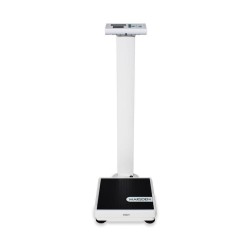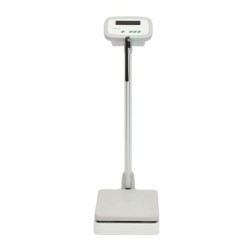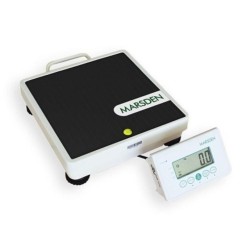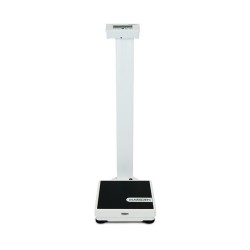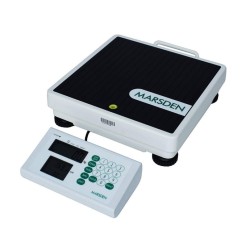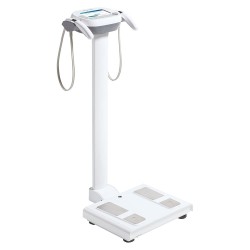
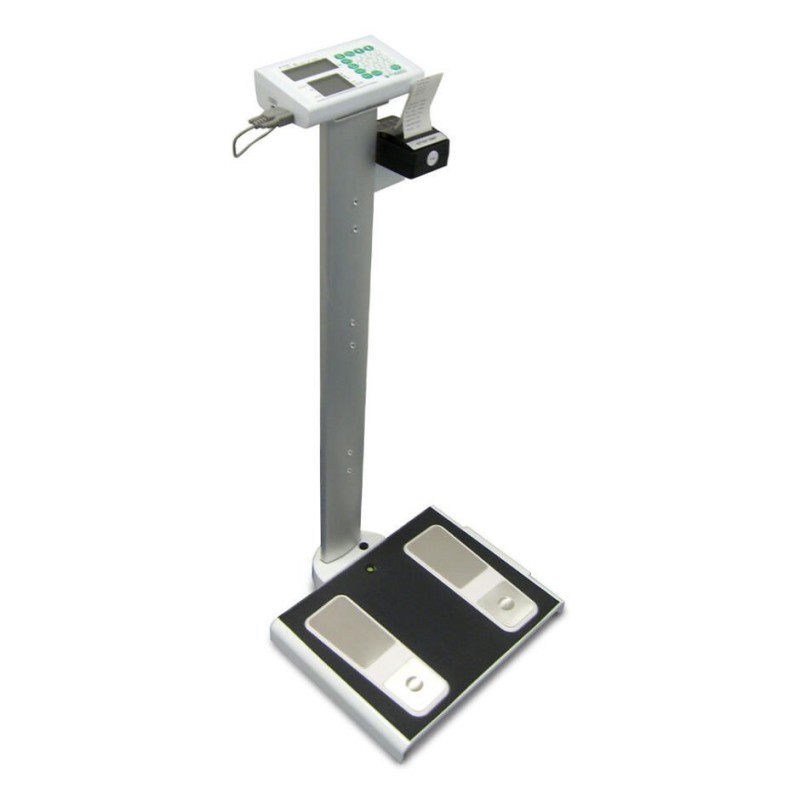

The Marsden MBF-6010 is a Class III and MDR Approved body composition scale combining clinical-grade weighing at 300kg capacity with bioelectrical impedance analysis (BIA) that measures seven distinct body composition metrics: Basal Metabolic Rate (BMR), Total Body Water (TBW), Fat-Free Mass (FFM), Fat Mass (FM), Body Fat Percentage, Weight and BMI. With a column-mounted indicator and printer included as standard, the MBF-6010 is the most widely specified body composition scale in NHS hospital physiotherapy departments, specialist weight management clinics, pharmacies and sports clubs requiring the clinical credibility of Class III certification alongside detailed body composition data.
The printer delivers a complete body composition printout at the end of each assessment, providing both the patient and the clinician with a documented record of all seven measurements that supports NHS weight management pathway monitoring and CQC clinical record requirements.
| Specification | Detail |
|---|---|
| Capacity | 300kg |
| Graduations | 100g |
| Approval | Class III and MDR Approved (NAWI Directive) |
| Measurement Method | Bioelectrical Impedance Analysis (BIA) |
| Metrics Measured | BMR, TBW, FFM, FM, Body Fat %, Weight, BMI |
| Indicator | Column-mounted at waist height |
| Printer | Included as standard |
| Optional Extras | Coin box, height measure |
Class III and MDR approval confirm the MBF-6010 meets NAWI Directive precision standards and EU Medical Device Regulation requirements for clinical diagnostic use, making it one of the few body composition scales certified for use in NHS clinical settings. BIA body composition data supports NHS NICE obesity pathway (CG43) assessments where fat mass and fat-free mass data provide a more clinically complete picture than BMI alone for patients at the extremes of body composition, and supports physiotherapy and sports medicine settings where tracking fat-free mass during weight loss or rehabilitation is a clinical outcome measure. The column design makes the MBF-6010 a permanent clinical fixture rather than a portable device, appropriate for NHS department and pharmacy locations with dedicated weighing areas.
How accurate is BIA body composition analysis compared with DEXA scanning?
BIA is less precise than DEXA (dual-energy X-ray absorptiometry) but significantly more accessible, lower-cost and radiation-free. Marsden's BIA scales have been tested against DEXA standard and produce results closer to DEXA than most comparable BIA devices. BIA accuracy is affected by hydration status, with readings varying if the patient is significantly over- or under-hydrated relative to their normal state. For clinical purposes, BIA is accepted in NHS weight management and physiotherapy settings as a reliable trend-monitoring tool when measurements are taken under consistent conditions (same time of day, same hydration status), even if individual readings are less precise than DEXA.
Who should not use a BIA body composition scale such as the MBF-6010?
BIA passes a small electrical current through the body and is contraindicated for patients with cardiac pacemakers or other implanted electronic devices, as the current may interfere with device operation. It is also not recommended for use during pregnancy. For all other patients, BIA at the current levels used in clinical body composition scales is safe for routine use. NHS clinical settings using the MBF-6010 should include a standard contraindication check (pacemaker, implanted device, pregnancy) as part of the body composition assessment consent process before each measurement.
Part of our professional Medical Scales and Measuring range. Professional gym and slimming scales deliver accurate body weight measurement for health and wellness monitoring in care and clinical settings.