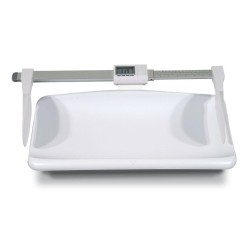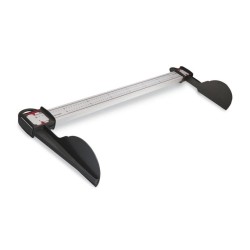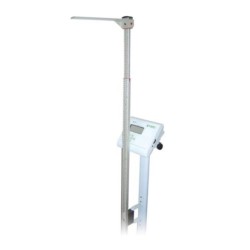
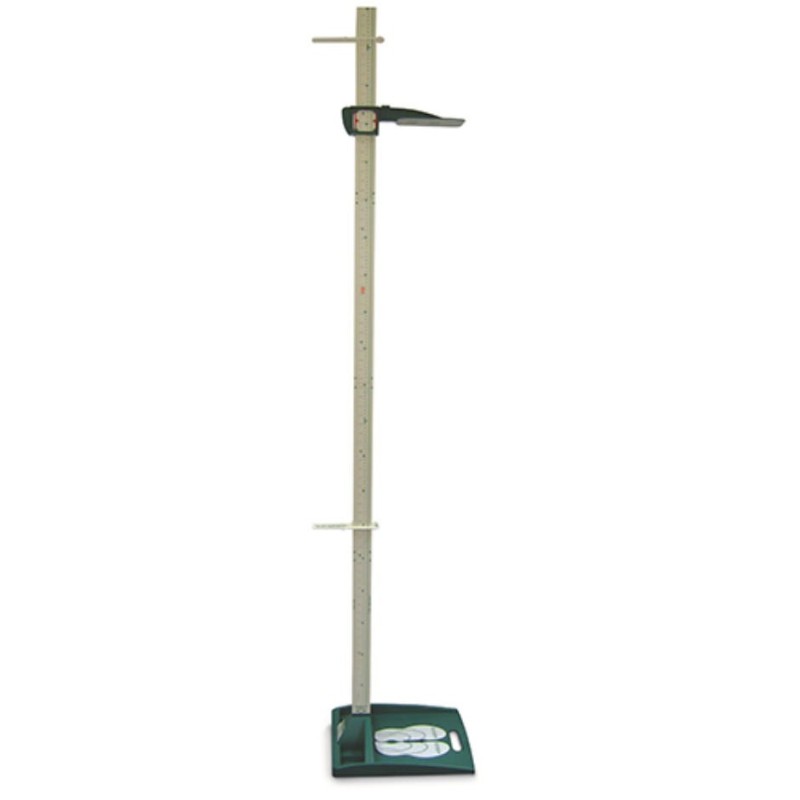


The Marsden HM-250P is a portable Leicester-style height measure with a 13.5cm to 210cm range and 1mm graduation, designed for community health visitors, school nurses and mobile clinical teams who require a portable, accurate standing height measure for use across home visits, community assessment venues and school health settings. The Leicester-style design provides the rigid vertical measurement surface that WHO and RCPCH specify for standing height measurement in children and adults, ensuring measurement reproducibility between clinical operators and across different settings in community health practice.
An optional carry case with wheels and handle supports protected transport during community rounds, keeping the HM-250P alongside the practitioner's other equipment without requiring the scale and height measure to be transported as separate items.
| Specification | Detail |
|---|---|
| Range | 13.5cm to 210cm (135mm to 2100mm) |
| Graduation | 1mm |
| Design | Leicester-style portable stadiometer |
| Lower Range | 13.5cm supports young children able to stand independently |
| Transport | Optional carry case with wheels and handle |
| Clinical Use | Community, school health, home visits, NCMP, BMI assessment |
WHO growth monitoring guidance and RCPCH UK growth chart guidance specify that standing height should be measured using a stadiometer (rigid height measure) rather than a flexible tape measure, as tape measures introduce measurement errors of 5mm or more from tape stretch, body contouring and operator technique variation. The Leicester-style design of the HM-250P provides the WHO-recommended rigid vertical measuring surface in a portable format, supporting measurement protocol compliance in community settings where a wall-mounted stadiometer is unavailable. For the National Child Measurement Programme, Public Health England guidance requires that height is measured using a portable stadiometer, which the HM-250P satisfies. The 1mm precision supports accurate BMI-for-age centile scoring on NHS growth charts, where height errors affect BMI-for-age classification in children at threshold centile positions.
What is the difference between a Leicester-style height measure and a standard telescopic rod?
A Leicester-style stadiometer provides a stable backboard against which the patient stands during height measurement, ensuring the patient's back, buttocks and heels maintain contact with the vertical surface and the headpiece makes level contact with the top of the head in a standardised position. Standard telescopic rods measure from a single point (the headpiece) without a backboard reference, which introduces more operator-to-operator variation in positioning and contact. Leicester-style designs produce more consistent measurements across different operators, which is why they are specified in NHS and WHO growth monitoring protocols where measurement reproducibility between clinicians is a quality requirement for the programme.
Can the HM-250P be used for measuring children under two years who cannot yet stand?
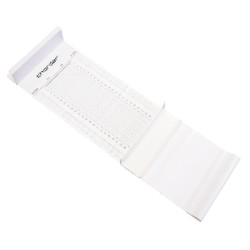
No. The HM-250P measures standing height and requires the patient to stand independently and upright against the measuring surface. For children under two years, or for infants and young children who cannot yet stand independently, supine length measurement is required as specified by WHO growth monitoring guidance. The Marsden HM-110 measuring mat or HM-80P and HM-80D measuring rods are the appropriate tools for supine length measurement in infants and young children, alongside a Class III baby scale for weight. Once a child can stand independently and cooperate with the standing measurement process (typically from around 2 years), the HM-250P becomes the appropriate height measurement tool.
Part of our Class III approved Medical Scales and Measuring range. Patient height measurers provide accurate standing and seated height measurement for clinical assessment in care homes and NHS environments.