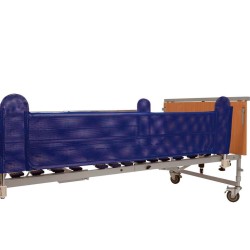
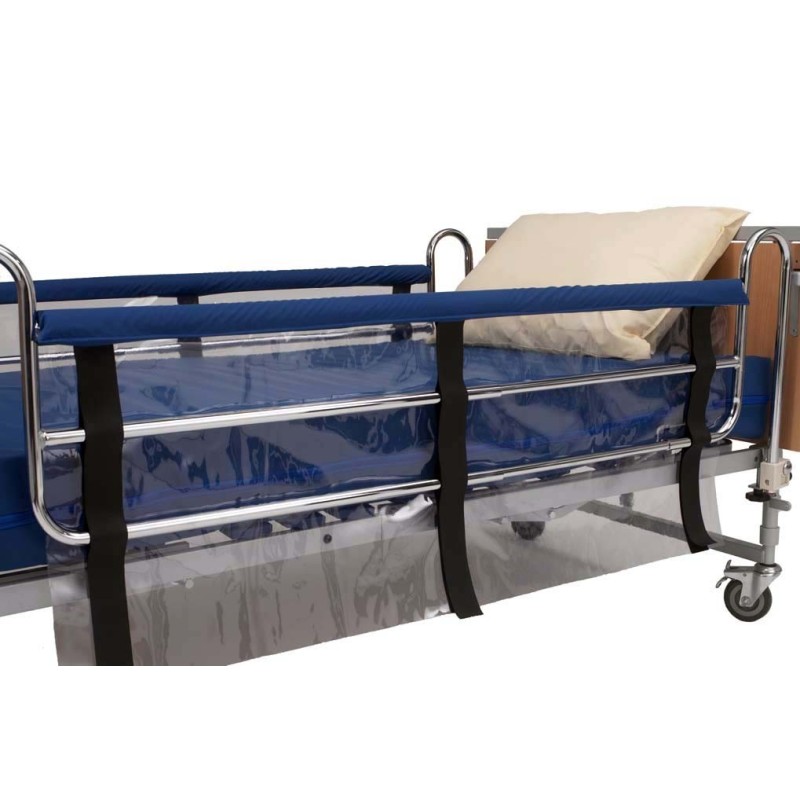

The See-Through Bed Rail Protector (200cm) provides full profiling bed length clear PVC panel coverage with a padded wipe-clean foam top rail and four hook-and-loop straps. Full-length transparency for resident sightlines and carer observation across the complete rail. Shorter versions: NCL-CSST (137cm, 3 straps) and NCL-CSST183 (183cm, 4 straps).
| Specification | Detail |
|---|---|
| Reference | NCL-CSSTPB |
| Length | 200 cm |
| Side Panels | Clear PVC - transparent |
| Top Rail | Rounded foam, wipe-clean cover |
| Fastening | Four vertical hook-and-loop straps |
| Settings | Dementia and high-dependency care |
| Shorter Versions | NCL-CSST (137cm, 3 straps); NCL-CSST183 (183cm, 4 straps) |
The CQC Regulation 10 dignity rationale, CQC Regulation 12 safe care monitoring rationale, MHRA bed rail safety requirements, and Mental Capacity Act 2005 best interest obligations applicable to the shorter versions apply equally to the 200cm version. The full-length 200cm specification should be confirmed in the bed rail risk assessment as providing the required coverage for the individual rail configuration and the resident's movement pattern during sleep.
How do see-through protectors compare to standard opaque bumpers for dementia care?
Standard opaque bumpers provide impact protection and entrapment prevention but create a visual barrier between the resident and their wider environment, which can worsen feelings of confinement and disorientation for residents with dementia. See-through protectors provide the same padded top rail impact protection while maintaining visual openness through the clear PVC panels, allowing the resident to see their room, care staff, and familiar objects without obstruction. For dementia residents where the bed rail risk assessment identifies confinement distress as a specific concern alongside the safety rationale for rail use, see-through protectors directly address both the safety and dignity requirements simultaneously.
Can clear PVC panels become a visual barrier over time as they cloud or discolour?
Yes, PVC panels can degrade in clarity with repeated use and cleaning, particularly if disinfectants incompatible with PVC are used. Degraded transparency reduces the intended visibility benefit and may need to be considered in the bed rail risk assessment if the panel no longer provides the clear sightlines for which it was specified. A panel clarity inspection should be included in the routine CQC Regulation 12 equipment check, and clouded or significantly yellowed panels should be replaced promptly to maintain the dignity and monitoring rationale for the see-through specification.