
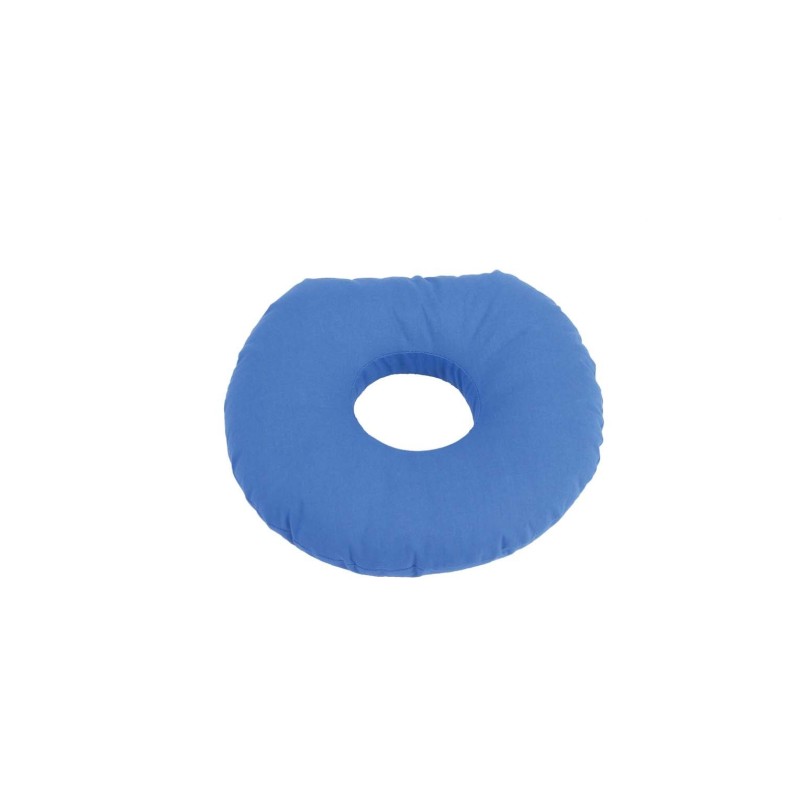

The Ring Cushion provides coccyx and perineal pressure relief through a central opening that suspends sensitive areas free of the seating surface. The lightweight hollow fibre filling maintains consistent support across extended seating episodes, and the breathable cotton cover ensures comfort for long-term use. Suitable for individuals recovering from coccydynia, post-surgical perineal or anal conditions, post-natal perineal trauma, or prolonged seated discomfort in care home, hospital, and homecare settings.
| Specification | Detail |
|---|---|
| Reference | NCL-FFCR |
| Filling | Hollow fibre |
| Cover | Breathable cotton |
| Key Feature | Central opening - coccyx and perineal offloading |
| Settings | Care homes, hospitals, homecare |
CQC Regulation 10 (dignity and person-centred care) requires that care environments support residents' comfort and quality of life; a ring cushion that enables comfortable seated participation in mealtimes and activities for residents with post-surgical or perineal discomfort directly supports this principle. The cushion is not a medical-grade pressure ulcer prevention device under NICE CG179, and should not be used as a substitute for a clinical pressure care assessment where pressure ulcer risk is present. For individuals with both perineal discomfort and pressure ulcer risk, a tissue viability nurse assessment should determine the appropriate seating solution, as ring cushions may not provide adequate pressure redistribution for high-risk sites in all clinical scenarios.
When is a ring cushion clinically indicated?
A ring cushion is indicated for individuals experiencing discomfort on seating due to coccydynia, post-anal or rectal surgery, post-natal perineal trauma, haemorrhoids, or other conditions causing sensitivity in the coccyx and perineal area. It is appropriate for short to medium-term use during recovery from procedures or acute conditions. Where pressure ulcer risk is a concurrent concern, the tissue viability nurse should review whether a ring cushion is appropriate, as the central opening concentrates seating load on the ischial tuberosities, which may increase pressure risk at those sites in individuals with compromised tissue viability.
Is the ring cushion suitable for use in a wheelchair?
The ring cushion can be used in a standard wheelchair seat, but a wheelchair seating assessment should confirm suitability before regular use. Wheelchair users with additional postural support needs or pressure ulcer risk at the ischial tuberosities should be assessed by an occupational therapist, as a specialist pressure-redistributing wheelchair cushion may be more appropriate. The ring cushion is primarily a comfort aid for temporary relief rather than a prescribed pressure care device, and should be used in accordance with the resident's care plan and any clinical guidance from the responsible clinician.