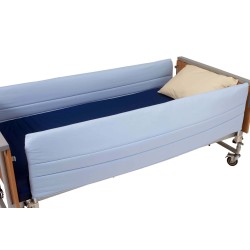
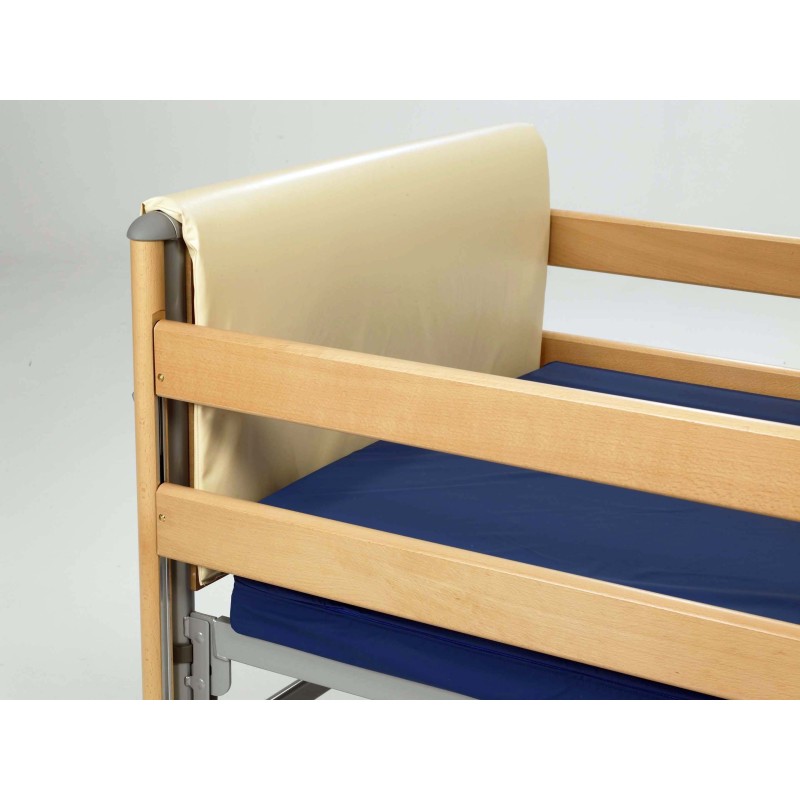

The Head or Foot Board Protector (100cm, Standard Foam, Wipe-Clean) cushions the exposed head and foot board areas of profiling beds, completing the impact protection achieved by full-length side rail bumpers. Gently tapered profile accommodates side rail tracking hardware. Wipe-clean durable cover for NHS IPC decontamination. Sold individually. Machine washable version is NCL-MWBHF.
| Specification | Detail |
|---|---|
| Reference | NCL-HFSTD |
| Length | 100 cm |
| Foam | Standard foam |
| Cover | Wipe-clean |
| Profile | Tapered for side rail tracking |
| Sold | Individually |
| Washable Version | NCL-MWBHF (machine washable) |
MHRA guidance on bed rail safety identifies head and foot board impact and entrapment as risk zones in profiling bed configurations, particularly where the resident's head or limbs can contact the exposed board surface during sleep or movement. The board protector addresses this zone as part of a complete bed safety programme. CQC Regulation 12 (safe care) documentation should note the head and foot board risk assessment findings and the protector specification alongside the side bumper documentation. Sold individually; the bed rail risk assessment should confirm whether one or two protectors are required for the specific bed configuration.
How is the head or foot board protector positioned alongside side bumpers?
The board protector is fitted at the head or foot end of the bed, covering the exposed board surface between the two side bumpers. The tapered ends of the protector accommodate the rail tracking hardware at the corners where the side rails meet the head or foot board, allowing the protector to sit flush against the board surface. Confirm that the protector covers the full exposed area of the board between the side bumper ends at both corners before use. Where side bumpers with closed ends are in use, check that the closed ends and the board protector together provide continuous coverage across the corner transitions.
Is one or two protectors required for a standard profiling bed?
The bed rail risk assessment should determine how many protectors are needed. Where the assessment identifies both the head board and the foot board as impact risk zones for the individual resident, two protectors should be specified - one for each end. Where only the headboard is identified as a risk, one protector is appropriate. Some residents may only require headboard protection if their movement during sleep does not bring limbs or the head into contact with the foot board. Sold individually to allow flexible specification based on the individual risk assessment findings.