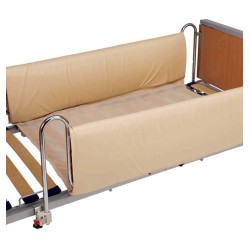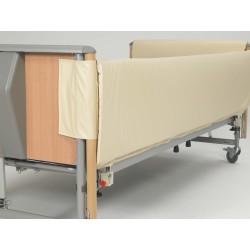
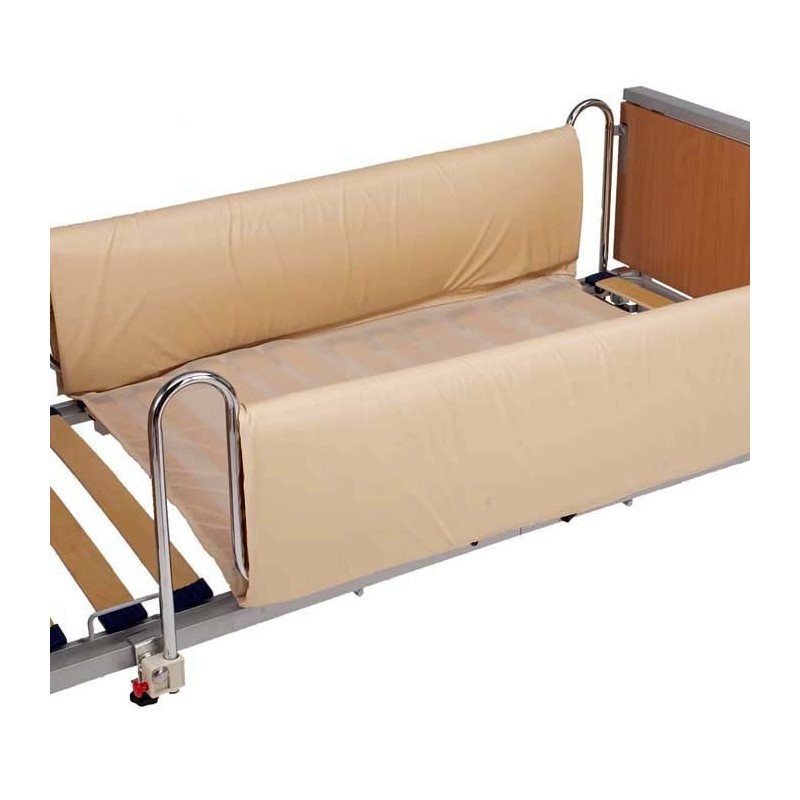

The Connected Cotside Bumper (200x76cm) provides full profiling bed length padded rail coverage with a highly permeable base sheet that passes beneath the mattress to prevent sub-rail limb entrapment. The 200cm standard profiling bed length provides continuous protection from head to foot. Wipe-clean outer; mattress-secured base sheet. High-sided version is NCL-CCBPBH (200x96cm); three-rail version is NCL-CCBPBX (200x105cm).
| Specification | Detail |
|---|---|
| Reference | NCL-CCBPB |
| Dimensions | 200 x 76 cm (79" x 30") |
| Key Feature | Highly permeable base sheet - sub-rail entrapment prevention |
| Securing Method | Mattress sits on base sheet |
| Cover | Wipe-clean |
| MHRA Compliance | Yes |
| Other Sizes | NCL-CCB (134x76cm); NCL-CCSFB (183x76cm); NCL-CCBPBH (200x96cm); NCL-CCBPBX (200x105cm) |
MHRA bed rail safety guidance identifies the sub-rail zone as one of the highest-risk entrapment areas; the CCB base sheet directly addresses this zone. CQC Regulation 12 documentation should include the bed rail risk assessment confirming sub-rail entrapment as a specific risk, the rationale for the CCB over standard bumpers, and the bumper condition inspection schedule. The 200cm length should be confirmed against the rail measurement before procurement to prevent coverage gaps. Mental Capacity Act 2005 best interest obligations apply. For overlay beds where a 76cm bumper leaves exposed rail above the mattress surface, the 200x96cm version (NCL-CCBPBH) is the appropriate specification.
How does the CCB connected bumper differ from standard cotside bumpers without a base sheet?
Standard cotside bumpers (such as the CSBPB range) cover the rail surface and reduce impact injury risk, but they do not address the sub-rail entrapment zone below the mattress-to-rail gap. The CCB connected bumper adds a highly permeable base sheet that extends beneath the mattress, creating a physical barrier at the mattress boundary that prevents limbs from passing into the sub-rail zone. Where MHRA guidance identifies sub-rail entrapment as a specific risk for an individual resident, the CCB is the appropriate specification; where only rail surface impact protection is required, standard cotside bumpers are adequate.
What maintenance does the base sheet require?
The base sheet should be inspected when the mattress is lifted or changed to confirm it is undamaged, correctly positioned across the full mattress width, and free from soiling that would require cleaning. The wipe-clean bumper body should be decontaminated between patient uses per NHS IPC protocol. The base sheet material should be checked for tears or perforations that would compromise its entrapment prevention function; a damaged base sheet must be replaced before the bed is returned to use. CQC Regulation 12 equipment inspection records should document base sheet condition checks.