
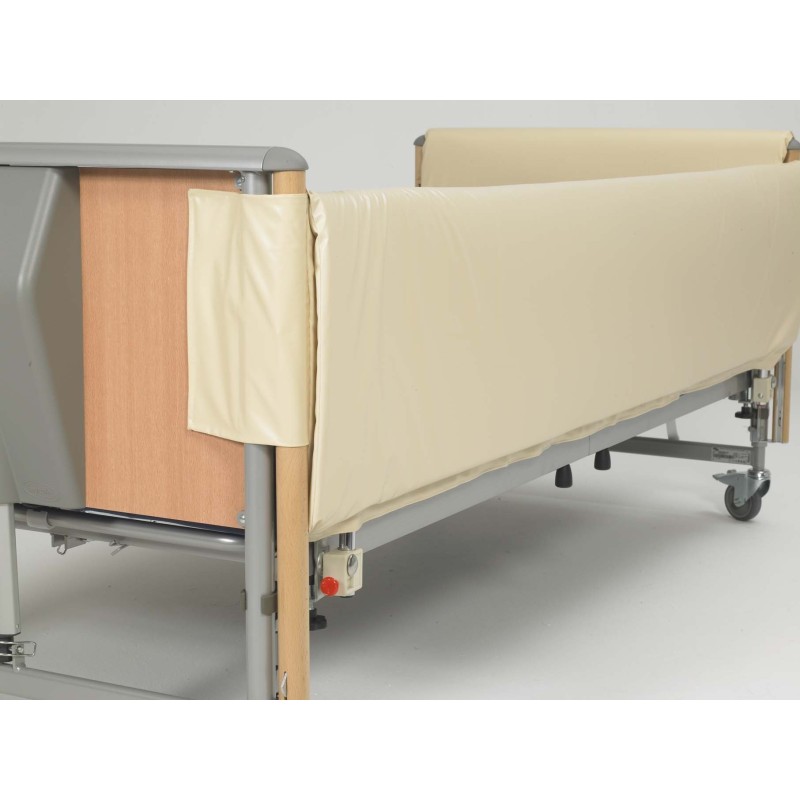


The Wrap-around Bumper (200x76cm, Standard) addresses the specific entrapment risks of profiling beds with metal side rails through double end flaps that wrap around the head and foot ends of the bed, closing the gaps left at the ends of shorter metal rails. Wipe-clean outer for NHS IPC decontamination; hook and loop fastening. High-sided 200x96cm version is NCL-CSBPBHW.
| Specification | Detail |
|---|---|
| Reference | NCL-CSBPBW |
| Dimensions | 200 x 76 cm (79" x 30") |
| Key Feature | Double end flaps - close gaps at metal rail ends |
| Rail Type | Standard metal bed rails |
| Cover | Wipe-clean |
| Fastening | Hook and loop |
| High-Sided Version | NCL-CSBPBHW (200 x 96 cm) |
MHRA guidance on bed rail entrapment zones identifies the gap between the rail end and the bed head or foot as a specific entrapment risk; metal rail configurations where the rail is shorter than the full bed length create a larger version of this gap than wooden full-length rails. The double end flaps directly address this zone. CQC Regulation 12 (safe care) documentation should confirm the metal rail configuration, the end-gap entrapment risk assessment, and the wrap-around specification rationale. MHRA guidance and Mental Capacity Act 2005 best interest obligations apply.
Why are wrap-around bumpers needed specifically for metal bed rails?
Metal bed rails on profiling beds are commonly shorter than the full bed length, leaving a gap between the end of the rail and the head or foot of the bed. A standard straight bumper sized to the rail length covers the rail body but does not extend into this end gap. The wrap-around end flaps extend beyond the bumper body and fold around the bed head or foot end, bridging this gap and preventing limbs from entering the entrapment zone that a straight bumper would leave open. Standard wooden rail bumpers are not designed to accommodate the shorter metal rail profile or the end gap it creates.
How are the double end flaps secured in position?
The end flaps wrap around the head and foot of the bed and are held in position by the hook and loop fastening system in conjunction with the bumper body's fit against the rail profile. The flaps should be fitted firmly against the bed head and foot surfaces and confirmed to be covering the full gap from the rail end to the bed surface before use. Check flap positioning at each routine CQC Regulation 12 equipment inspection, as flap displacement during patient movement would leave the end gap unprotected.
