
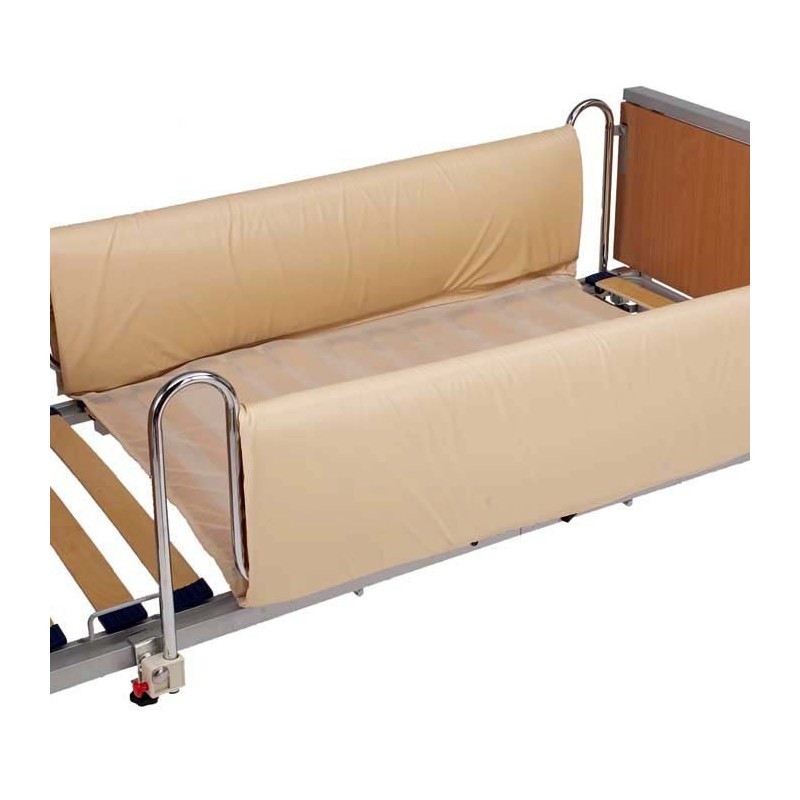

The Connected Cotside Bumper (134x76cm) features a highly permeable base sheet that connects both cotside bumpers and passes beneath the mattress, creating a safety net that prevents limbs from entering the sub-rail entrapment zone. The mattress secures the base sheet in position. Wipe-clean outer cover for NHS IPC decontamination. MHRA compliant. Full range: 183x76cm (NCL-CCSFB), 200x76cm (NCL-CCBPB), 200x96cm (NCL-CCBPBH), 200x105cm (NCL-CCBPBX).
| Specification | Detail |
|---|---|
| Reference | NCL-CCB |
| Dimensions | 134 x 76 cm (53" x 30") |
| Key Feature | Highly permeable base sheet - sub-rail entrapment prevention |
| Securing Method | Mattress sits on base sheet |
| Cover | Wipe-clean |
| MHRA Compliance | Yes |
| Other Sizes | NCL-CCSFB (183x76cm); NCL-CCBPB (200x76cm); NCL-CCBPBH (200x96cm); NCL-CCBPBX (200x105cm) |
MHRA guidance on bed rail safety (MDA 2001/21 and NHS/PSA/W/2017/005) identifies the sub-rail zone - the area between the underside of the rail and the bed frame - as one of the highest-risk entrapment zones, as patients trapped in this zone may be unable to self-extricate and asphyxiation risk is documented. The highly permeable base sheet directly addresses this entrapment zone by creating a physical barrier at mattress level. CQC Regulation 12 (safe care) documentation must include the bed rail risk assessment confirming sub-rail entrapment as a specific identified risk, the clinical rationale for the CCB specification over standard bumpers, and Mental Capacity Act 2005 best interest considerations where applicable.
How does the base sheet prevent sub-rail limb entrapment?
The highly permeable base sheet extends horizontally beneath the mattress, connecting both cotside bumpers across the full width of the bed at the mattress level. When a limb moves downward toward the gap between the rail and the mattress during sleep, the base sheet acts as a barrier at the mattress boundary, preventing the limb from entering the sub-rail zone below. The sheet's high permeability allows air to flow through the mattress surface without creating a heat or moisture trap beneath the mattress, consistent with the ventilation requirements of pressure relief and airflow mattress systems.
How is the base sheet secured under the mattress?
The base sheet is positioned beneath the mattress on the bed base, and the mattress is then placed on top. The weight and surface friction of the mattress holds the base sheet in position throughout the protection period. This mattress-secured design does not require clips, ties, or separate fixings, but the base sheet should be inspected when the mattress is changed or turned to confirm it remains correctly positioned and undamaged. CQC Regulation 12 equipment inspection records should document the base sheet condition check at each mattress change.
